Explaining Conductivity (Edexcel IGCSE Chemistry)
Guided lessons are live for this note
Work through it step by step — key points, depth layers, a worked example and self-checks.
Conductivity of Covalent Compounds
Spec point — understand why covalent compounds do not conduct electricity
-
Electric current is the flow of charged particles
-
This usually refers to electrons, but it could also mean the flow of ions
-
Most covalent compounds do not conduct electricity as they have no freely moving charged particles to carry the current
-
They act as insulators and have many applications which rely on that property
-
Covalent substances are used as electrical insulators in solid, liquid and gaseous form
- For example, sulfur hexafluoride is a dense gas used to insulate electrical transformers
- Silicone oils and liquid hydrocarbons are also used in electrical equipment
-
Common insulators include the plastic coating around household electrical wiring:
Covalent compounds are used as insulating materials
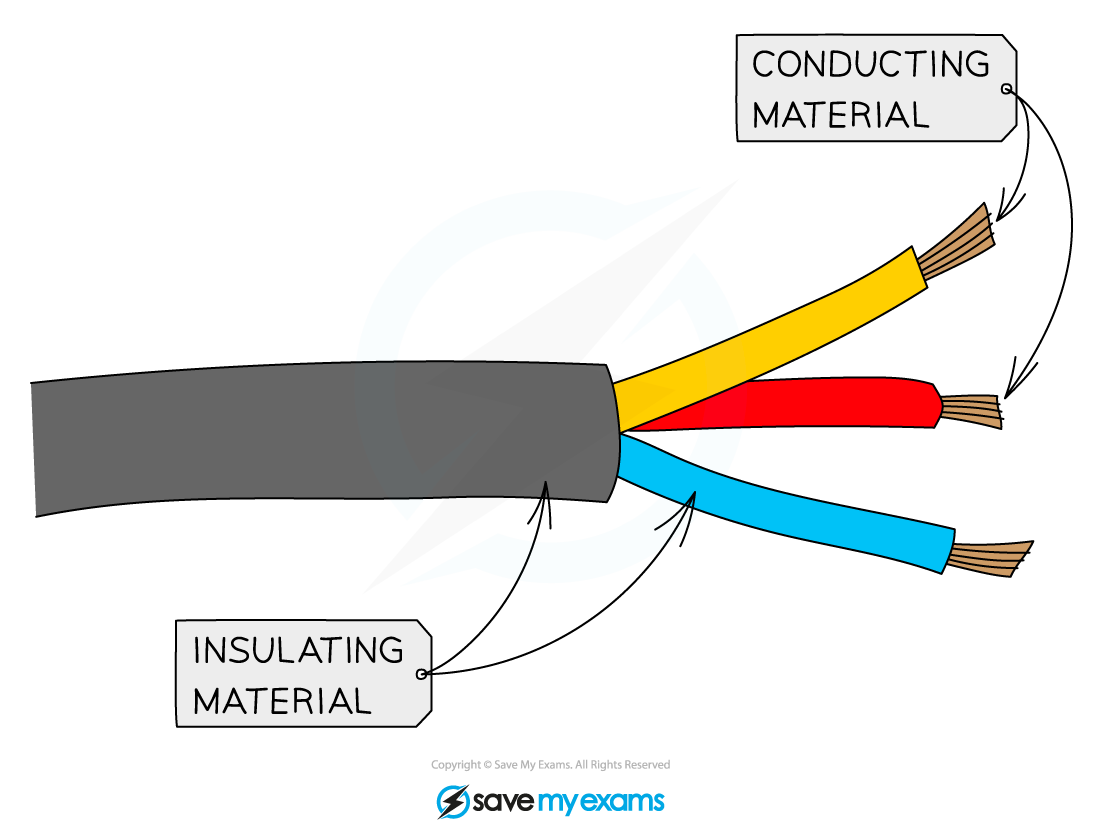
Covalent compounds are unable to conduct due to having no freely moving charged particles
Conductivity of Ionic Compounds
Spec point — understand why ionic compounds conduct electricity only when molten or in aqueous solution
- Ionic compounds can conduct electricity in the molten state or in solution
- This is because they have ions that can move and carry charge
- They cannot conduct electricity in the solid state as the ions are in fixed positions within the lattice and are unable to move
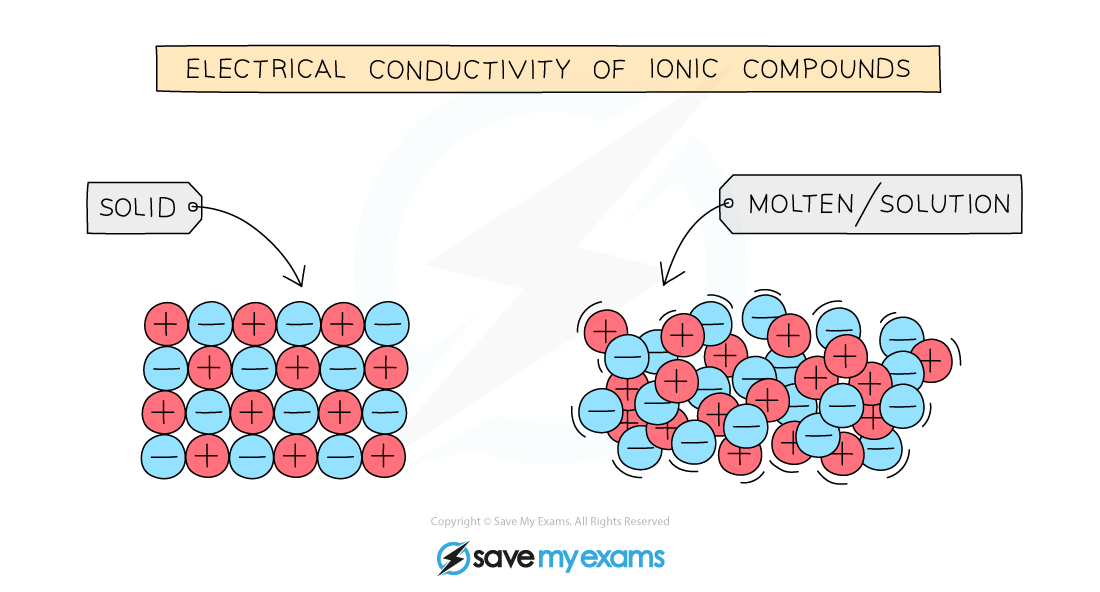
Molten or aqueous particles move and conduct electricity but cannot in solid form
Anions & Cations
Spec point — know that anion and cation are terms used to refer to negative and positive ions respectively
Cations and anions
-
Anions are negatively charged ions
- E.g. Cl-, O2-, SO42-
-
Cations are positively charged ions
- E.g. K+, Mg2+, H+
-
During electrolysis the electrons move from the anode towards the cathode
-
Cations within the electrolyte migrate towards the negatively charged electrode which is the cathode
-
Anions within the electrolyte migrate towards the positively charged electrode which is the anode
Diagram showing the direction of movement of electrons and ions in the electrolysis of NaCl
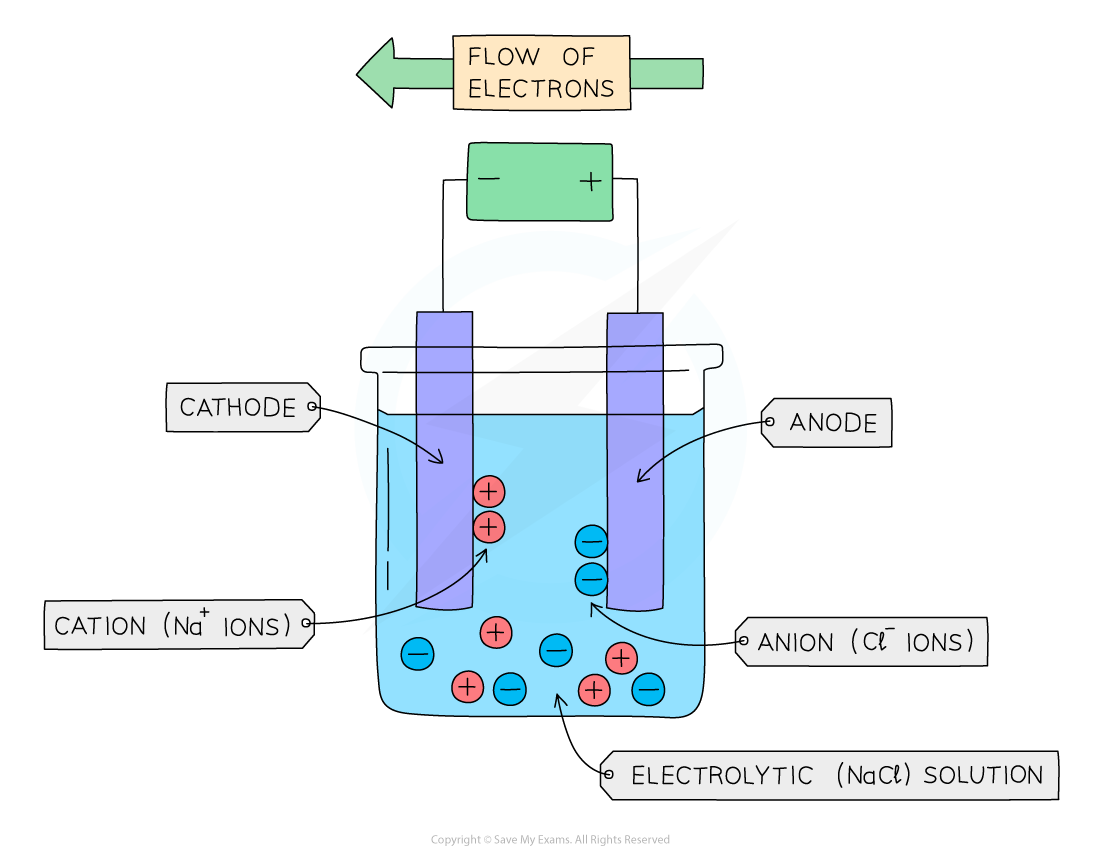
Cations are attracted to the cathode and anions to the anode due to their opposite charges
Exam Hint When a metal conducts it is the electrons that are moving through the metal. When a salt solution conducts it is the ions in the solution that move towards the electrodes while carrying the electrons.
Was this revision note helpful?
Build on this topic