Explaining Conductivity
2 guided lessons · 18 checks · 1. Principles of Chemistry → Electrolysis
Guided lessons for this note
Which concept don't you understand yet?
We'll explain it simply and check your understanding. Pick any lesson — any order works.
0 of 18 checks correct so far
Lesson 1 of 2
Conductivity of covalent & ionic compounds
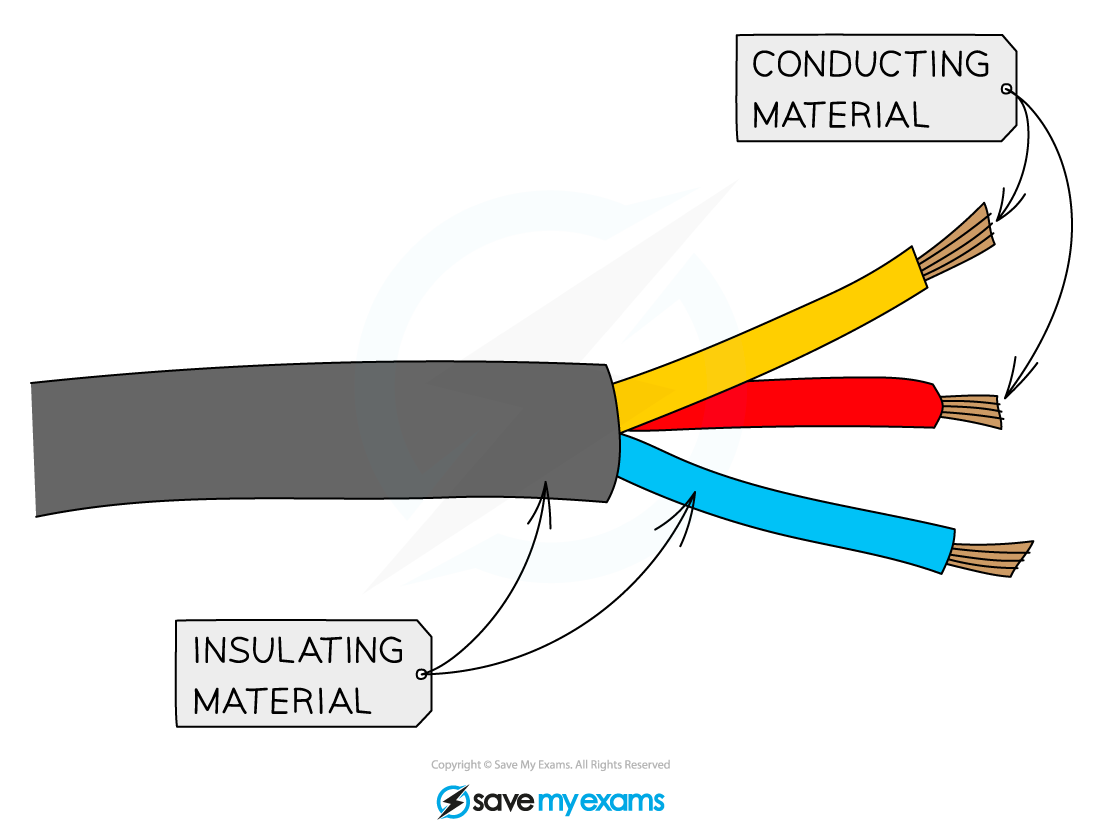
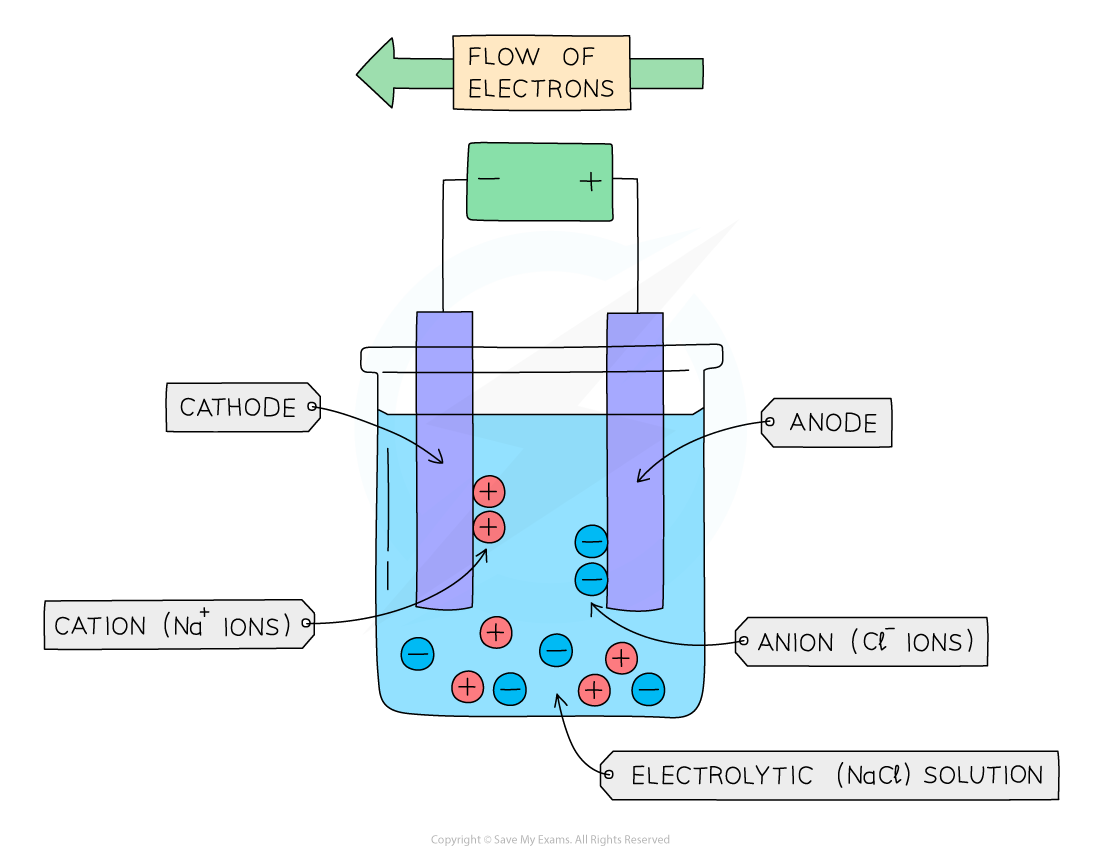
An electric current is a flow of charged particles, which usually means electrons but can also mean ions. Covalent compounds have no freely moving charged particles, so they act as insulators in solid, liquid and gaseous form. Ionic compounds hold fixed ions in the solid state, but once molten or dissolved the ions move and carry the current, so those two states conduct.
What you know already
From Covalent Bonding and Ionic Bonding you know the two families of compounds and the particles inside them. This note asks one question of both: can anything charged actually move? The answer decides whether a compound conducts, and it also introduces the names anion and cation for the two charges of ion.
Key points of understanding
- An electric current is a flow of charged particles, usually electrons but sometimes ions.
- Covalent compounds do not conduct, since nothing charged is free to move through them and carry the current.
- Covalent substances work as insulating materials whether solid, liquid or gas.
- Ionic compounds conduct in the molten state or in solution, because their ions can then move and carry charge.
- Solid ionic compounds do not conduct, because their ions are fixed in the lattice and cannot move.
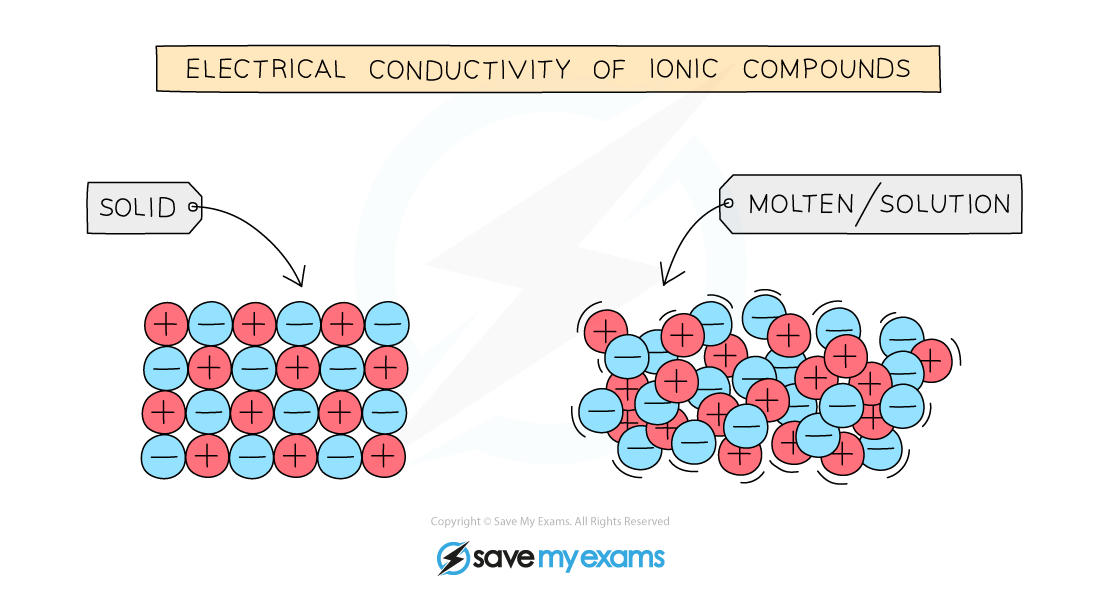
They cannot conduct electricity in the solid state as the ions are in fixed positions within the lattice and are unable to move
Choose a confidence level to continue.
Prefer to read it all at once? Show the full lesson as a page
1.Conductivity of covalent & ionic compounds
An electric current is a flow of charged particles, which usually means electrons but can also mean ions. Covalent compounds have no freely moving charged particles, so they act as insulators in solid, liquid and gaseous form. Ionic compounds hold fixed ions in the solid state, but once molten or dissolved the ions move and carry the current, so those two states conduct.
They cannot conduct electricity in the solid state as the ions are in fixed positions within the lattice and are unable to move
Key points
Guided content from the SME authoring corpus — note rn_rHKCkt3PTXDBpmJG, pinned at fa1f302050ba · promoted SyllabAI/syllabai-resources e967e75f1339