Nitrogen Oxides & Sulfur Dioxide (Edexcel IGCSE Chemistry)
Guided lessons are live for this note
Work through it step by step — key points, depth layers, a worked example and self-checks.
Formation of Nitrogen Oxides
Spec point — know that, in car engines, the temperature reached is high enough to allow nitrogen and oxygen from air to react, forming oxides of nitrogen
Nitrogen Oxides
- These compounds (NO and NO2) are formed when nitrogen and oxygen react in the high pressure and temperature conditions of internal combustion engines and blast furnaces
- Exhaust gases also contain unburned hydrocarbons and carbon monoxide
- Cars are fitted with catalytic converters which form a part of their exhaust systems
- Their function is to render these exhaust gases harmless
- The adverse effects of nitrogen oxides include acid rain as well as producing photochemical smog and breathing difficulties, in particular for people suffering from asthma.
Formation of Sulfur Dioxide
Spec point — explain how the combustion of some impurities in hydrocarbon fuels results in the formation of sulfur dioxide
Sulfur dioxide
- Fossil fuels are often contaminated with small amounts of sulfur impurities
- When these contaminated fossil fuels are combusted, the sulfur in the fuels get oxidised to sulfur dioxide
S (s) + O2 (g) → SO2 (g)
-
The adverse effects of sulfur dioxide include acid rain:
- Acid rain causes corrosion to metal structures, buildings and statues made of carbonate rocks, damage to aquatic organisms
- It pollutes crops and water supplies, irritates lungs, throats and eyes
Acid Rain
Spec point — understand how sulfur dioxide and oxides of nitrogen oxides contribute to acid rain
How is acid rain formed?
From sulfur dioxide
- The sulfur dioxide produced from the combustion of fossil fuels dissolves in rainwater droplets to form sulfuric acid
2SO2 (g) + O2 (g) + 2H2O (l) → 2H2SO4 (aq)
- Sulfuric acid is one of the components of acid rain which has several damaging impacts on the environment
From nitrogen dioxide
- Nitrogen dioxide produced from car engines reacts with rain water to form a mixture of nitrous and nitric acids, which contribute to acid rain:
2NO2 (g) + H2O (l) → HNO2 (aq) + HNO3 (aq)
- Lightning strikes can also trigger the formation of nitrogen monoxide and nitrogen dioxides in air
- Nitrogen dioxide gas reacts with rain water and more oxygen to form nitric acid
4NO2 (g) + 2H2O (l) + O2 (g) → 4HNO3 (aq)
- When the clouds rise, the temperature decreases, and the droplets get larger
- When the droplets containing these acids are heavy enough, they will fall down as acid rain
The formation of acid rain
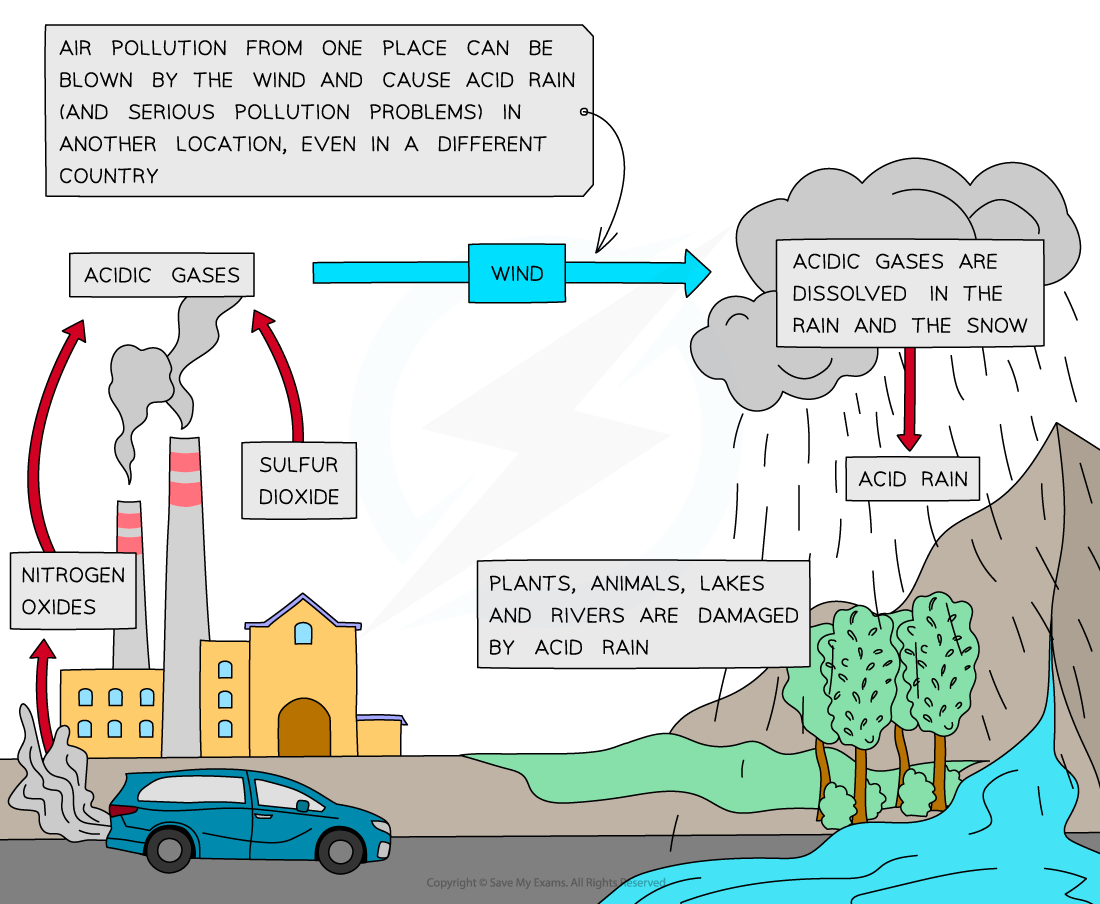
Formation of acid rain from nitrogen and sulfur oxides
Was this revision note helpful?
Build on this topic