Nitrogen Oxides & Sulfur Dioxide
2 guided lessons · 18 checks · 4. Organic Chemistry → Crude Oil
Guided lessons for this note
Which concept don't you understand yet?
We'll explain it simply and check your understanding. Pick any lesson — any order works.
0 of 18 checks correct so far
Lesson 1 of 2
Hot engines and dirty fuels
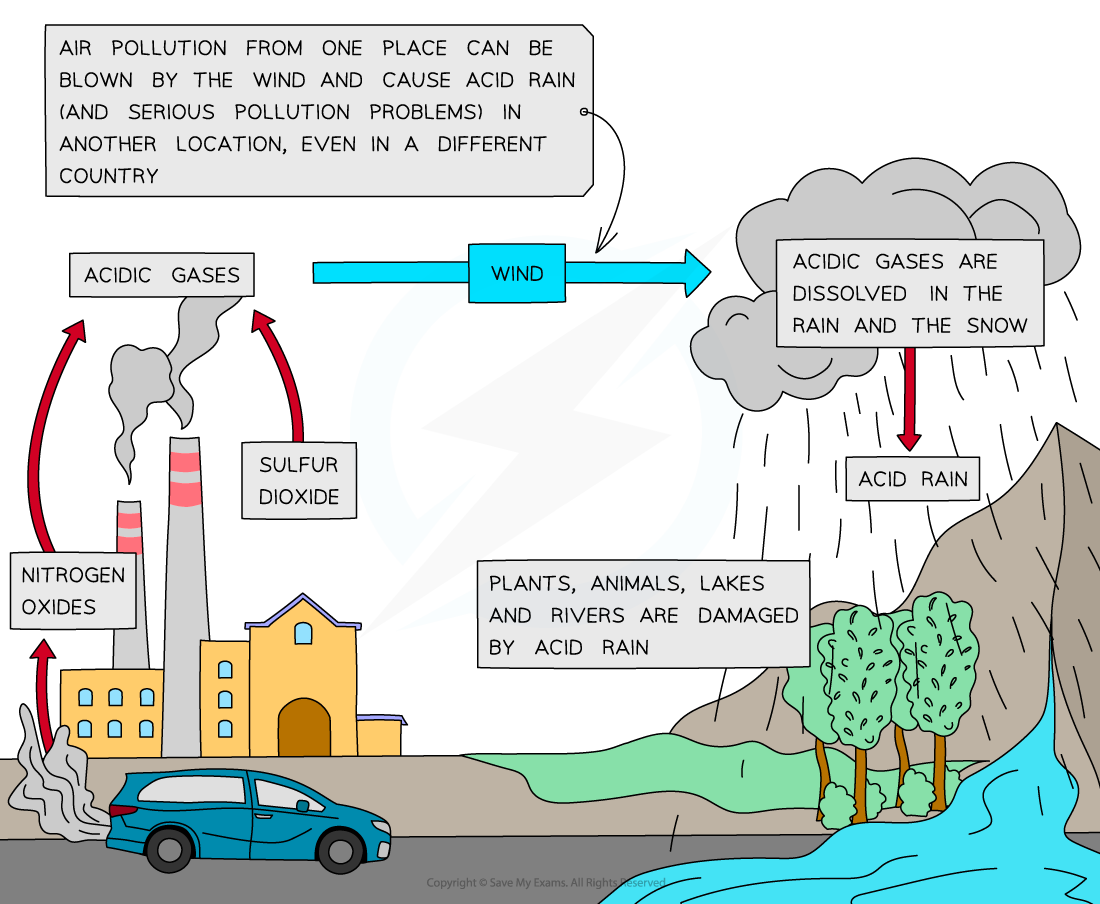
Two very different sources feed the same pollution story. In the engine, sheer heat welds air nitrogen to oxygen; in the fuel, sulfur impurities burn along with the hydrocarbons.
What you know already
From Combustion you already know that fuels burn with products decided by their ingredients. This note adds the two pollutant families: nitrogen oxides born in hot engines, and sulfur dioxide from impurities in the fuel, then follows both into the rain that turns acidic.
Key points of understanding
- Nitrogen and oxygen from air react in the high temperature and pressure inside internal combustion engines.
- The products are the oxides of nitrogen, NO and NO2, also formed in blast furnaces.
- Exhaust gases also carry unburned hydrocarbons and carbon monoxide, so cars fit catalytic converters to render them harmless.
- Fossil fuels are contaminated with small amounts of sulfur impurities, which burn to sulfur dioxide.
- The burning of the impurity follows S + O2 -> SO2, and nitrogen oxides also add to smog and asthma difficulties.
Choose a confidence level to continue.
Prefer to read it all at once? Show the full lesson as a page
1.Hot engines and dirty fuels
Two very different sources feed the same pollution story. In the engine, sheer heat welds air nitrogen to oxygen; in the fuel, sulfur impurities burn along with the hydrocarbons.
Key points
- Nitrogen and oxygen from air react in the high temperature and pressure inside internal combustion engines.
- The products are the oxides of nitrogen, NO and NO2, also formed in blast furnaces.
- Exhaust gases also carry unburned hydrocarbons and carbon monoxide, so cars fit catalytic converters to render them harmless.
- Fossil fuels are contaminated with small amounts of sulfur impurities, which burn to sulfur dioxide.
Guided content from the SME authoring corpus — note rn_9J7DQhskyxzhd7CP, pinned at 52acc7ec1650 · promoted SyllabAI/syllabai-resources e967e75f1339