Practical: Investigating Temperature Changes (Edexcel IGCSE Chemistry)
Exam board Pearson Edexcel · IGCSEUpdated 2024-08-20
Guided lessons are live for this note
Work through it step by step — key points, depth layers, a worked example and self-checks.
Spec point — practical: investigate temperature changes accompanying some of the following types of change: • salts dissolving in water • neutralisation reactions • displacement reactions • combustion reactions
Practical: Investigating Temperature Changes
Aim:
- To perform a calorimetry study of the reaction between HCl and NaOH
Apparatus:
- Dilute hydrochloric acid
- Dilute sodium hydroxide solution
- Styrofoam (polystyrene) calorimeter & lid
- 25 cm3 measuring cylinder
- Thermometer & stirrer
Simple calorimeter
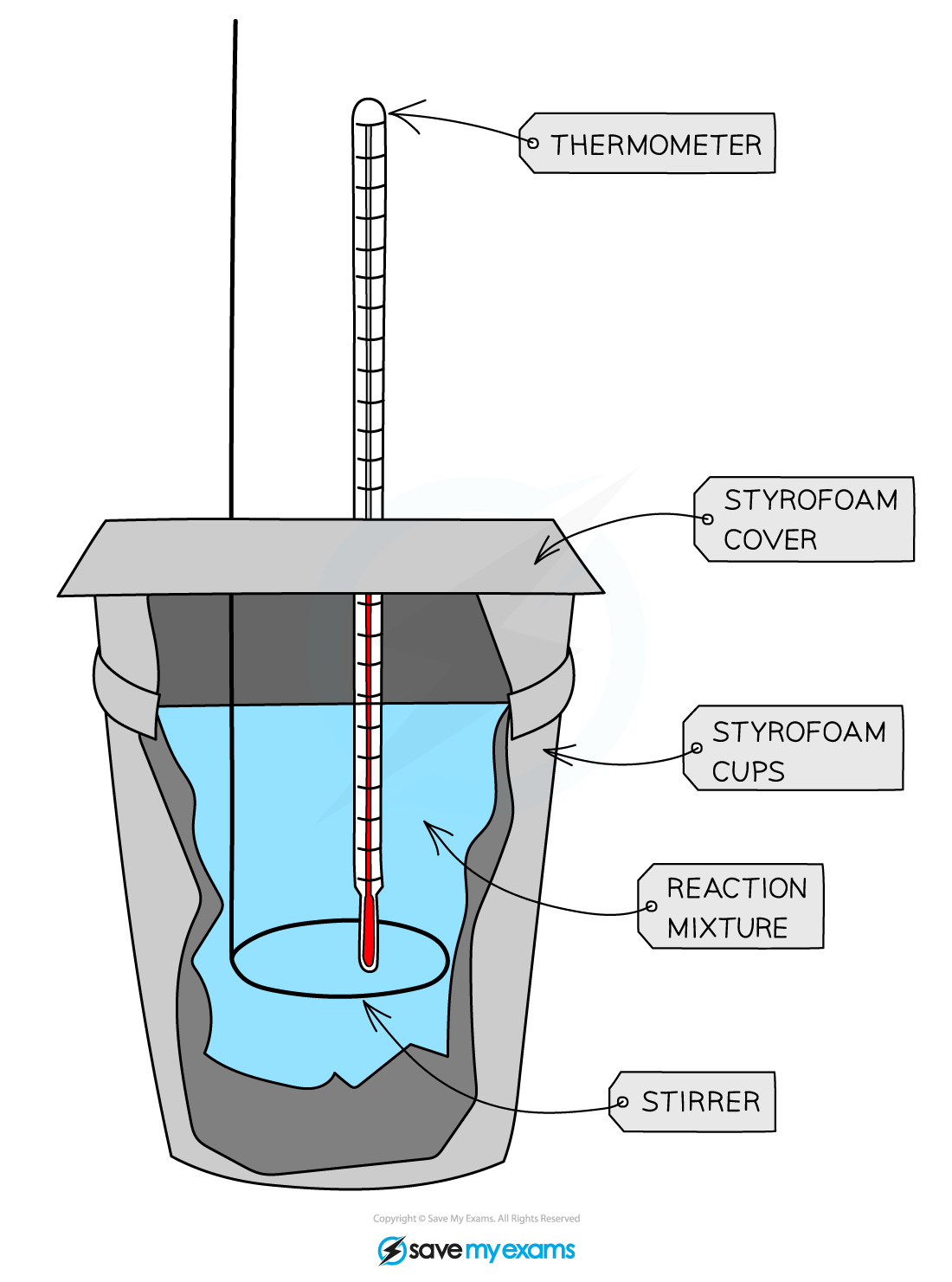
A lid is required to prevent heat loss
Method:
- Using a measuring cylinder, place 25 cm3 of the NaOH solution into the calorimeter
- Measure and record the temperature of the solution
- Add 5 cm3 of the dilute HCl and stir
- Measure and record the highest temperature reached by the mixture
- Repeat steps 1 – 4 increasing the amount of acid added by 5 cm3 each time
Results:
- Record your results in a suitable table
| Volume of acid (cm3) | Temperature (oC) |
|---|---|
| 5 | |
| 10 | |
| 15 | |
| 20 | |
| 25 |
- Plot a graph of the results and draw a line of best fit, using the graph to determine what volume of acid causes the biggest change in temperature
Conclusion:
- The larger the difference in the temperature the more energy is absorbed or released
Was this revision note helpful?
Build on this topic