Practical: Investigating Temperature Changes
2 guided lessons · 18 checks · 3. Physical Chemistry → Energetics
Guided lessons for this note
Which concept don't you understand yet?
We'll explain it simply and check your understanding. Pick any lesson — any order works.
0 of 18 checks correct so far
Lesson 1 of 2
Setting up and running the temperature-change practical
The practical performs a calorimetry study of hydrochloric acid reacting with sodium hydroxide solution. This lesson lists the apparatus, then walks the five steps that build the results table.
What you know already
From Calorimetry you already know how an insulated cup turns a reaction into a temperature reading. This practical applies that apparatus to a neutralisation between acid and alkali, adding acid in steps to map how the energy change grows. The graph you plot at the end identifies the mixture that releases the most heat.
Key points of understanding
- The aim is a calorimetry study of the reaction between hydrochloric acid and sodium hydroxide.
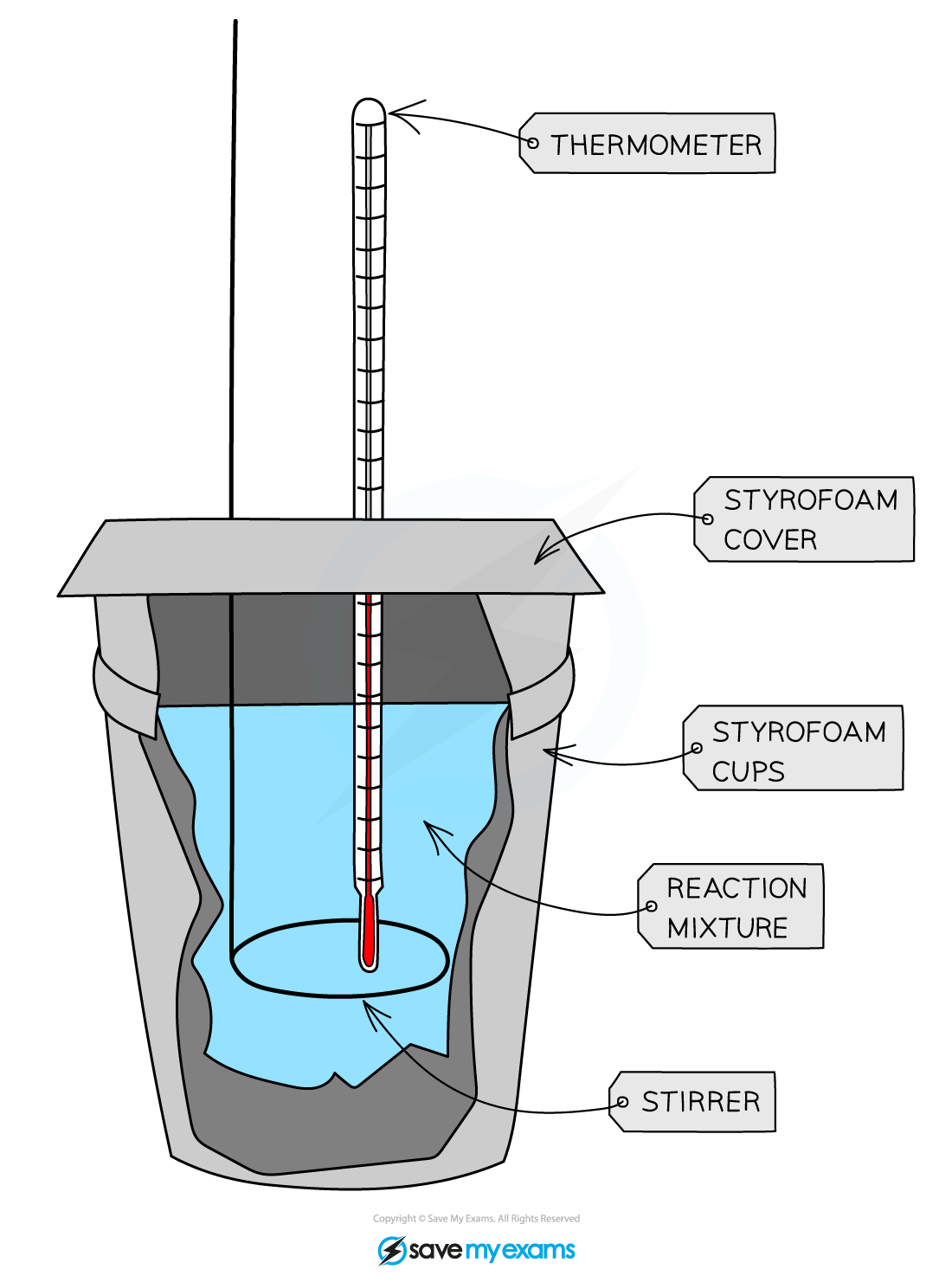
- Apparatus includes dilute acid, dilute alkali, a polystyrene calorimeter with lid, a measuring cylinder, thermometer and stirrer.
- A lid is required on the calorimeter to prevent heat loss during the experiment.
- The method places sodium hydroxide solution in the calorimeter, records its temperature, then adds acid in 5 cm3 portions.
- After each addition the highest temperature reached by the mixture is measured and recorded.
Choose a confidence level to continue.
Prefer to read it all at once? Show the full lesson as a page
1.Setting up and running the temperature-change practical
The practical performs a calorimetry study of hydrochloric acid reacting with sodium hydroxide solution. This lesson lists the apparatus, then walks the five steps that build the results table.
Key points
- The aim is a calorimetry study of the reaction between hydrochloric acid and sodium hydroxide.
- Apparatus includes dilute acid, dilute alkali, a polystyrene calorimeter with lid, a measuring cylinder, thermometer and stirrer.
- A lid is required on the calorimeter to prevent heat loss during the experiment.
- The method places sodium hydroxide solution in the calorimeter, records its temperature, then adds acid in 5 cm3 portions.
- After each addition the highest temperature reached by the mixture is measured and recorded.
Guided content from the SME authoring corpus — note rn_6478QfpYNQDjZSvt, pinned at 51a6ed34e715 · promoted SyllabAI/syllabai-resources e967e75f1339