Electronic Configuration & Reactivity
2 guided lessons · 18 checks · 1. Principles of Chemistry → The Periodic Table
Guided lessons for this note
Which concept don't you understand yet?
We'll explain it simply and check your understanding. Pick any lesson — any order works.
0 of 18 checks correct so far
Lesson 1 of 2
Similar Chemical Properties
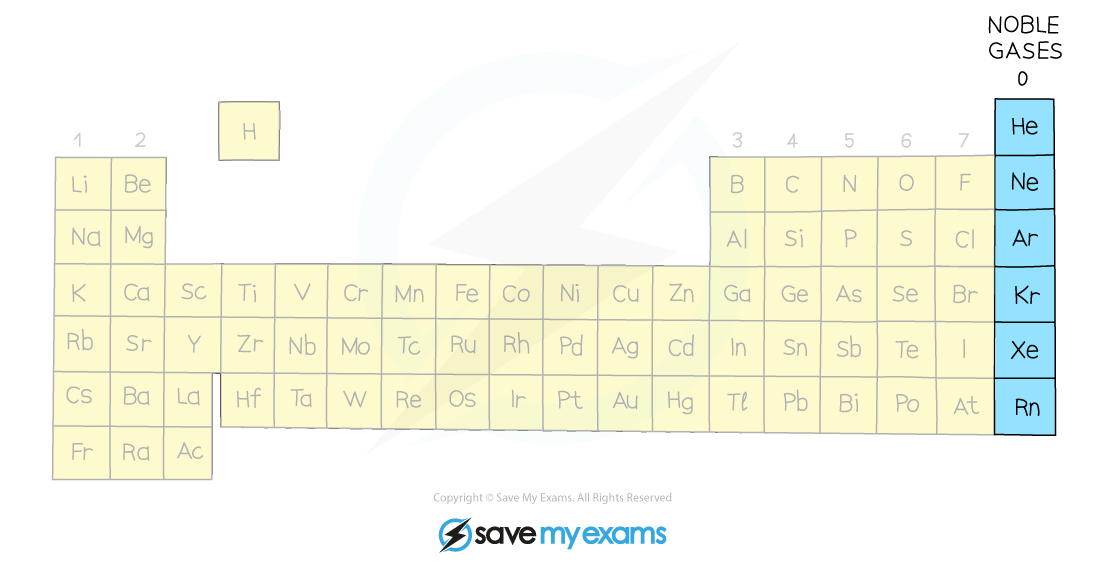
Walk down any column of the Periodic Table and the elements react in similar ways, because every atom in that column carries the same count of outer electrons. The group number printed on the table is itself that outer count, so the layout works as a shorthand for how each atom will react and bond.
What you know already
The Periodic Table gave you the layout of the elements: groups as columns and periods as rows, with the electronic configuration reading straight off both. This note explains why that layout predicts chemistry — atoms in the same column react alike, reactivity climbs or falls as you walk down a column, and one column, the noble gases, barely reacts at all.
Key points of understanding
- The group number equals the outer-shell electron count, which is why one column shares its chemistry.
- The rule holds for every element except helium, which sits in Group 0 with just two electrons in its only shell.
- Group 1 metals turn more reactive further down, while Group 7 elements turn less reactive further down.
- Observing one member of a group lets you predict how its partners react, including trend-finding from two or more members.
- Lithium, sodium and potassium are Group 1 metals that each react with Group 7 elements to form an ionic compound.
Choose a confidence level to continue.
Prefer to read it all at once? Show the full lesson as a page
1.Similar Chemical Properties
Walk down any column of the Periodic Table and the elements react in similar ways, because every atom in that column carries the same count of outer electrons. The group number printed on the table is itself that outer count, so the layout works as a shorthand for how each atom will react and bond.
Key points
- The group number equals the outer-shell electron count, which is why one column shares its chemistry.
- The rule holds for every element except helium, which sits in Group 0 with just two electrons in its only shell.
- Group 1 metals turn more reactive further down, while Group 7 elements turn less reactive further down.
Guided content from the SME authoring corpus — note rn_mBqgkpZ3hbSBmWCC, pinned at da18433ed9e8 · promoted SyllabAI/syllabai-resources e967e75f1339