Ionic Bonds: Dot & Cross Diagrams
2 guided lessons · 18 checks · 1. Principles of Chemistry → Ionic Bonding
Guided lessons for this note
Which concept don't you understand yet?
We'll explain it simply and check your understanding. Pick any lesson — any order works.
0 of 18 checks correct so far
Lesson 1 of 2
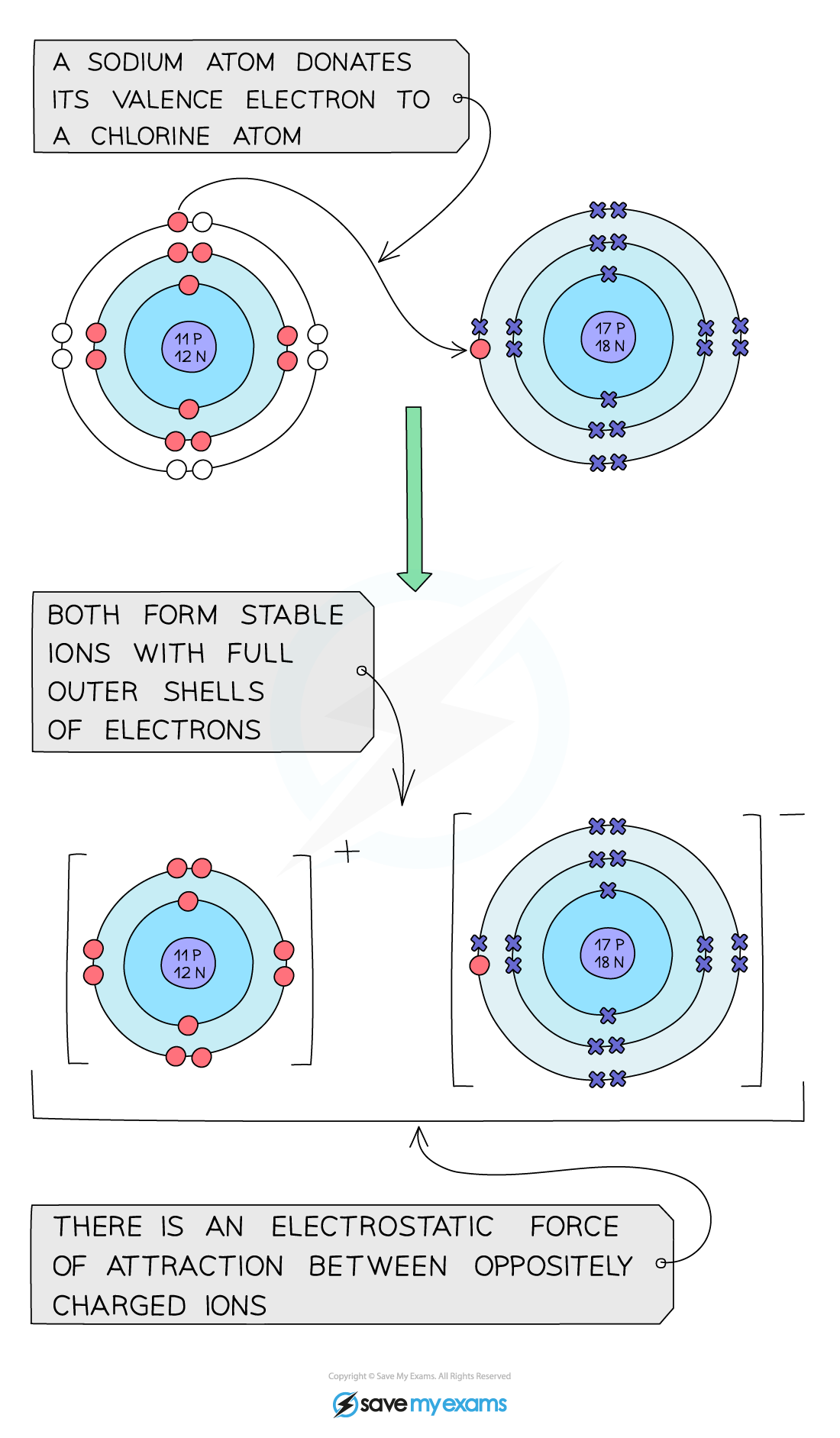
Sodium chloride dot and cross diagram
A dot-and-cross diagram draws the outer electrons of each atom, using a different symbol for each atom involved. When a metal reacts with a non-metal, electrons move across from the metal to the non-metal, and square brackets around each ion carry its charge. Sodium chloride is the standard example: one electron passes from sodium to chlorine.
What you know already
From Ionic Bonding you already know that metal atoms lose their outer electrons and non-metal atoms gain them, forming ions with full outer shells. This note shows how that electron transfer is drawn: dot-and-cross diagrams that make the movement of electrons, and the charges left behind, visible on the page.
Key points of understanding
- In a dot-and-cross diagram each atom's outer electrons get their own symbol, dots for one atom and crosses for the other.
- Sodium is a Group 1 metal, so it loses its single outer electron to reach a full outer shell.
- Chlorine is a Group 7 non-metal, so it gains that electron to complete its own outer shell.
- The transfer produces a 1+ sodium ion and a 1- chloride ion, giving the formula NaCl.
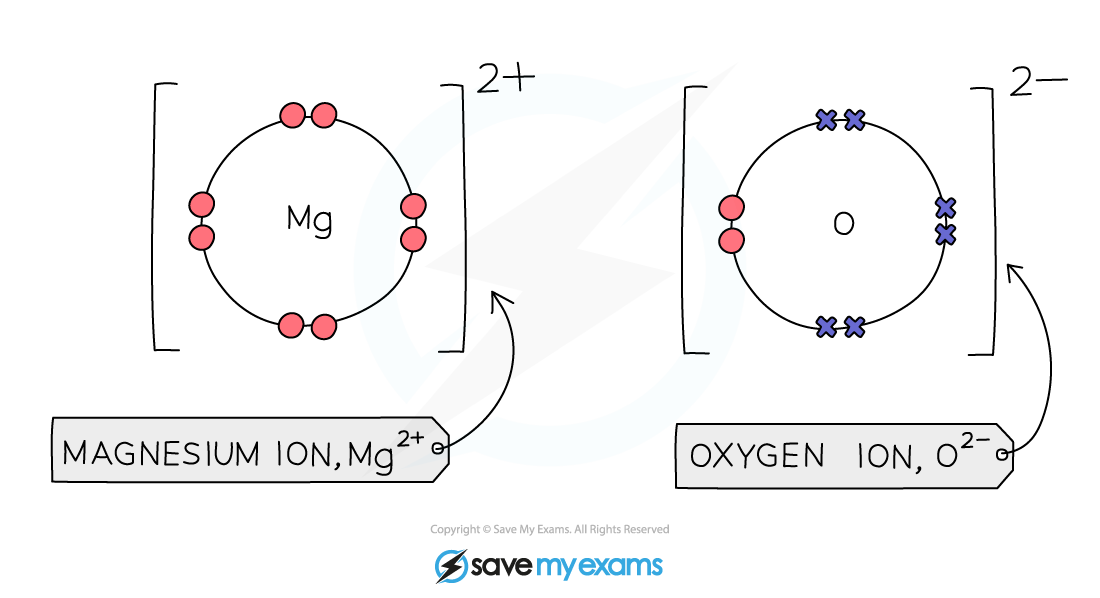
- Large square brackets enclose each ion, with the charge written outside at the top right in superscript.
Choose a confidence level to continue.
Prefer to read it all at once? Show the full lesson as a page
1.Sodium chloride dot and cross diagram
A dot-and-cross diagram draws the outer electrons of each atom, using a different symbol for each atom involved. When a metal reacts with a non-metal, electrons move across from the metal to the non-metal, and square brackets around each ion carry its charge. Sodium chloride is the standard example: one electron passes from sodium to chlorine.
Key points
- In a dot-and-cross diagram each atom's outer electrons get their own symbol, dots for one atom and crosses for the other.
- Sodium is a Group 1 metal, so it loses its single outer electron to reach a full outer shell.
- Chlorine is a Group 7 non-metal, so it gains that electron to complete its own outer shell.
Guided content from the SME authoring corpus — note rn_FCnWFz9MhgsqnZGM, pinned at fa1f302050ba · promoted SyllabAI/syllabai-resources e967e75f1339