The Rough Endoplasmic Reticulum & Golgi (Edexcel IAL Biology)
Formation of Extracellular Enzymes
Spec point —
3.4
-
In cells, many organelles are involved in the production and secretion of proteins
- Organelles are specialised parts of a cell that carry out a particular function
- Some organelles are membrane-bound, meaning that they are surrounded by membrane
-
The organelles involved in protein synthesis include
-
Nucleus
- Transcription of the DNA code occurs here
-
Ribosomes
- Free ribosomes and those on the RER produce proteins in the process of translation
-
Rough endoplasmic reticulum (RER)
-
Golgi apparatus
-
Cell surface membrane
- Proteins formed within the cell are secreted here
-
Rough endoplasmic reticulum
-
Ribosomes on the RER produce proteins that can be secreted out of the cell or become attached to the cell surface membrane
-
Proteins that have been passed into the lumen of the rough endoplasmic reticulum are folded and processed here
- The term lumen refers to the inside space of the RER
-
Note that free ribosomes found within the cytoplasm make proteins that stay within the cytoplasm rather than being moved to another organelle or being exported from the cell
Golgi apparatus
-
Processed proteins from the RER are transported to the Golgi apparatus in vesicles which fuse with the Golgi apparatus, releasing the proteins into the Golgi
- The Golgi apparatus modifies the proteins, preparing them for secretion
-
Proteins that go through the Golgi apparatus are usually
-
Exported, e.g. extracellular enzymes
- The term extracellular refers to 'outside the cell'
-
Put into lysosomes, e.g. hydrolytic enzymes
-
Delivered to other membrane-bound organelles
-
-
The modified proteins then leave the Golgi apparatus in vesicles
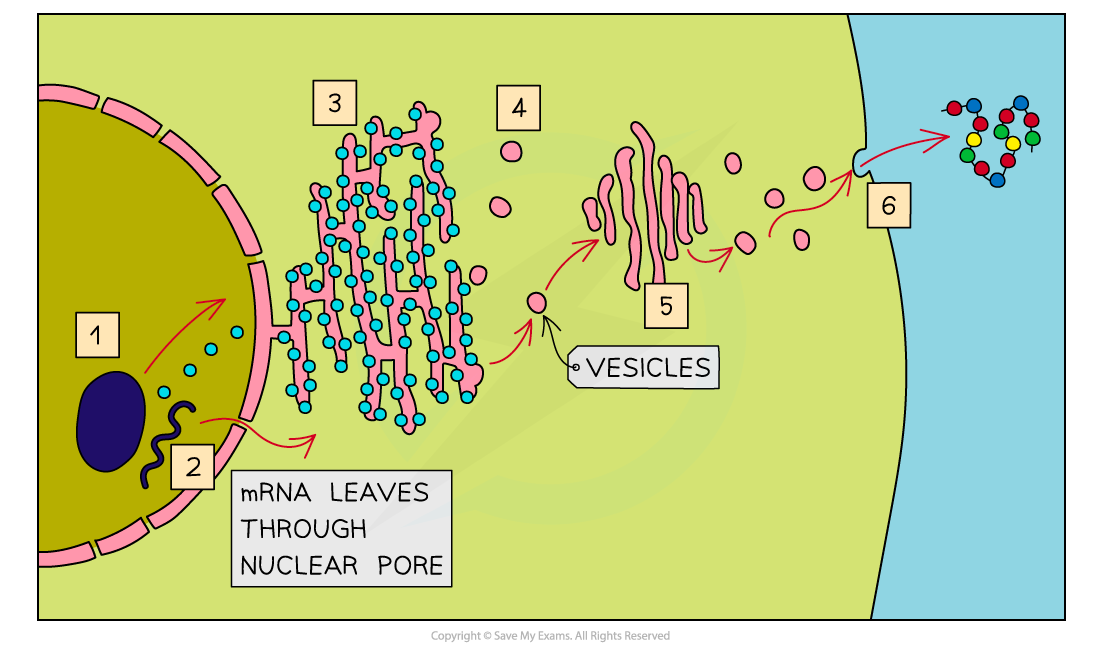
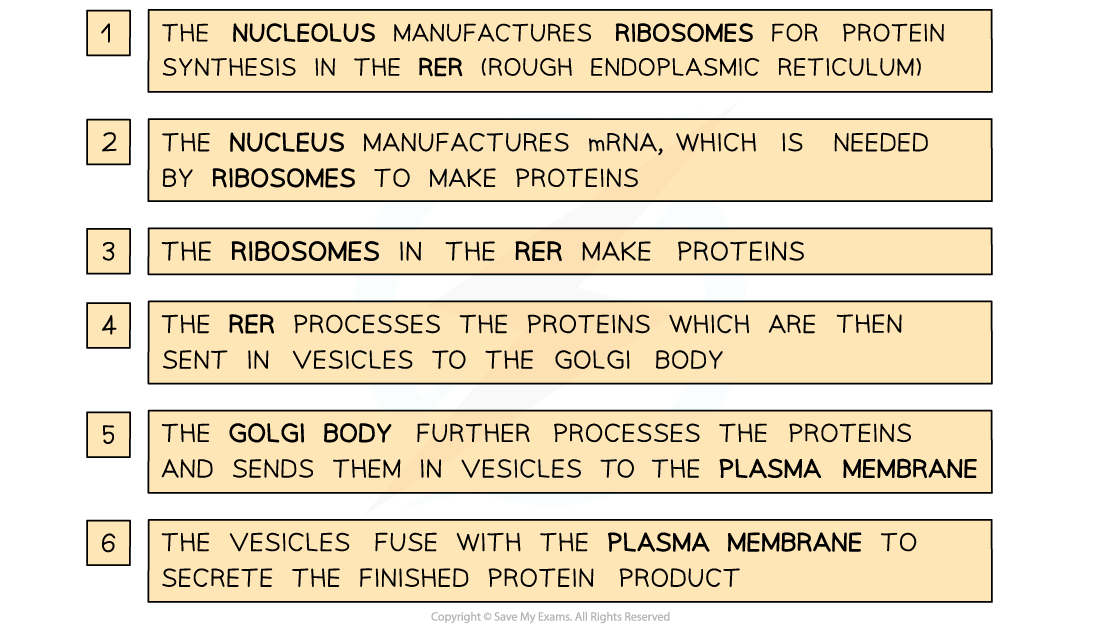
The RER and Golgi apparatus are involved with producing, packaging and transporting proteins in a cell. This process can be used to produce and export extracellular enzymes.
Was this revision note helpful?