Prokaryotic Cells (Edexcel IAL Biology)
Cell Components: Structures
Spec point —
3.5
-
Animal and plant cells are types of eukaryotic cells, whereas bacteria are a type of prokaryote
-
Prokaryotic cells are much smaller than eukaryotic cells
-
They also differ from eukaryotic cells in having
-
A cytoplasm that lacks membrane-bound organelles
-
Ribosomes that are smaller (70 S) than those found in eukaryotic cells (80 S)
-
No nucleus, instead having a single circular bacterial chromosome that is free in the cytoplasm and is not associated with proteins
-
A cell wall that contains the glycoprotein murein
- Murein is sometimes known as peptidoglycan
-
-
In addition, many prokaryotic cells also have the following structures
- Loops of DNA known as plasmids
- Capsules
- Flagella (singular flagellum)
- Pili (singular pilus)
- A cell membrane that contains folds known as mesosomes
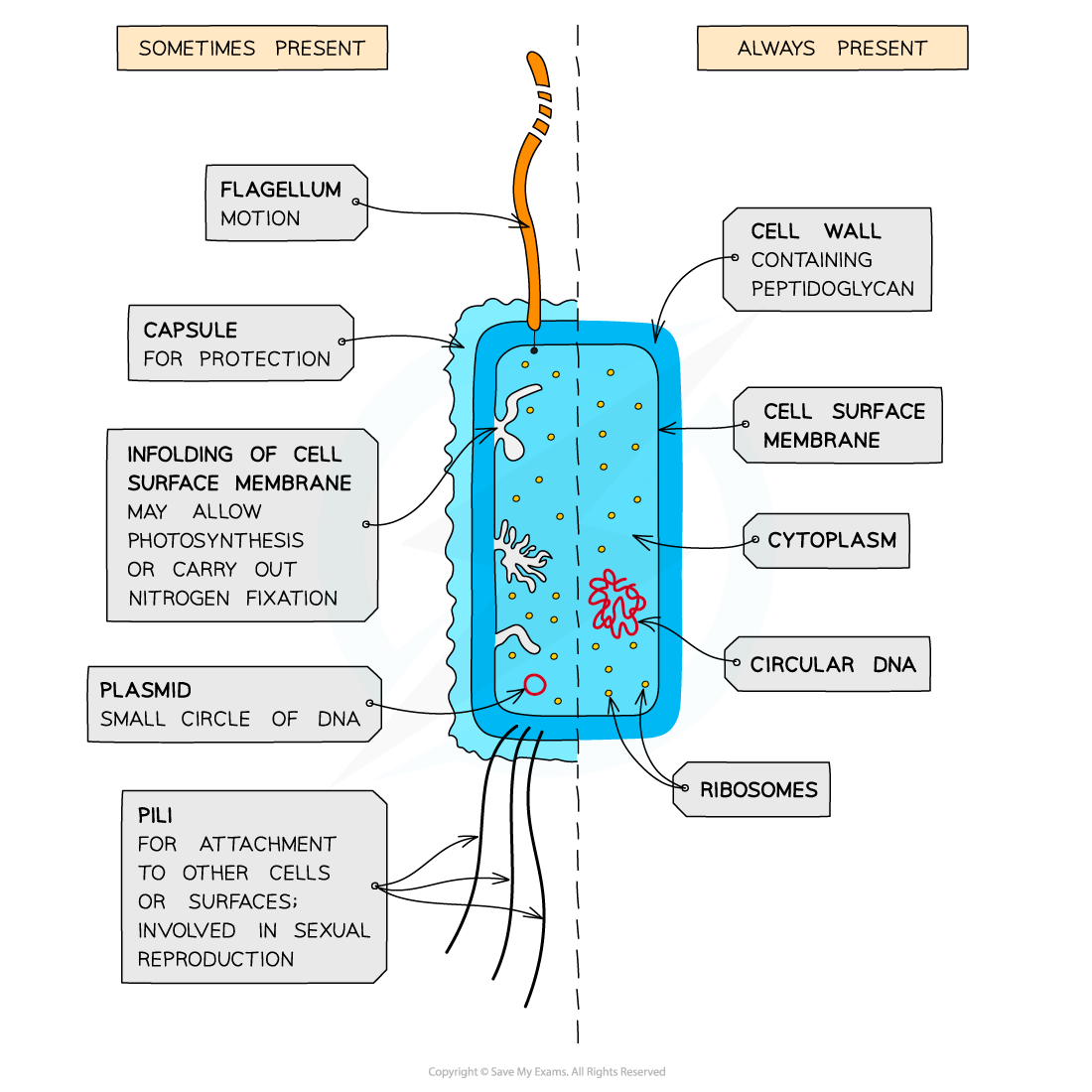
Bacteria are prokaryotic cells
Prokaryotes vs eukaryotes
- There are a number of important structural and physiological differences between prokaryotic and eukaryotic cells
- These differences affect their metabolic processes and how they reproduce
Comparison of Prokaryotic and Eukaryotic Cells Table
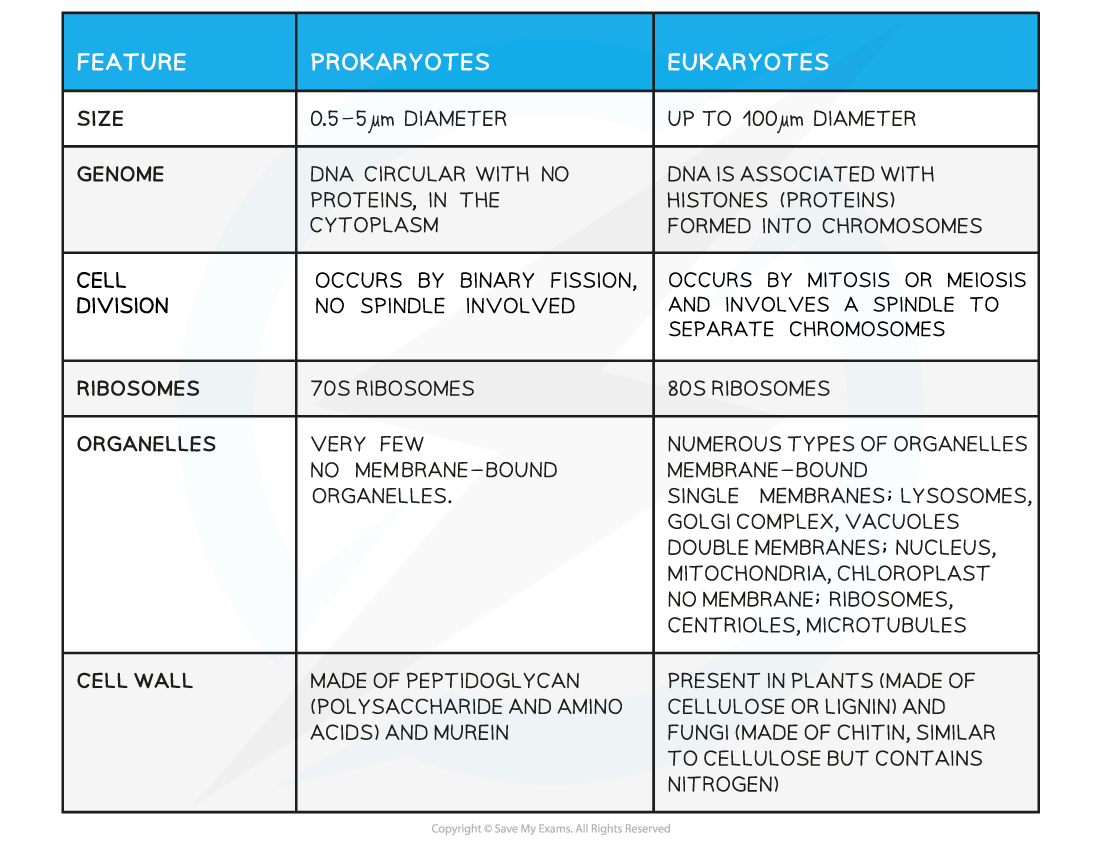
Exam Hint You will need to know all the differences between prokaryotic and eukaryotic cells; remember that not all of the structures mentioned here are present in all prokaryotic cells
Remember that size is not a structural feature so if you are asked for a structural difference between a prokaryotic and eukaryotic cell don't include size in your answer.
Cell Components: Functions
Spec point —
3.5
-
The ultrastructure of prokaryotic cells includes several features that are not found in eukaryotic cells, e.g.
- Plasmids
- Capsule
- Flagella
- Pili
- Mesosomes
- Circular DNA
- Ribosomes
-
Some of these features are found in all prokaryotes, while some are only present in some
Additional Prokaryotic Structures Table
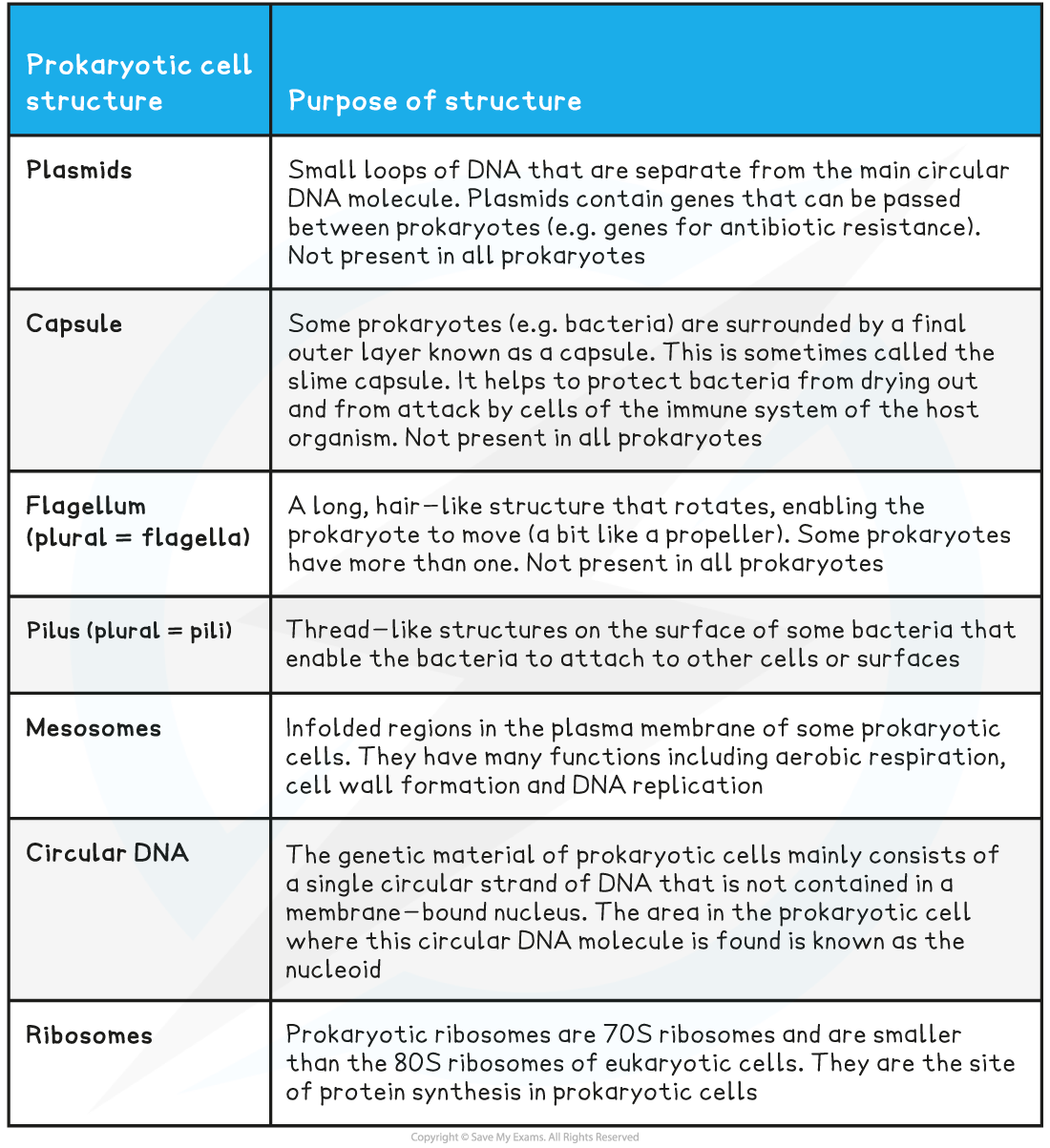
Exam Hint Note that the specification does not include the role of mesosomes in prokaryotic cells.
Was this revision note helpful?