Eukaryotic Cells (Edexcel IAL Biology)
Organelle Structures
Spec point —
3.3
-
Cells can be divided into two broad types; eukaryotic and prokaryotic cells
-
Eukaryotic cells have a more complex ultrastructure than prokaryotic cells
- The term ultrastructure refers to the internal structure of cells
-
Eukaryotic cells are larger than prokaryotic cells
- Eukaryotic cells range in diameter from around 10-100 μm
- Prokaryotic cells range in diameter from around 0.1-5 μm
-
The cytoplasm of eukaryotic cells is divided up into membrane-bound compartments called organelles
-
Animal and plant cells are both types of eukaryotic cells that share key structures such as
- Membrane-bound organelles, including a nucleus
- Larger ribosomes known as 80S ribosomes
-
Key differences between animal and plant cells include
-
Animal cells contain centrioles and some have microvilli while plant cells do not
- Microvilli are folded regions of the cell surface membrane that increase cell surface area for absorption, e.g. in the small intestine
-
Plant cells have a cellulose cell wall, large permanent vacuoles, and chloroplasts while animal cells do not
-
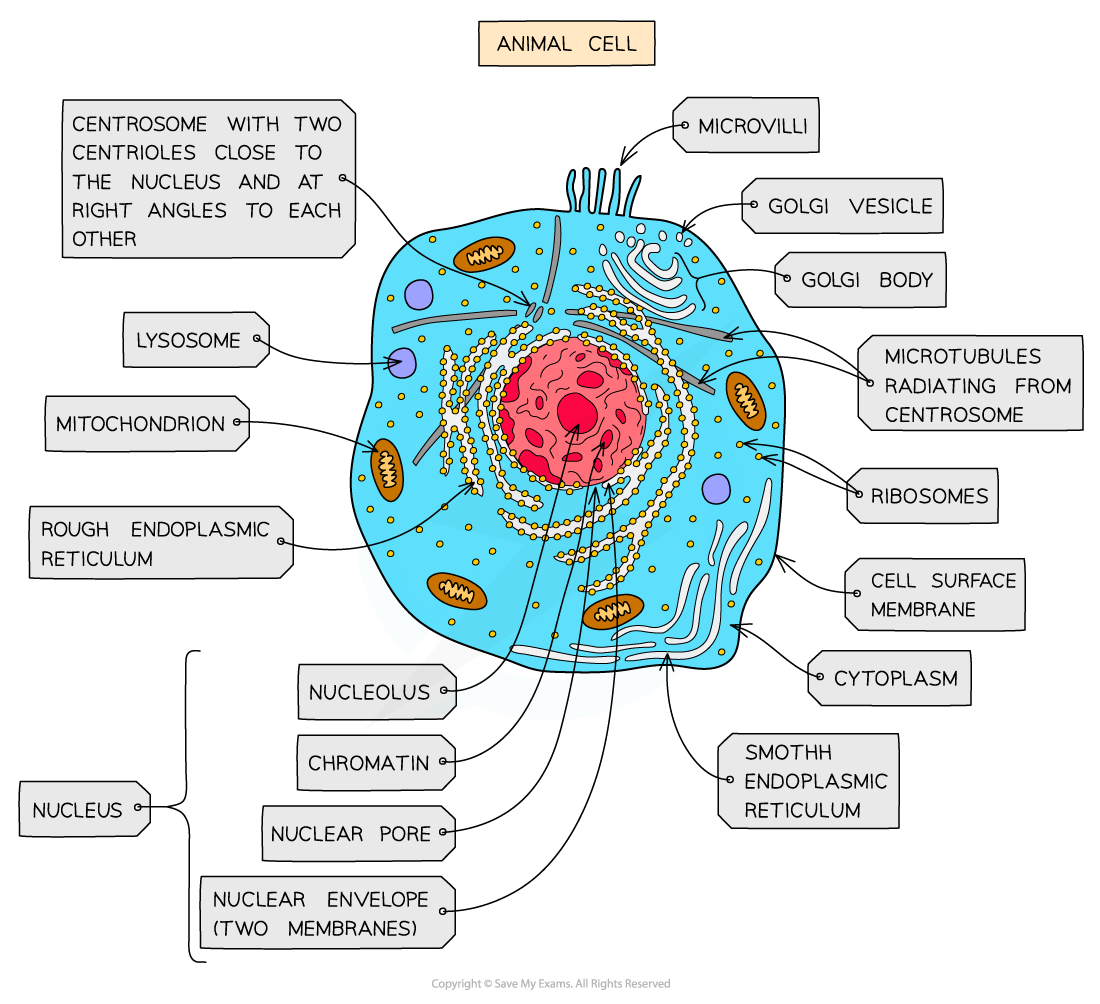
Animal cells are a type of eukaryotic cell
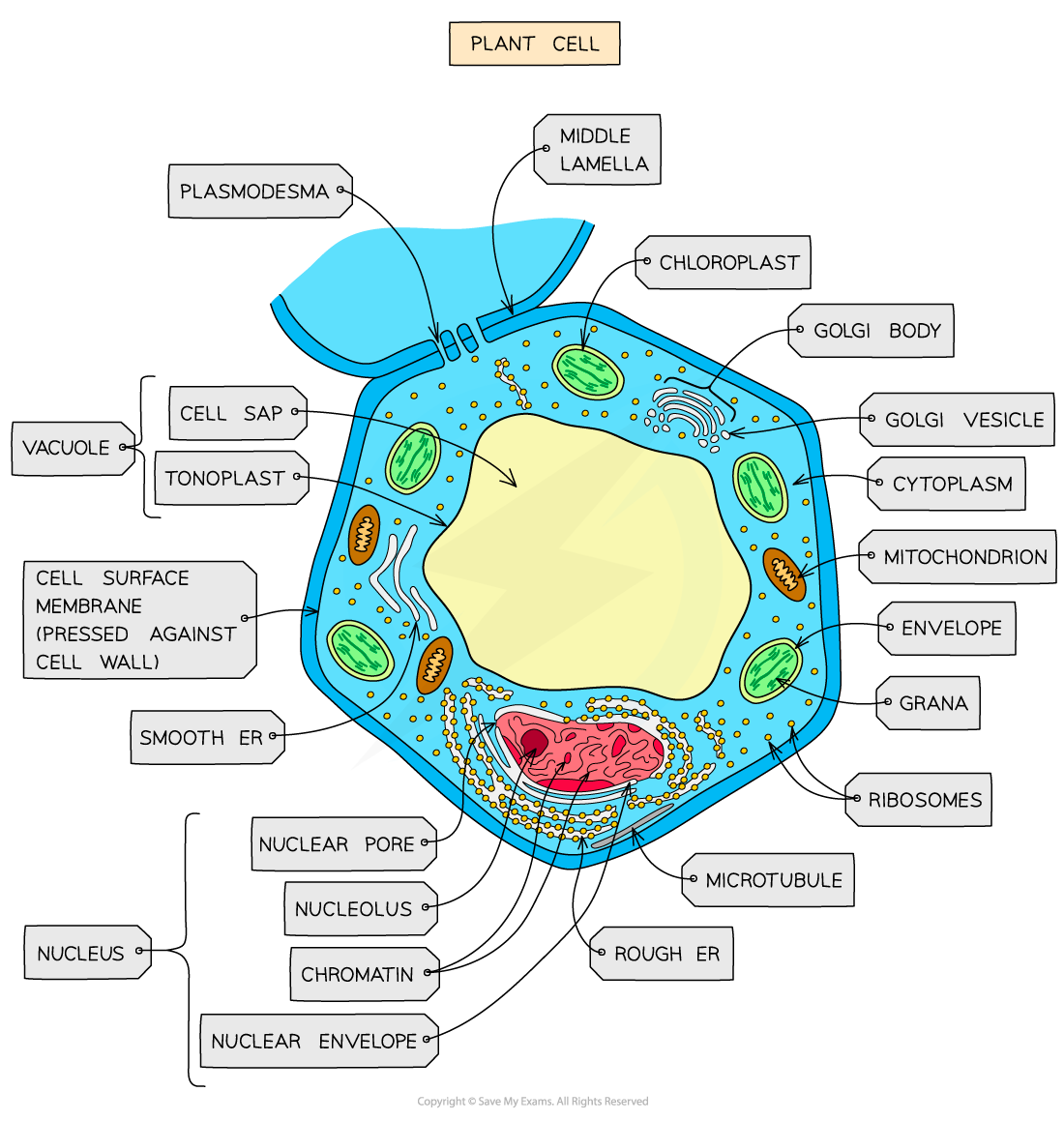
Plant cells are eukaryotic cells that have a cellulose cell wall, permanent vacuole, and chroroplasts
Organelle Functions
Spec point —
3.3
Cell surface membrane
-
All cells are surrounded by a cell surface membrane which controls the exchange of materials between the internal cell environment and the external environment
- The membrane is described as being partially permeable, meaning that some substances can pass through the membrane while others cannot
-
Cell membrane is formed from a *phospholipid **bilayer **spanning a diameter of around 10 nm
-
Many organelles inside cells are surrounded by cell membrane, so when referring to the outer membrane of a cell it is always a good idea to refer to it as the cell** surface** membrane
- The cell surface membrane can also be referred to as the plasma membrane
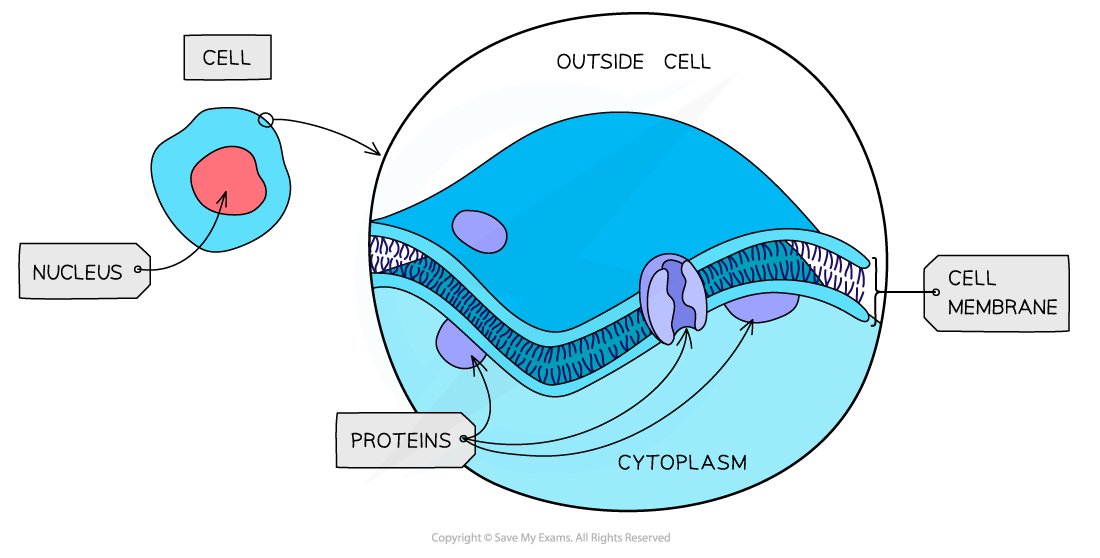
The cell surface membrane surrounds the cell, separating it from its external environment
Nucleus
-
Present in all eukaryotic cells, the nucleus is relatively large and separated from the cytoplasm by a double membrane called the nuclear envelope, which has many pores
- Nuclear pores are important channels for allowing mRNA and ribosomes to travel out of the nucleus, as well as allowing enzymes, e.g. DNA polymerases, and signalling molecules to travel in
-
The nucleus contains chromatin, the material from which chromosomes are made
- Chromosomes are made of sections of linear DNA tightly wound around proteins called histones
-
Usually, at least one or more darkly stained regions of the nucleus can be observed under a microscope; these regions are individually termed nucleolus(plural nucleoli) and are the sites of ribosome production
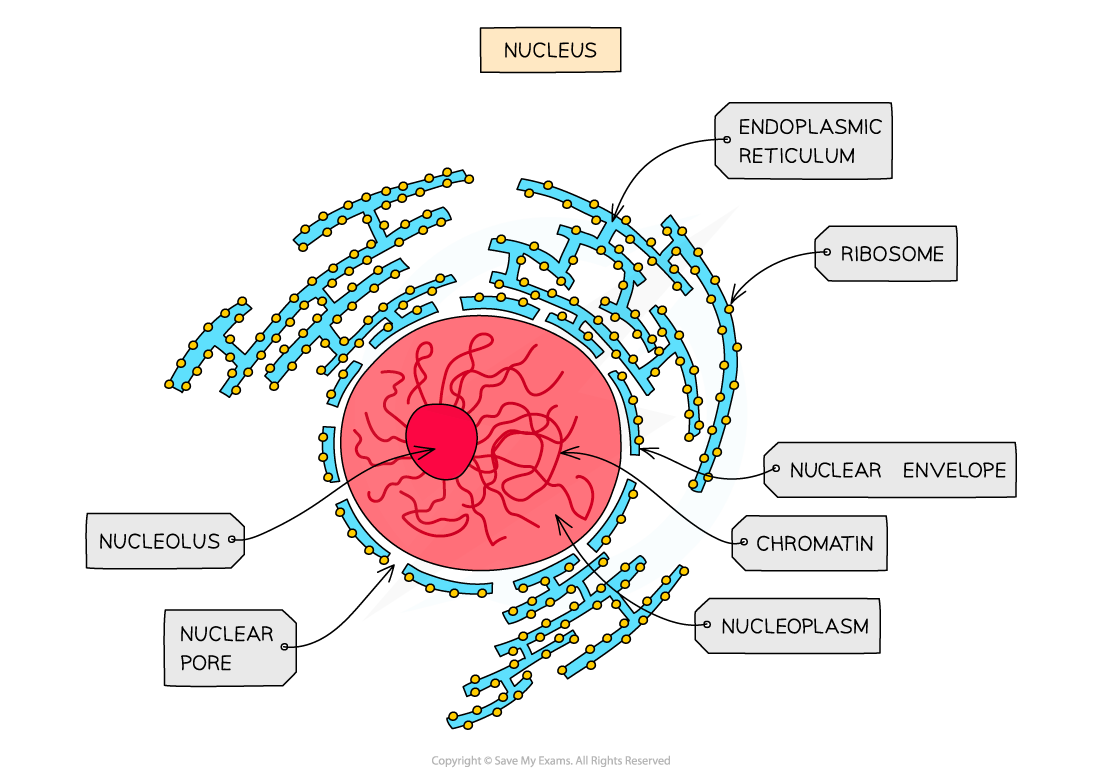
The nucleus of a eukaryotic cell is surrounded by the nuclear envelope and contains chromatin as well as a region called the nucleolus. Note that the nucleus is shown here surrounded by another organelle; the endoplasmic reticulum
Mitochondria
-
The site of aerobic respiration within eukaryotic cells, mitochondria (singular mitochondrion) are just visible with a light microscope
-
Mitochondria are surrounded by a double-membrane with the inner membrane folded to form structures called cristae
-
The matrix of mitochondria contains enzymes needed for aerobic respiration, producing ATP
-
Small circular pieces of DNA, known as mitochondrial DNA, and ribosomes are also found in the matrix
- These are needed for replication of mitochondria before cell division
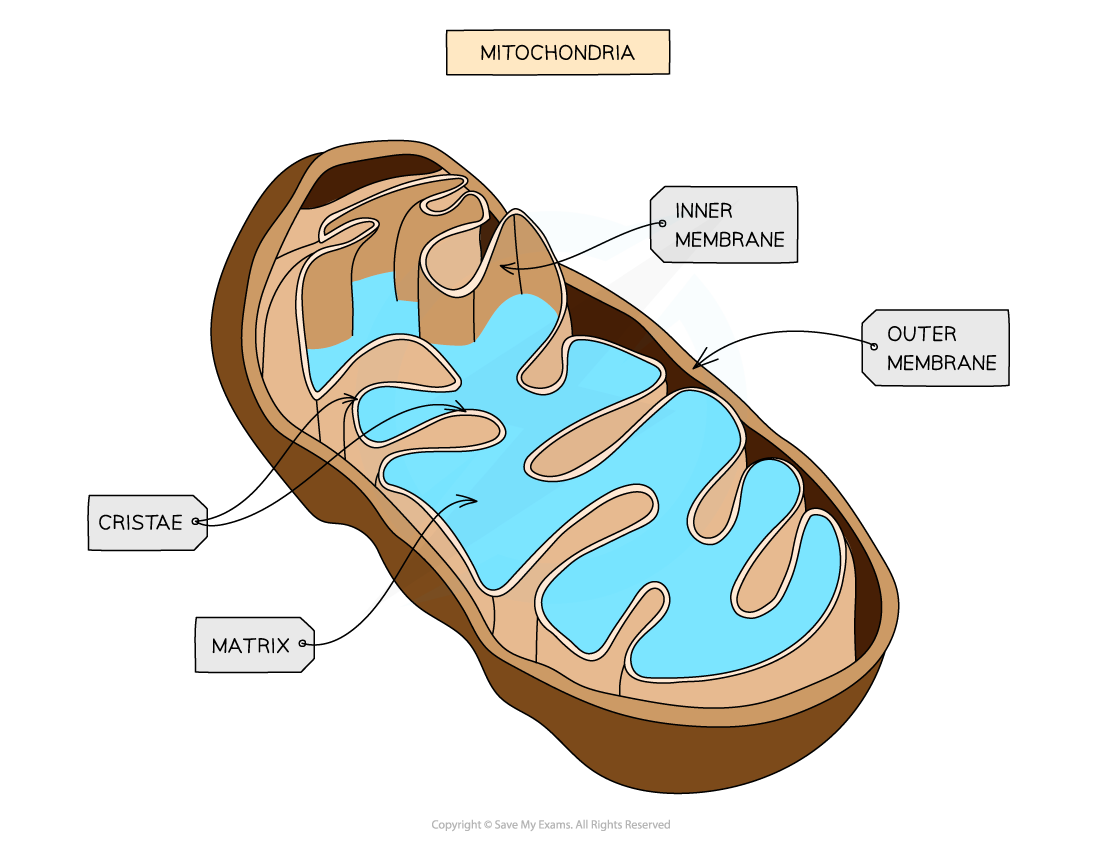
Mitochondria are the site of aerobic respiration in eukaryotic cells
Ribosomes
- Ribosomes can be found as free organelles in the cytoplasm of all cells or as part of the rough endoplasmic reticulum in eukaryotic cells
- They are not surrounded by a membrane
- Each ribosome is a complex of ribosomal RNA (rRNA) and proteins
- 80s ribosomes are found in eukaryotic cells
- 70s ribosomes are found in prokaryotes, mitochondria, and chloroplasts
- Ribosomes are the site of translation
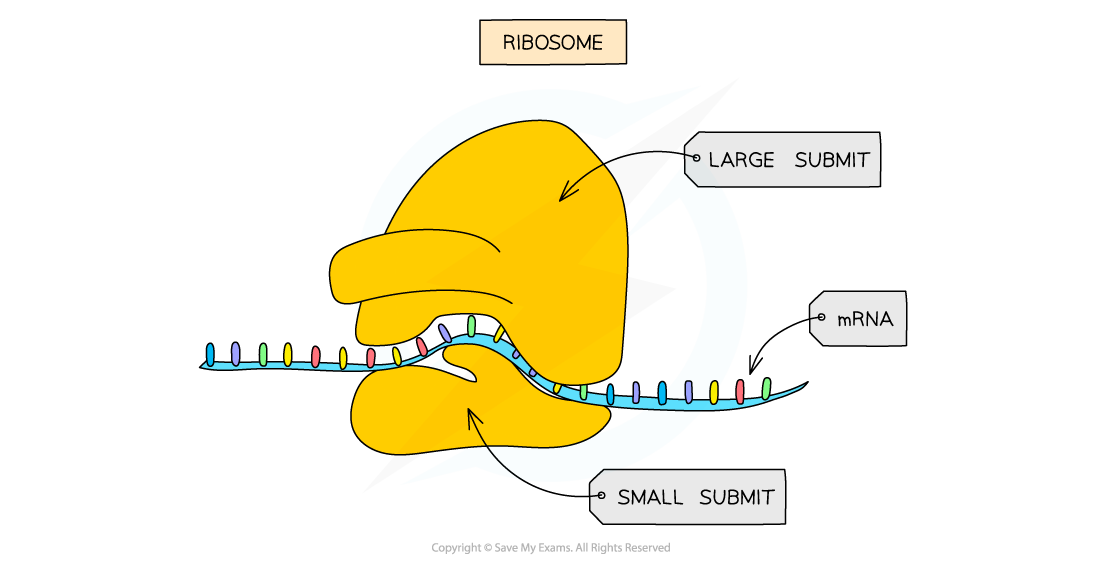
Ribosomes are formed in the nucleolus and are composed of almost equal amounts of RNA and protein
Endoplasmic reticulum
-
There are two types of endoplasmic reticulum; rough and smooth
-
Rough Endoplasmic Reticulum (RER)
- RER is formed from folds of membrane continuous with the nuclear envelope
- The surface of RER is covered in ribosomes
- The role of the RER is to process proteins made on the ribosomes
-
Smooth Endoplasmic Reticulum (SER)
- SER is also formed from folds of membrane but its function is distinct from the RER, being involved in the production, processing and storage of lipids, carbohydrates and steroids
- SER does not have ribosomes on its surface
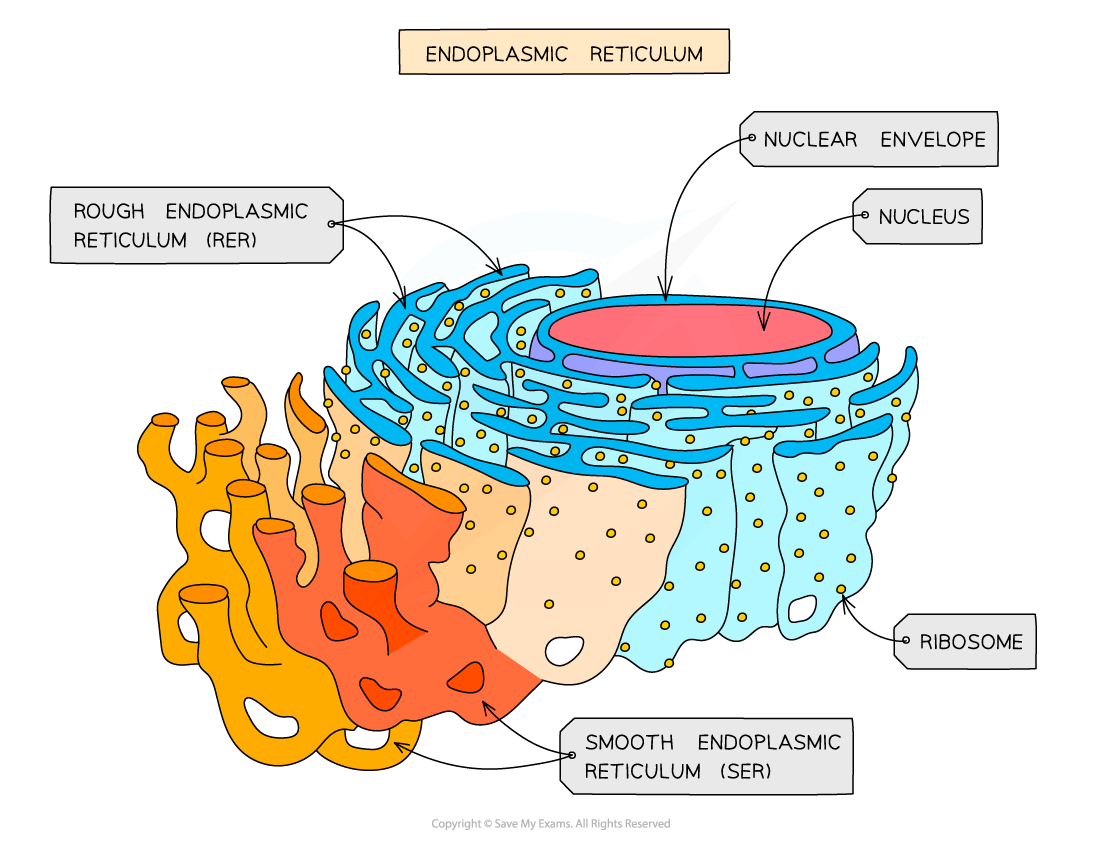
The RER and SER are visible under the electron microscope; the presence or absence of ribosomes helps to distinguish between them
Golgi apparatus
-
The Golgi apparatus consists of flattened sacs of membrane similar in appearance to the smooth endoplasmic reticulum
- The Golgi apparatus is sometimes known as the Golgi body
- The Golgi can be distinguished from the SER by its regular, stacked appearance; it can be described as looking like a wifi symbol!
-
The role of the Golgi apparatus is to modify proteins and lipids before packaging them into Golgi vesicles
-
The vesicles then transport the proteins and lipids to their required destination
-
Proteins that go through the Golgi apparatus can be
- Exported from the cell, e.g. hormones such as insulin
- Put into lysosomes, e.g. hydrolytic enzymes
- Delivered to other membrane-bound organelles
-
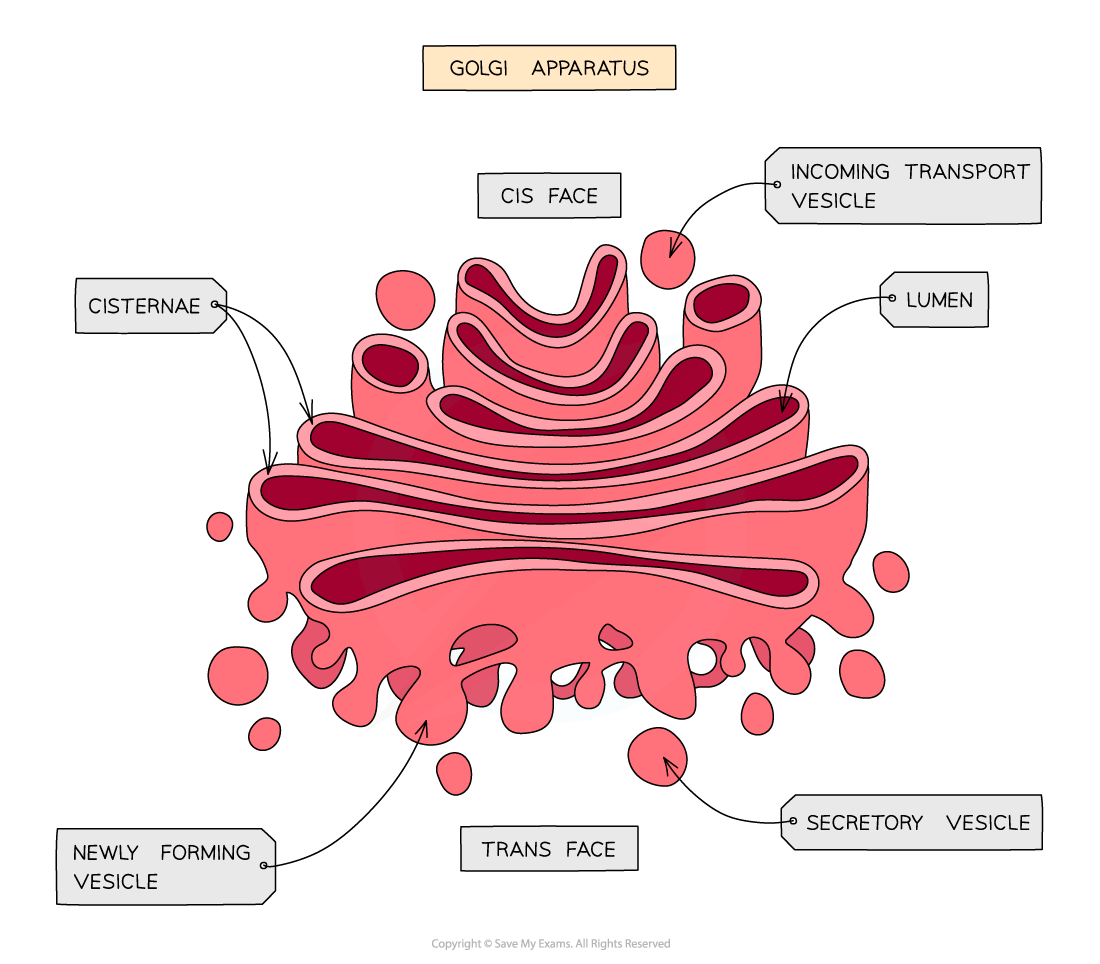
The Golgi apparatus; the cis face lies near the rough endoplasmic reticulum, while the trans face lies near the cell membrane
Lysosomes
-
Lysosomes are specialist forms of vesicle which contain *hydrolytic enzymes
-
The role of lysosomes is to break down waste materials such as worn-out organelles,
- Lysosomes are used extensively by cells of the immune system and in programmed cell death, known as apoptosis
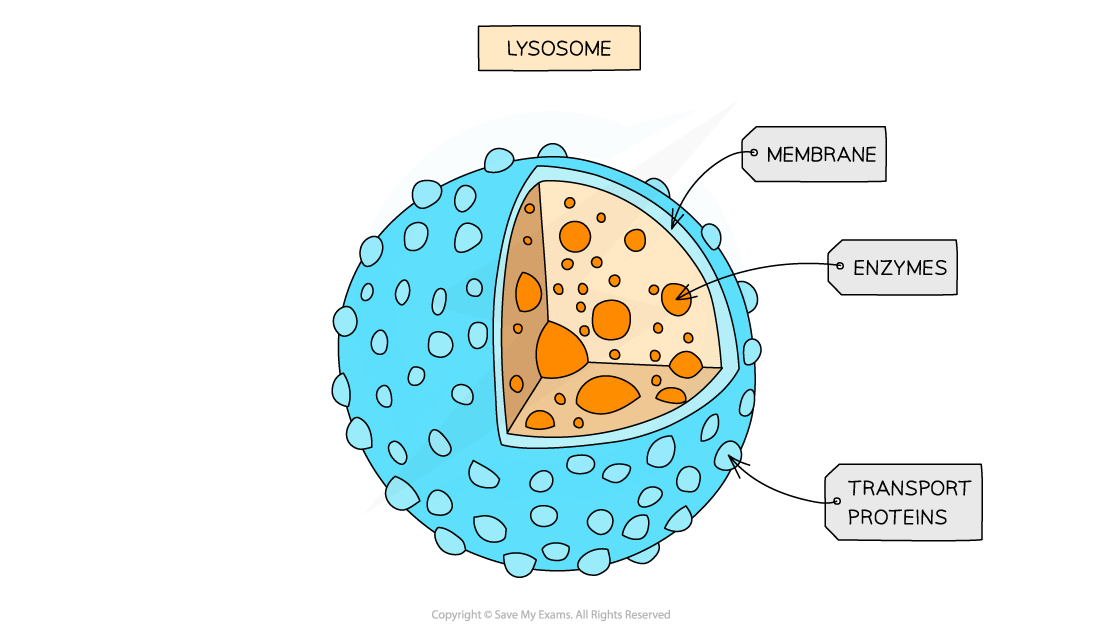
Lysosomes contain digestive enzymes
Centrioles
-
Centrioles are made of hollow fibres knows as microtubules
- Microtubules are filaments of protein that can be used to move substances around inside a cell, as well as to support the shape of a cell from the inside
-
Two centrioles at right angles to each other form a centrosome which organises the spindle fibres during cell division
-
Centrioles are not found in plants and fungi
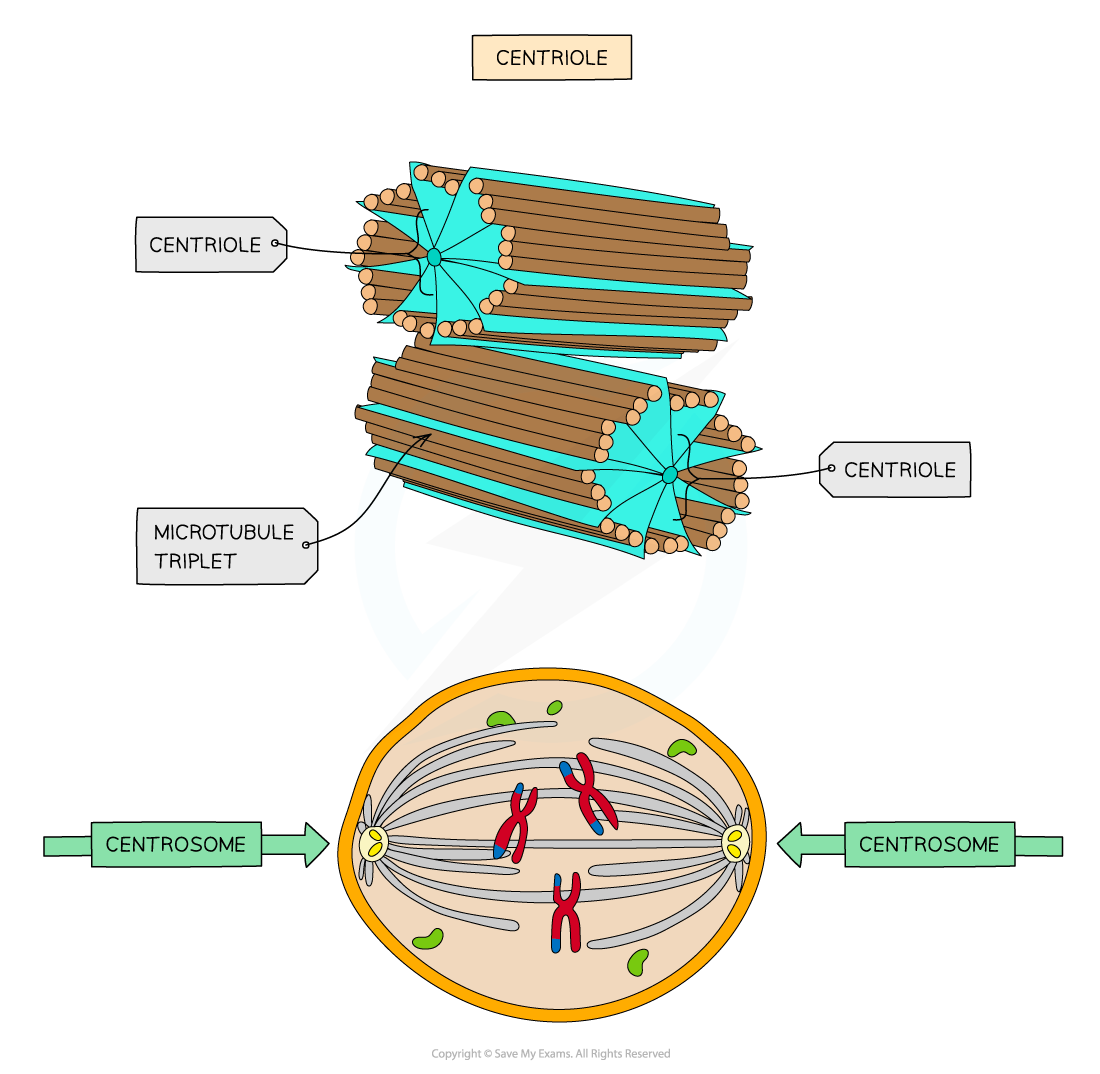
Centrioles are structures formed from microtubules; they are involved with the process of nuclear division in animal cells
Was this revision note helpful?