Real & Virtual Images (Cambridge International IGCSE Physics)
Real images & virtual images
Spec point —
3.2.7· Describe the characteristics of an image using the terms enlarged/same size/diminished, upright/inverted and real/virtual
-
Images produced by lenses can be one of two types:
- a real image
- a virtual image
-
Images can be described compared to their object as:
- enlarged/same size/diminished
- upright/inverted
- real/virtual
Real images
- A real image is defined as:
An image that is formed when the light rays from an object converge and meet each other and can be projected onto a screen
-
A real image is one produced by the convergence of light towards a focus
-
Real images are always inverted
-
Real images can be projected onto pieces of paper or screens
- An example of a real image is the image formed on a cinema screen
A real image
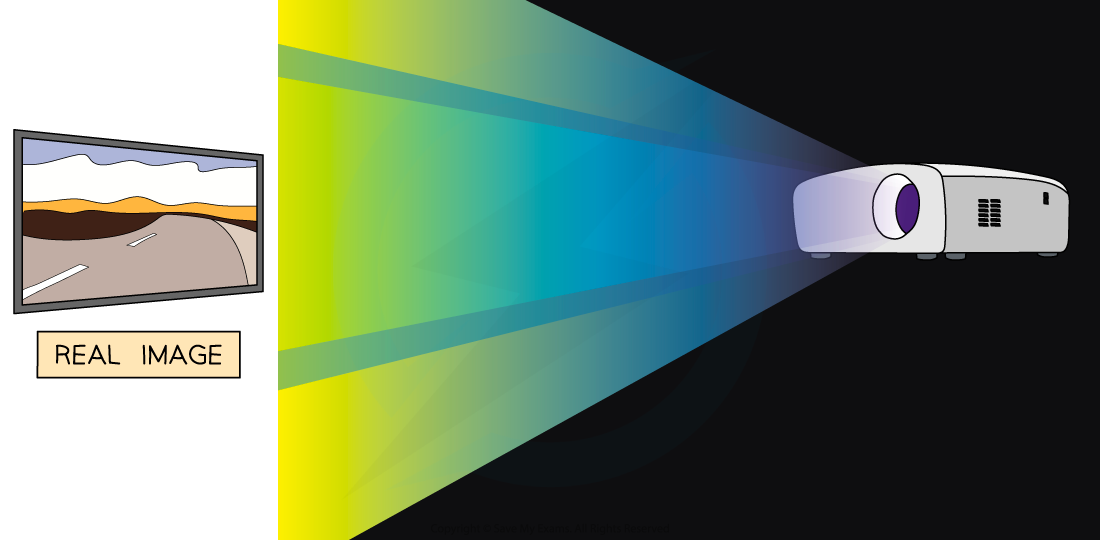
A real image can be projected onto a screen
Virtual images
- A virtual image is defined as:
An image that is formed when the light rays from an object do not meet but appear to meet behind the lens and cannot be projected onto a screen
-
A virtual image is formed by the divergence of light away from a point
-
Virtual images are always upright
-
Virtual images cannot be projected onto a piece of paper or a screen
- An example of a virtual image is a person's reflection in a mirror
A virtual image
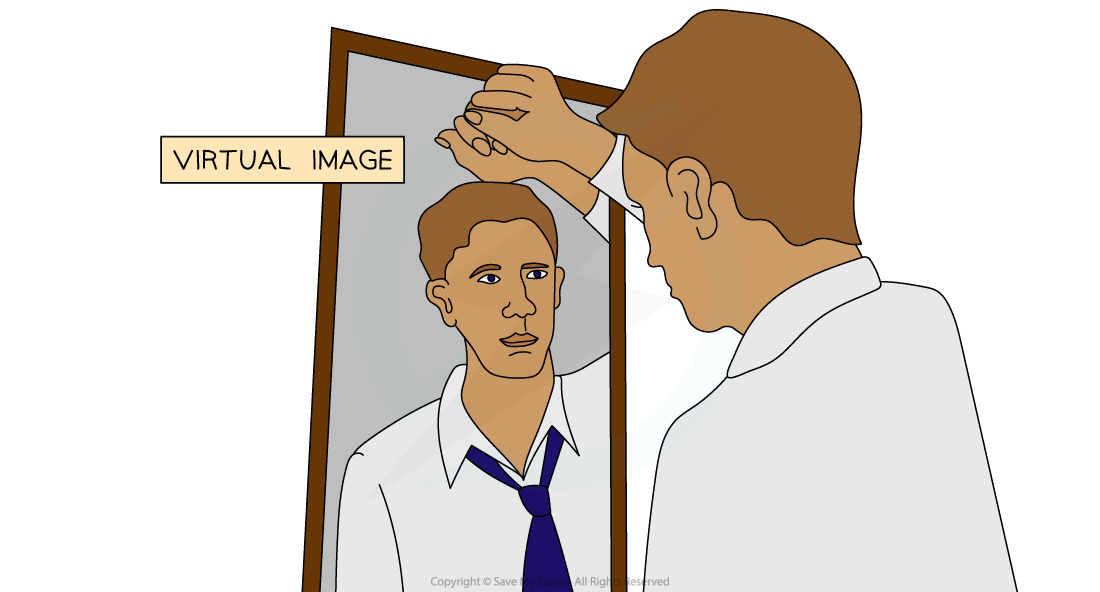
A reflection in a mirror is an example of a virtual image
Was this revision note helpful?
Build on this topic