Correcting Sight (Cambridge International IGCSE Physics)
Spec point —
3.2.8· Describe the use of converging and diverging lenses to correct long-sightedness and short- sightedness
Correcting sight
Extended Tier Only
-
Converging and diverging lenses are commonly used in glasses and contact lenses to correct defects of sight
- Converging lenses can be used to correct long-sighted vision
- Diverging lenses can be used to correct short-sighted vision
Use of lenses to correct long-sightedness
-
Long-sighted people have eyes that are less curved than normal or the eyeball is too short
- This means they cannot see things that are close and can only clearly see things that are far away
Ray diagram to show long-sightedness
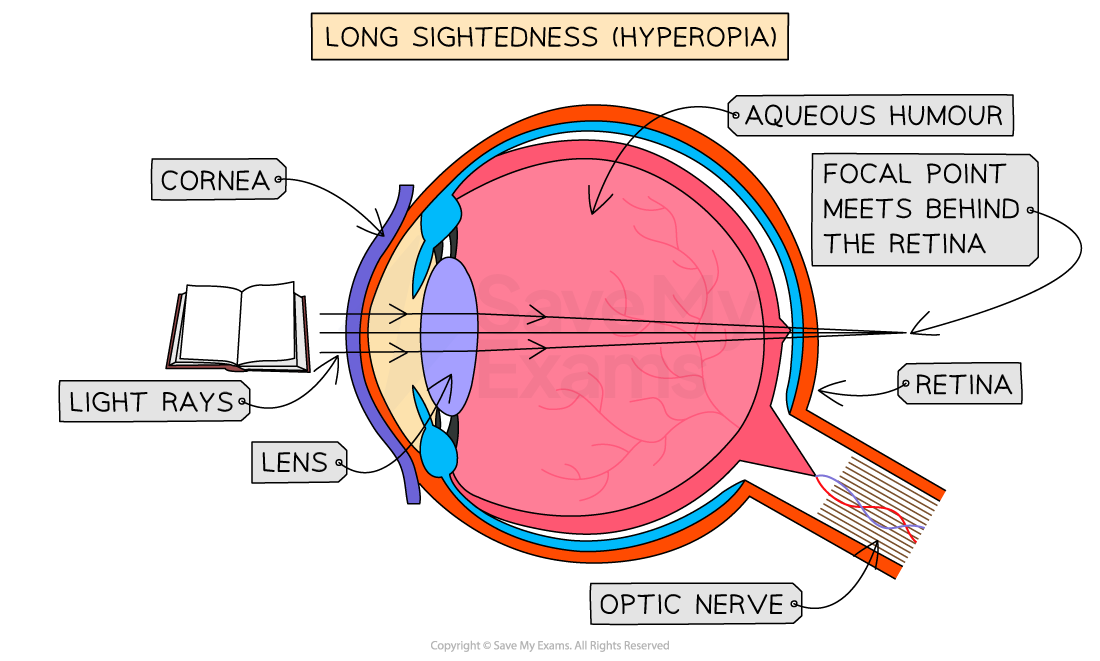
An eye that is long-sighted has a narrower lens with a smaller focussing power so the light rays meet and form an image behind the retina and not on it
-
The eye refracts the light rays and they are brought to a focus beyond the retina
- In other words, the focus point is behind the retina at the back of the eye
-
This can be corrected by using a convex or converging lens
The effect of a converging lens on a long-sighted eye
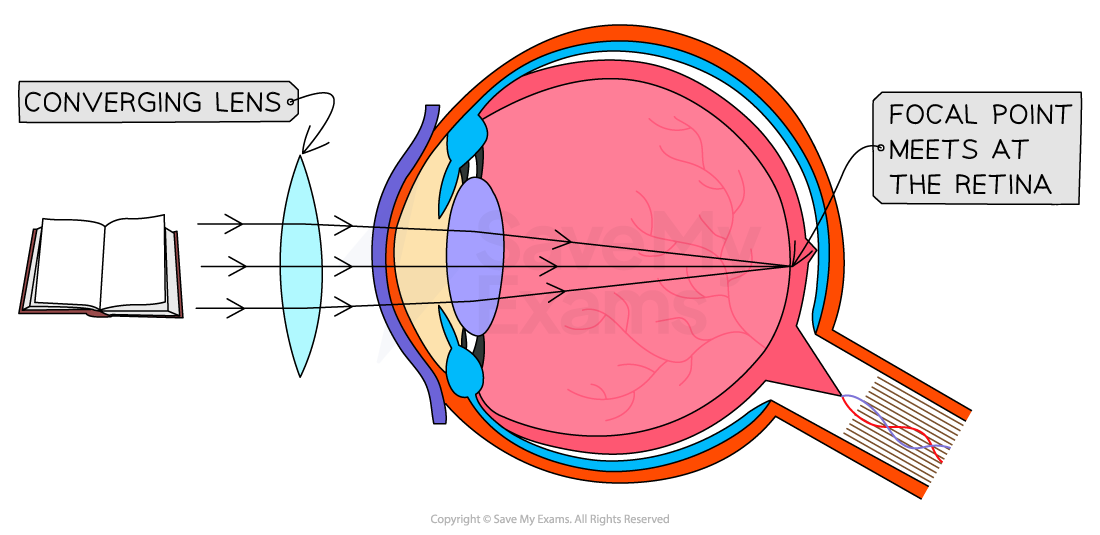
The converging lens causes the rays to converge before they reach the eye, so the image is formed on the retina and not behind it
Use of lenses to correct short-sightedness
-
People who are short-sighted have eyes that are more curved than normal or have an eyeball that is too long
- This means they cannot see things that are far away, and only see things that are close to them
Ray diagram of short-sightedness
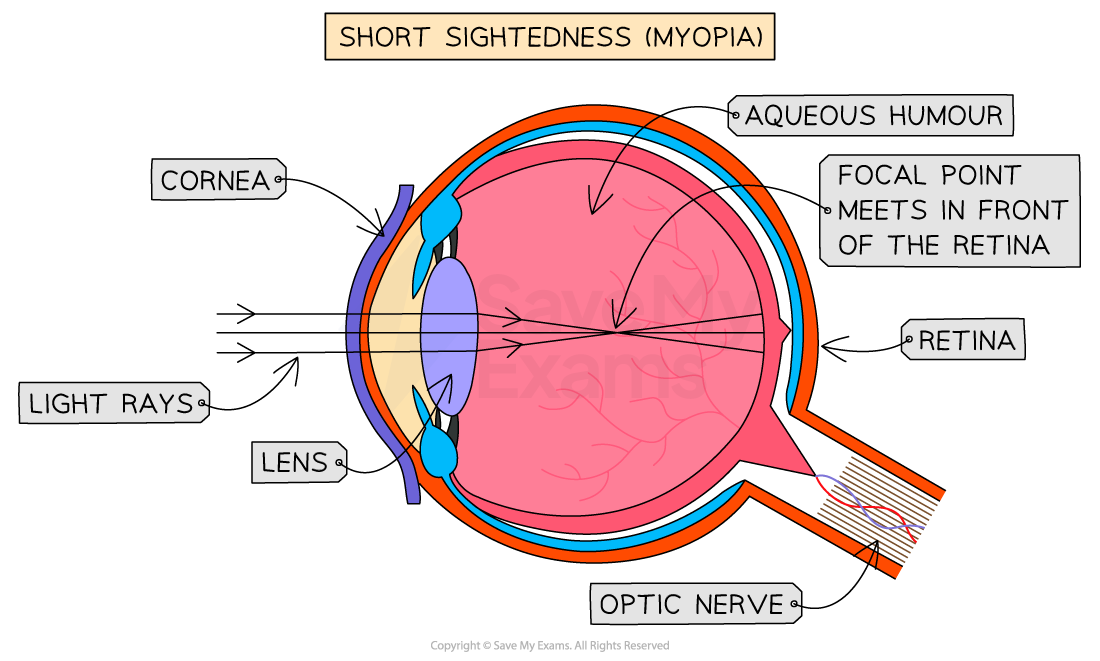
An eye that is short-sighted has a wider lens with a larger focussing power so the light rays meet and form an image in front of the retina and not on it
-
This is because the eye refracts the light and brings it to a focus before it reaches the retina
- In other words, the focus point is in front of the retina at the back of the eye
-
This can be corrected by using a concave or a diverging lens
The effect of a diverging lens on a short-sighted eye
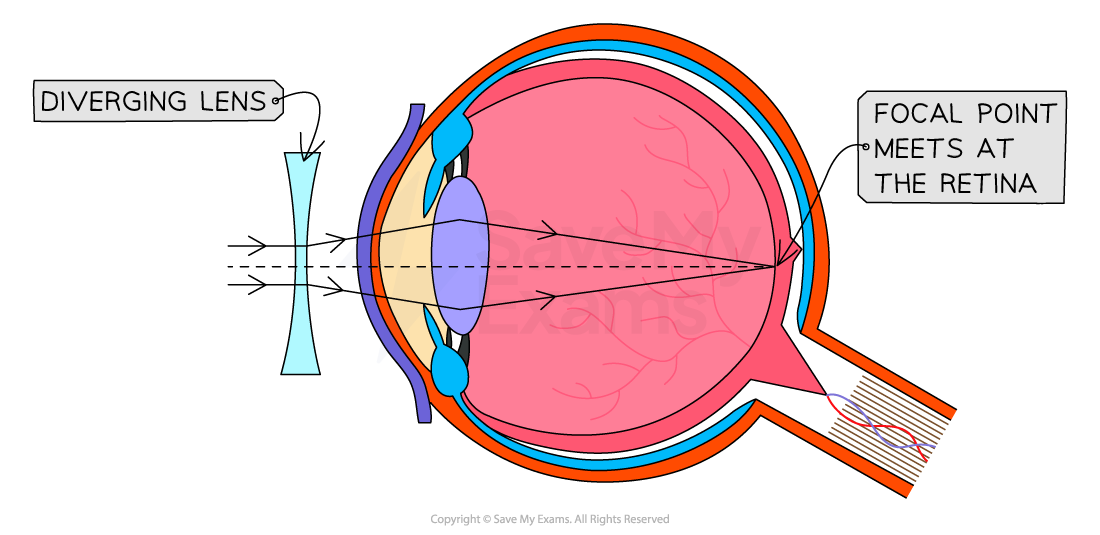
The diverging lens causes the rays to diverge before they reach the eye, so the image is formed on the retina and not in front of it
Was this revision note helpful?
Build on this topic