Energy from the Sun (Cambridge International IGCSE Physics)
The Sun
Spec point —
1.8.1· • Know that radiation from the Sun is the main source of energy for all our energy resources except geothermal, nuclear and tidal
Extended Tier Only
-
The Sun transfers energy to Earth by electromagnetic radiation
-
Most of our energy resources on Earth come indirectly from the Sun
- The Sun heats up the atmosphere, creating wind and producing waves
- Water evaporated by the Sun falls as rain, filling up reservoirs
- Plants grown using sunlight form the basis for fuels – both biofuels and fossil fuels
-
Some energy resources, however, do not come from the Sun
-
These include:
- Geothermal– this comes from thermal energy produced in the Earth’s core
- Nuclear– this comes from elements which make up a small proportion of the Earth’s crust
- Tidal– this comes (mainly) from the gravitational attraction of the Moon
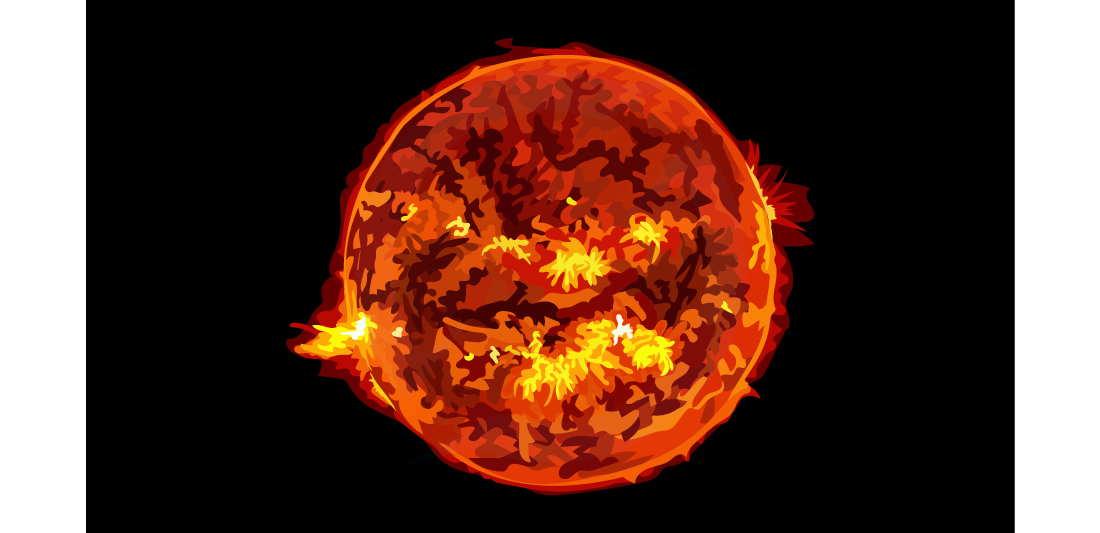
Energy from the Sun is the source of the energy stored in many of Earth's energy resources
Solar cells
Spec point —
1.8.1· Describe how useful energy may be obtained, or electrical power generated, from:
- light from the Sun to generate electrical power (solar cells) Describe advantages and disadvantages in terms of renewability, availability, reliability, scale and environmental impact:
Solar cells
-
The energy from the Sun that falls on the Earth is transferred by radiation
- Mostly visible light and infrared radiation
-
The amount of energy transferred from the Sun to the Earth each hour is equal to the energy use of the world for one year!
-
Therefore, scientists are working hard to find methods of harnessing this energy
- Solar energy has a low energy density, which means large collecting devices are required
- Collecting solar energy has been expensive (due to the equipment required) and inefficient
- Improved technology and large-scale manufacturing have made solar cells much cheaper and more efficient than they used to be
-
Solar cells transfer energy from sunlight and produce a current, therefore generating electricity
- Solar cells, sometimes called photovoltaic cells, are made of semiconducting materials
- A number of cells connected together can supply electricity to homes, small-scale businesses, communication devices and satellites
- Energy generated from solar cells can be stored in batteries for later use
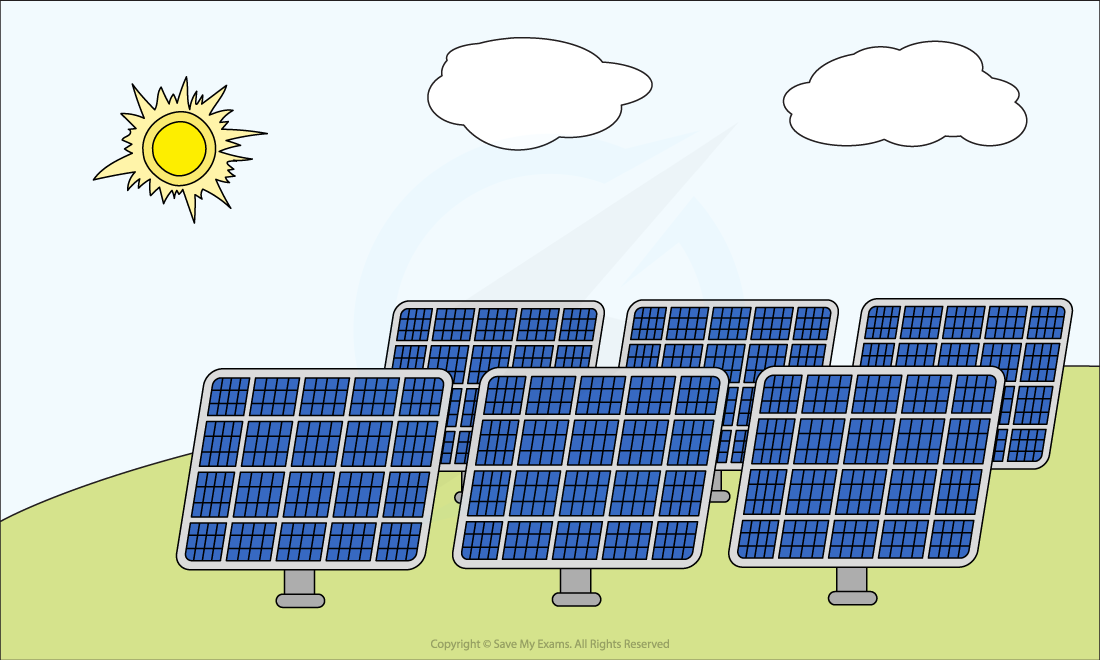
Solar cells use energy from sunlight to produce electricity
Advantages of solar cells
- Solar energy is a renewable resource since it relies on light from the Sun which will not run out
A renewable resource is one which can be replenished at the same rate as it is used
-
Solar farms do not emit carbon dioxide or other greenhouse gases while operating, so they do not contribute to global warming
-
Solar energy can be generated in remote places that are not connected to an electricity grid
- For example, to power solar street signs in rural areas
-
Solar farms have low running costs because there is no fuel to buy
Disadvantages of solar cells
-
Solar cells provide an intermittent or unreliable supply of electricity because they depend entirely on the availability of sunlight
- They cannot generate electrical power at night, and their power output is heavily dependent on weather conditions
-
Solar farms need to be large-scale and contain vast numbers of solar cells to produce large amounts of electricity
-
Each solar cell generally has a lower power output than a standard mains electrical supply
Solar panels
Spec point —
1.8.1· Describe how useful energy may be obtained, or electrical power generated, from:
- infrared and other electromagnetic waves from the Sun to heat water (solar panels) and be the source of wind energy including references to a boiler, turbine and generator where they are used Describe advantages and disadvantages in terms of renewability, availability, reliability, scale and environmental impact
Solar panels
-
Useful energy may be obtained from infrared and other electromagnetic waves from the Sun using solar panels
-
Solar panels transfer energy from sunlight to the thermal store of the solar panels, which is used to heat water in the pipes
- Solar panels can be used to warm domestic water supplies
- This can reduce the cost of producing hot water since it is heated partially by the solar panels
-
Solar furnaces consist of large curved mirrors that focus the Sun's rays onto a small area
- These can be used to boil water, generating enough steam to turn turbines and generate electricity in a power station
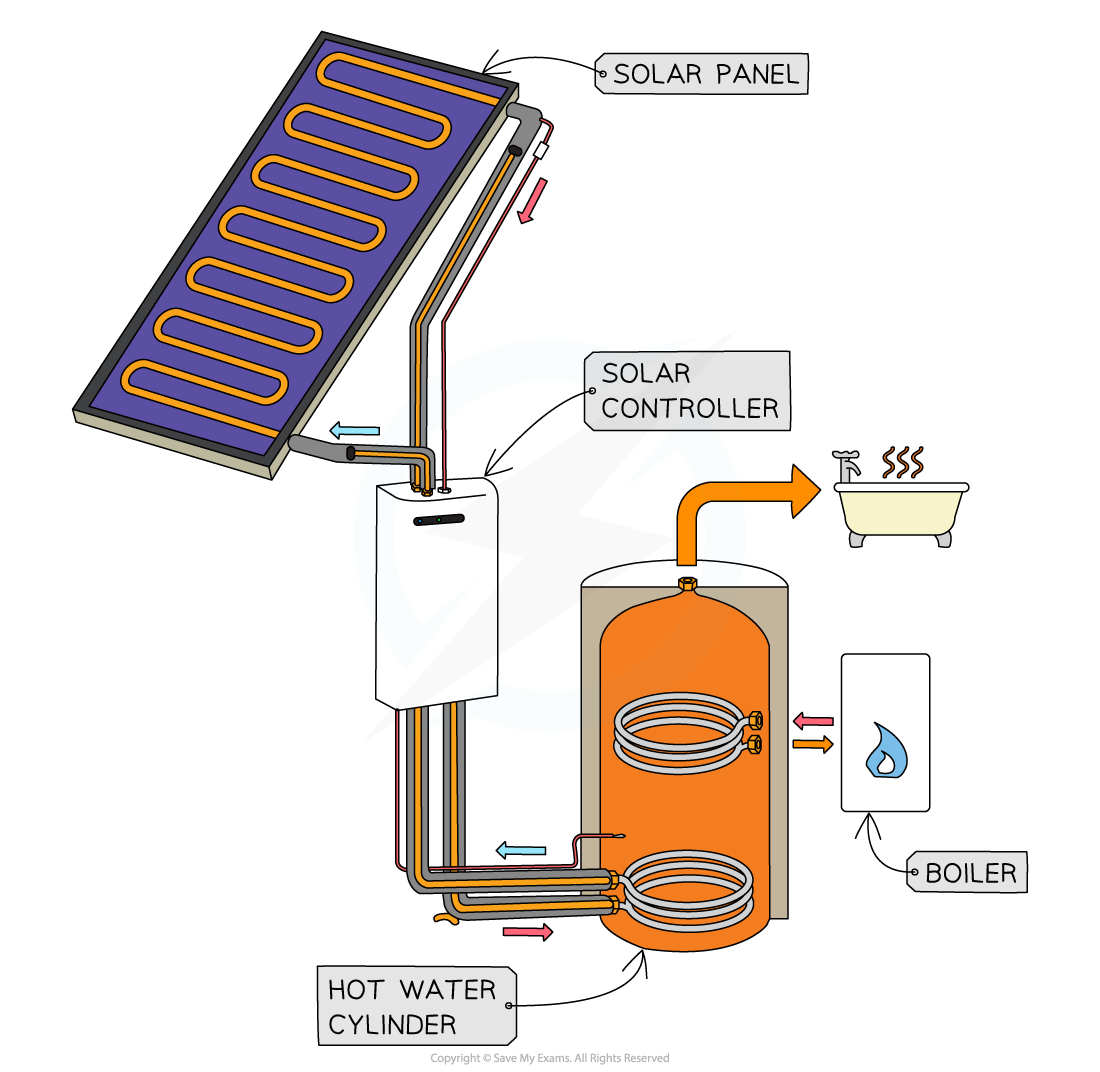
*Solar panels use energy from sunlight to heat water *
How solar panels work
- Water is stored in a water **tank **and pumped through small **pipes **running through the solar panel
- Infrared radiation from the Sun heats the water in the pipes as it flows through them
- The water returns to the tank at a** higher temperature**
- Water may still need to be heated further to reach the desired temperature (e.g. for a shower)
Advantages of solar panels
- Solar energy is a renewable resource since it relies on light from the Sun which will not run out
- Solar panels do not emit carbon dioxide or other greenhouse gases while operating, so they do not contribute to global warming
- While they may have an initial installation cost, they are cheap to run and require low maintenance
- Solar panels can be placed on the roofs of buildings, saving ground space
Disadvantages of solar panels
-
Solar panels provide an intermittent or unreliable supply of electricity because they depend entirely on the availability of sunlight
-
Solar furnaces need to be large-scale to produce high temperatures
-
Solar panels have a much lower power output compared to a standard mains electrical supply
- A solar panel will take longer to recharge a battery than a mains supply would
Wind energy
Spec point —
1.8.1· Describe how useful energy may be obtained, or electrical power generated, from:
- infrared and other electromagnetic waves from the Sun to heat water (solar panels) and be the source of wind energy including references to a boiler, turbine and generator where they are used Describe advantages and disadvantages in terms of renewability, availability, reliability, scale and environmental impact
Wind energy
-
Energy from the wind can be used to generate electricity
-
The wind turns a turbine, which turns a generator, which generates electricity
-
Energy from the kinetic store of the wind is transferred
- mechanically to the kinetic store of the turbine
- which is transferred mechanically to the kinetic store of the generator
- which is transferred electrically to the electricity grid
Wind turbines use energy from the wind to generate electricity
Advantages of wind power
- Wind is a renewable resource
- Wind turbines do not emit carbon dioxide or other greenhouse gases while operating, so they do not contribute to global warming
- Wind turbines do not produce sulfur dioxide or other acidic gases during operation, so they do not contribute to acid rain
- Offshore wind farms can be built in coastal areas
- Wind turbines do not use fuel, so there are no fuel costs
Disadvantages of wind power
- Wind power is not reliable because the wind does not blow constantly, and they cannot generate power if the wind is too weak or too strong
- Each turbine only produces a small amount of electricity, so wind farms are needed for large-scale electricity generation
- Wind turbines are often difficult to maintain, particularly if they are built offshore
- Offshore wind farms can disrupt shipping routes
Exam Hint In your IGCSE exam, you will not be awarded marks for giving vague advantages or disadvantages without further explanation. Make sure you can justify your answers.
Was this revision note helpful?
Build on this topic