Proving half-angle formulae
Excerpt: Students use diagrams to construct a geometric proof of the formula . The same ideas can be adapted to give proofs of related results for and .
Problem
Take a look at the identities below.
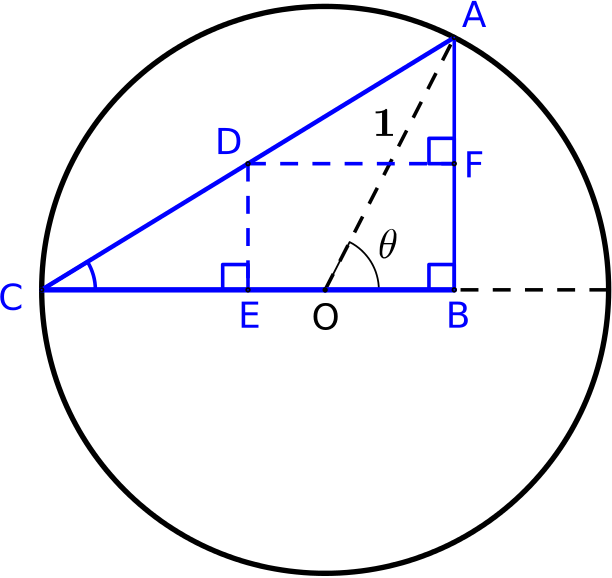
You may well know enough trigonometric identities to be able to prove these results algebraically, but you could also prove them using geometry. We have provided some diagrams that may help you to prove the result for . Can you link the diagrams together to form a proof?
You may find it helpful to group the diagrams together in different ways or look for links between pairs of diagrams. You don’t need to use all the diagrams in your proof and you may prefer to add some of your own diagrams. The diagrams are available as a print out. There is an extra card in case you’d like to include another diagram in your proof.
Suggestion: strategy
It might be easier to prove .
Can you relate the diagrams to either the left-hand side of the identity or to the right-hand side?
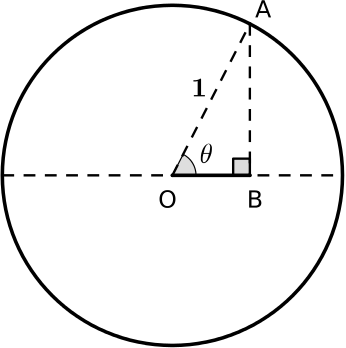
Is there a diagram that shows a length that corresponds to ?
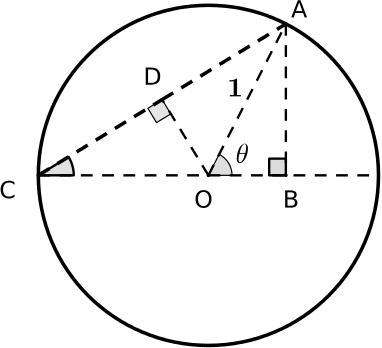
Suggestion: diagram
Can you prove the result for in a similar way?
Possible proof
Take a look at the identities below.
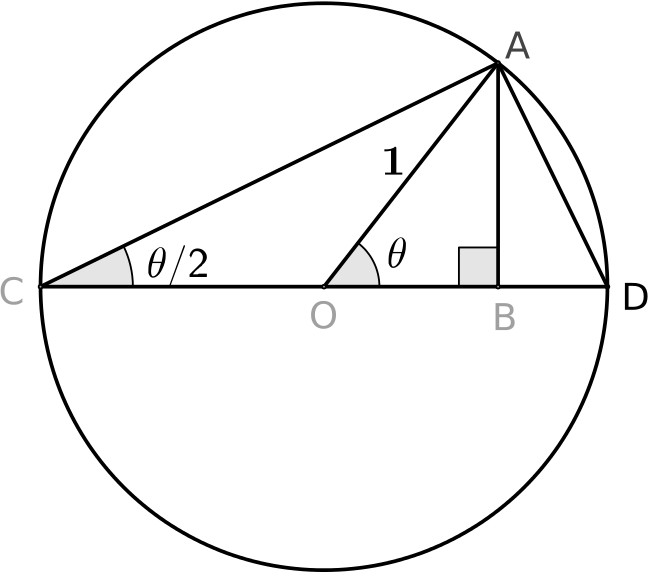
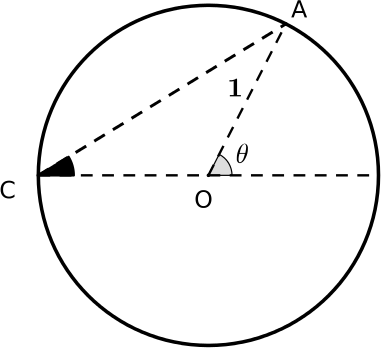
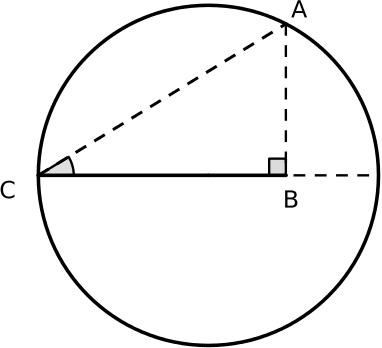
You may well know enough trigonometric identities to be able to prove these results algebraically, but you could also prove them using geometry. Here are some diagrams that may help you to prove the result for . Can you link the diagrams together to form a proof?
You may find it helpful to group the diagrams together in different ways or look for links between pairs of diagrams. You don’t need to use all the diagrams in your proof and you may prefer to add some of your own diagrams. The diagrams are available as a print out. There is an extra card in case you’d like to include another diagram in your proof.
There are many ways to prove this result using these diagrams. Here is one approach.
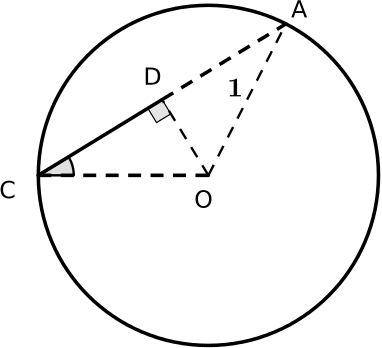
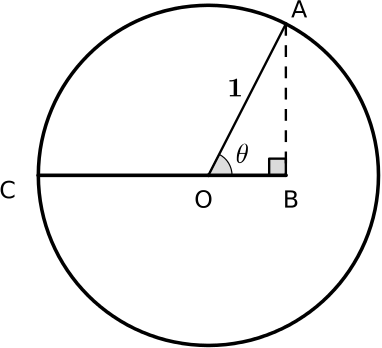
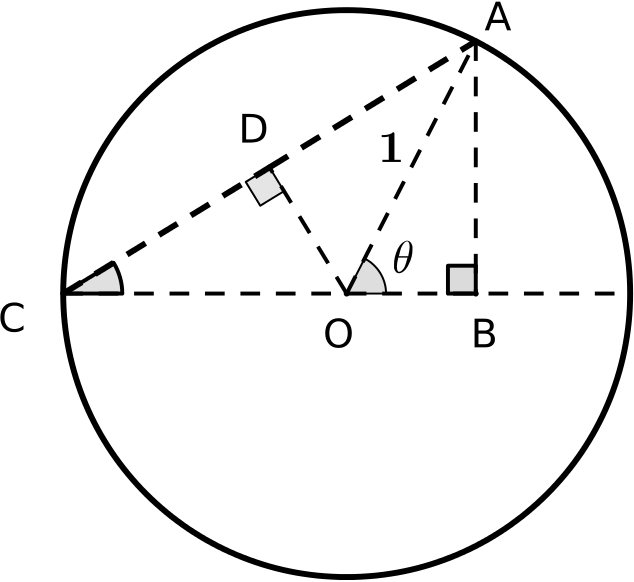
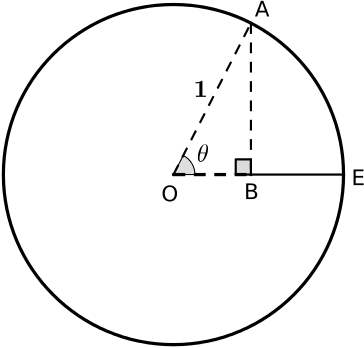
We are aiming for the result as this is equivalent to the identity we want to prove. We will express the line segment in two different ways. One will involve and one will involve .
so and therefore .
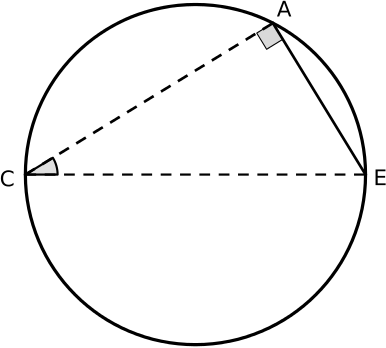
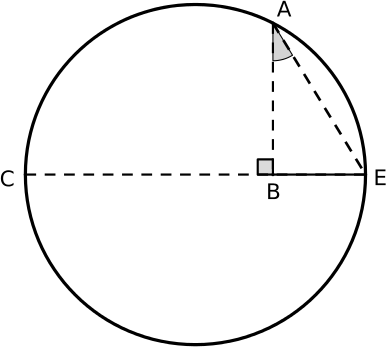
Triangle is isosceles and is the exterior angle at , so . Looking at the right-angled triangle , we see that . Therefore .
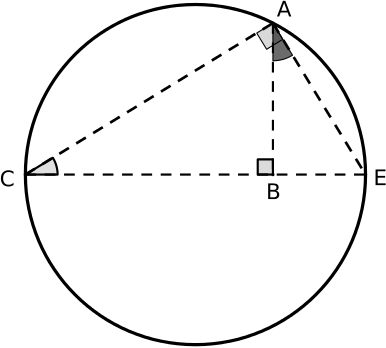
(The first diagram was in the suggestion and may help you to see how triangle is related to the other triangles on the cards.) In triangle , and therefore .
We have managed to write in two different ways, and so equating these expressions for gives us the result we wanted.
A similar approach could be used to prove that .
From the first diagram we can see that . From the second diagram and using a similar approach to the proof for above, we see that and , so .
The triangles and are similar, so is . From triangle we can see that so . Equating the two ways we can write gives us the result we wanted.
Looking again
Take another look at the identities.
The first says that is the mean of and . What does this tell you geometrically?
Suggestion
Can you use this diagram to connect the geometry with this way of looking at the identity?
Can you use the same ideas to think about the identity for ?
Can you draw a diagram to illustrate the following results for ? and
Diagram for
This diagram could be used to show the two identities for .
For which values of are these identities true?