Informal Employment (Edexcel IGCSE Geography)
Causes of Informal Employment
Spec point —
4GE1-S6.067
-
Informal employment is any employment which is unregulated and unofficial
-
It is estimated that more than 60% of the world's employed population work in informal employment
-
As much as 93% of informal employment is in developing and emerging countries
- Levels of underemployment and unemployment are high in these areas
-
Most informal employment is work in the tertiary sector
-
Examples of jobs in the informal economy include:
- shoe shining
- rubbish collecting
- selling fruit or other products on the street
- para-transit - including rickshaws and tuk-tuks
-
There are several causes of informal employment
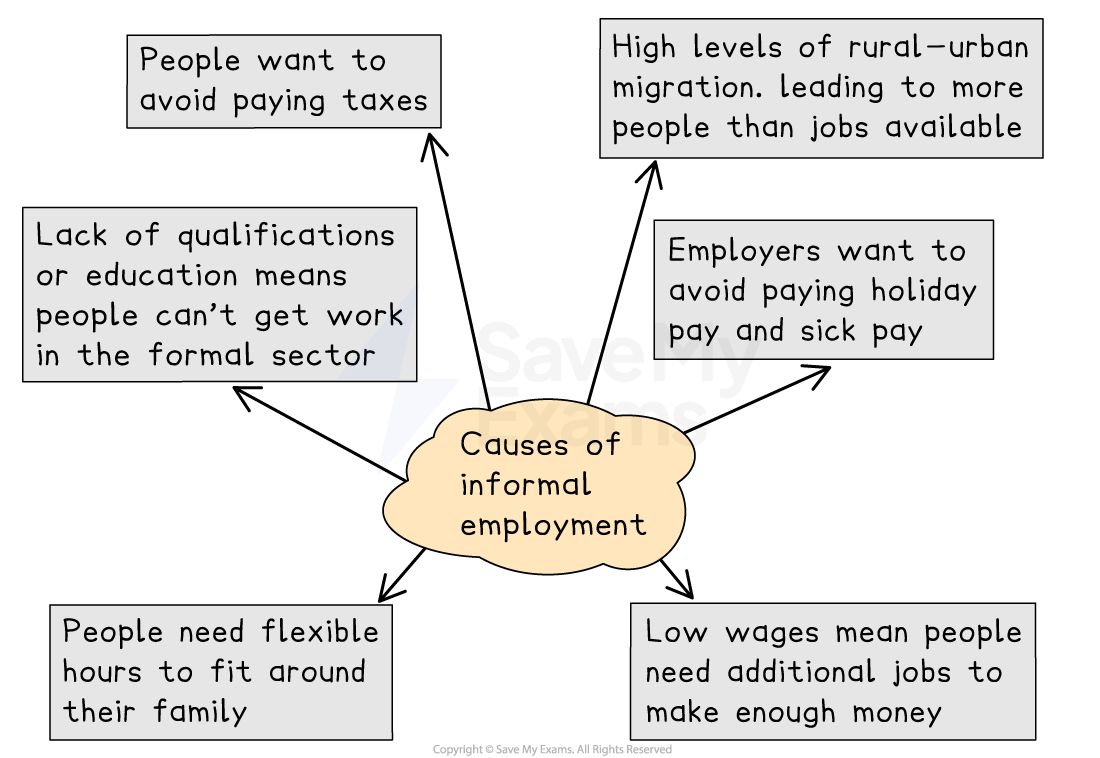
Causes of Informal Employment
Impacts of Informal Employment
Spec point —
4GE1-S6.067
-
People working in the informal economy:
- Have no healthcare benefits
- Are often exposed to health or safety risks
- Have no contracts or guaranteed pay
- Have no holiday or sick pay
-
Paratransit often causes congestion and if motorised they cause additional pollution
-
Lack of regulations means workers are often exploited by employers
-
Many children working in informal employment do not get the opportunity to go to school
-
Children may be exposed to health risks, drugs, violence and crime
-
Governments collect less in tax because the jobs are not official
Case Study: Informal Employment in Dhaka
Spec point —
4GE1-S6.067
Case Study
Dhaka is the capital of Bangladesh
It is a megacity with a population of 22.5 million people
Approximately 400,000 people migrate to Dhaka each year
Estimates suggest that over 75% of the population is engaged in informal employment:
- 500,000 rickshaw drivers
- 80,000 waste-related workers
- Workers in small workshops
- Casual workers in restaurants and hotels
- Day labourers in construction
Informal employment also includes children with over 690,000 children in Dhaka involved in informal employment
Many of Dhaka's informal workers live in informal settlements
Characteristics of Dhaka's Informal Sector
- Low pay
- Long working hours
- Temporary or part-time work
- Underemployment
- No benefits such as holiday pay or sick pay
- Poor and unhealthy working conditions
- Health and safety risks
- No training
- Exploitation by employers
- No legal protection
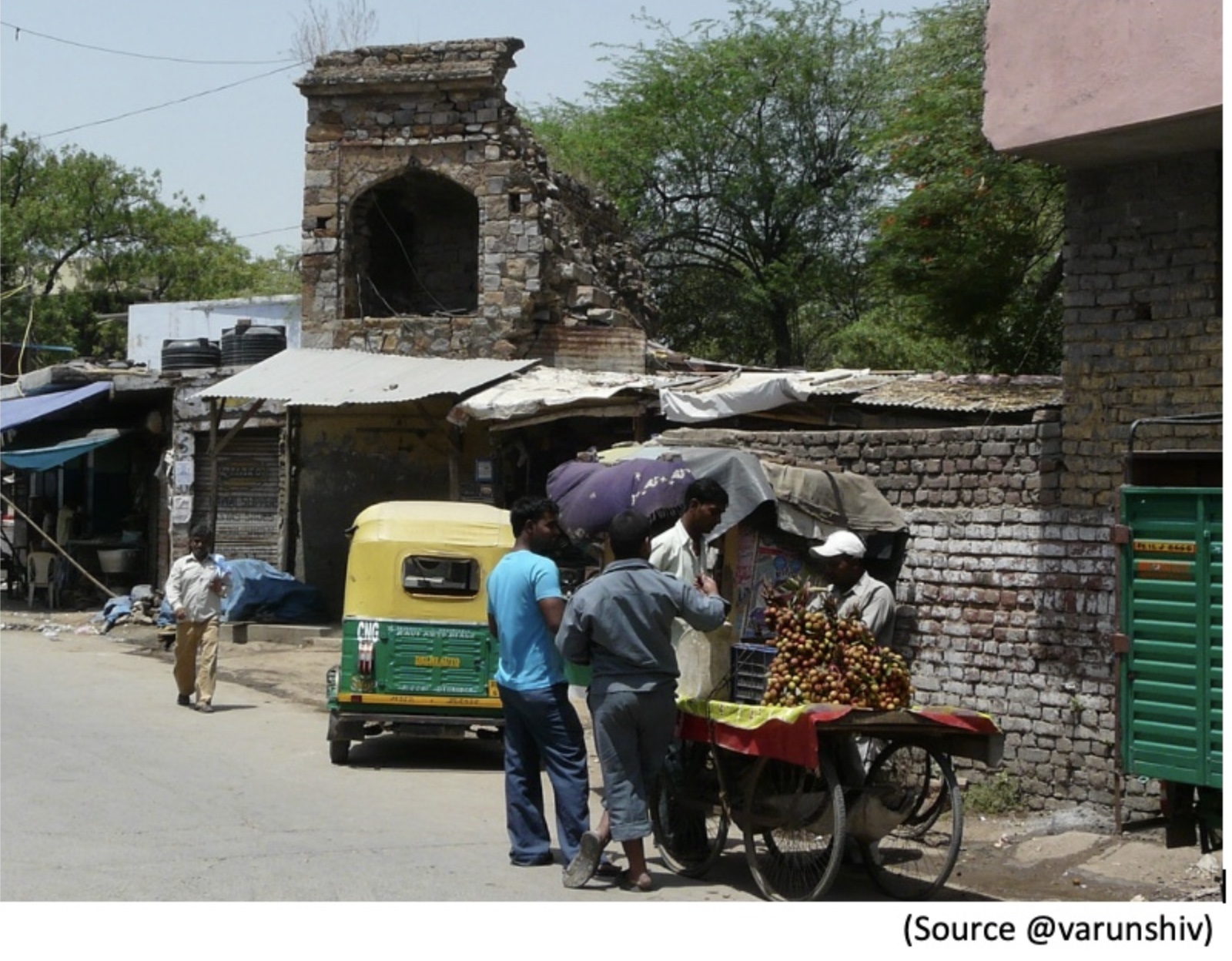
Worked Example Study Figure 1, which shows examples of informal employment in India
Figure 1 – Examples of Informal Employment in India
Explain one piece of evidence that there is informal employment in this city
(2 Marks)
- Answer
- There is a man selling goods from a cart **(1) **because he doesn't have a shop to sell his goods from (1)
** OR**
- There is a motorised rickshaw, or tuk-tuk (1); these are not part of the public transport system (1)
Exam Hint Remember underemployment and unemployment are not the same. Underemployment is when a person has work but is not working as many hours as they want to. Unemployment is when a person is not working.
Was this revision note helpful?