Relationship of Population on Resources (Edexcel IGCSE Geography)
Population & Resources
Spec point —
4GE1-S6.067
-
Economic activities all involve the use of resources and energy
-
The rate at which resources & energy are used depends on two main factors:
- The population size
- The rate of development
-
Many resources including energy sources are finite and non-renewable
Carrying capacity
-
Each country/area has a carrying capacity, which is the maximum number of people (population) an area's resources can sustain
-
The population that results in the highest standard of living is the optimum population:
- There are not so many people or so few resources that the standard of living falls
- There are enough people to develop the resources of the country
-
Underpopulation is when the population is too small to develop the resources effectively
-
**Overpopulation **is when there are too many people or too few resources to ensure a high standard of living
-
Population pressure occurs when the population is greater than the** carrying capacity**
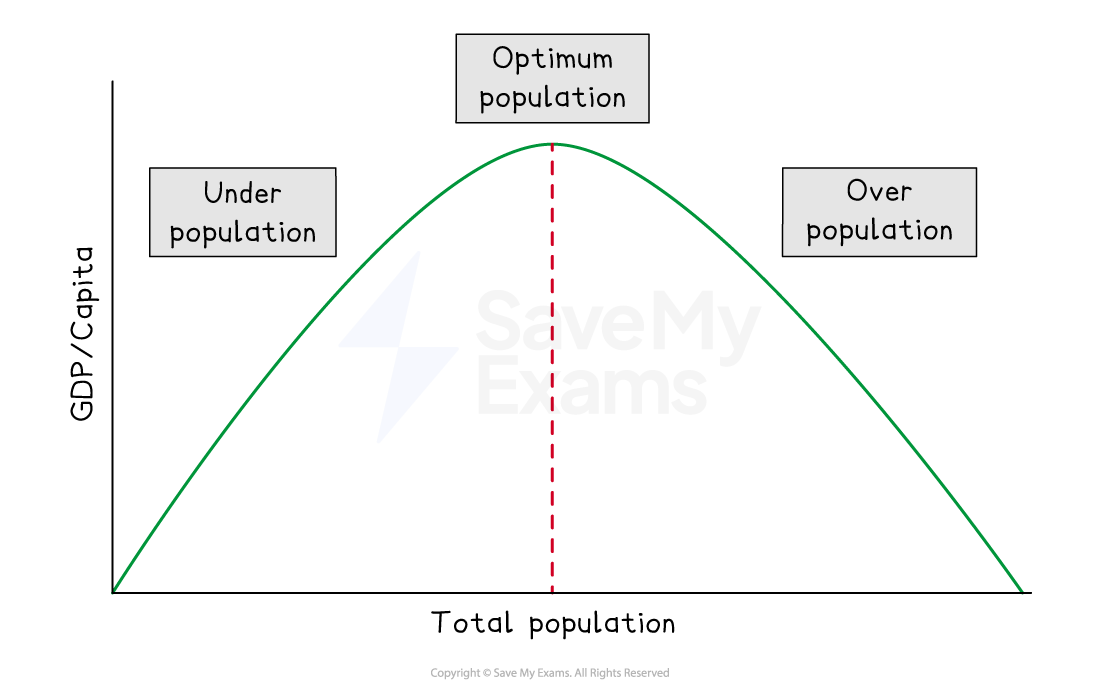
Optimum Theory of Population
- The Earth's population is now over 8 billion
- Whether there are enough resources to sustain the population has been examined by different theorists
Theories of Thomas Malthus
Spec point —
4GE1-S6.067
-
Malthus proposed his theory in 1798 in An Essay on the Principle of Population
-
He had a pessimistic view of the relationship between population and resources (specifically food) which states:
- population growth is increasing at a faster rate than food supply
- there will be a time when there is not enough food to sustain the population
- as a result, population growth will stop as a result of a Malthusian catastrophe - famine, disease or war
- these are known as **positive checks **as they increase the death rate
- preventative checks are factors which decrease the birth rate
- these** limiting factors** maintain the balance between population and resources
-
Malthus's predictions were incorrect as they came before much of the technological developments which have enabled food supply to be increased
-
As the world population increases much of the world's productive land has been used
-
Neo-Malthusians today base their views on Malthus' theory. They argue that:
- we have now used most of the available agricultural land
- the amount of fertile land is in decline
- food prices are increasing
- the population continues to increase
-
They suggest that famines are one example of how Malthusian theory has proved to be correct
-
Neo-Malthusians argue that population control is essential to avoid Malthusian catastrophe
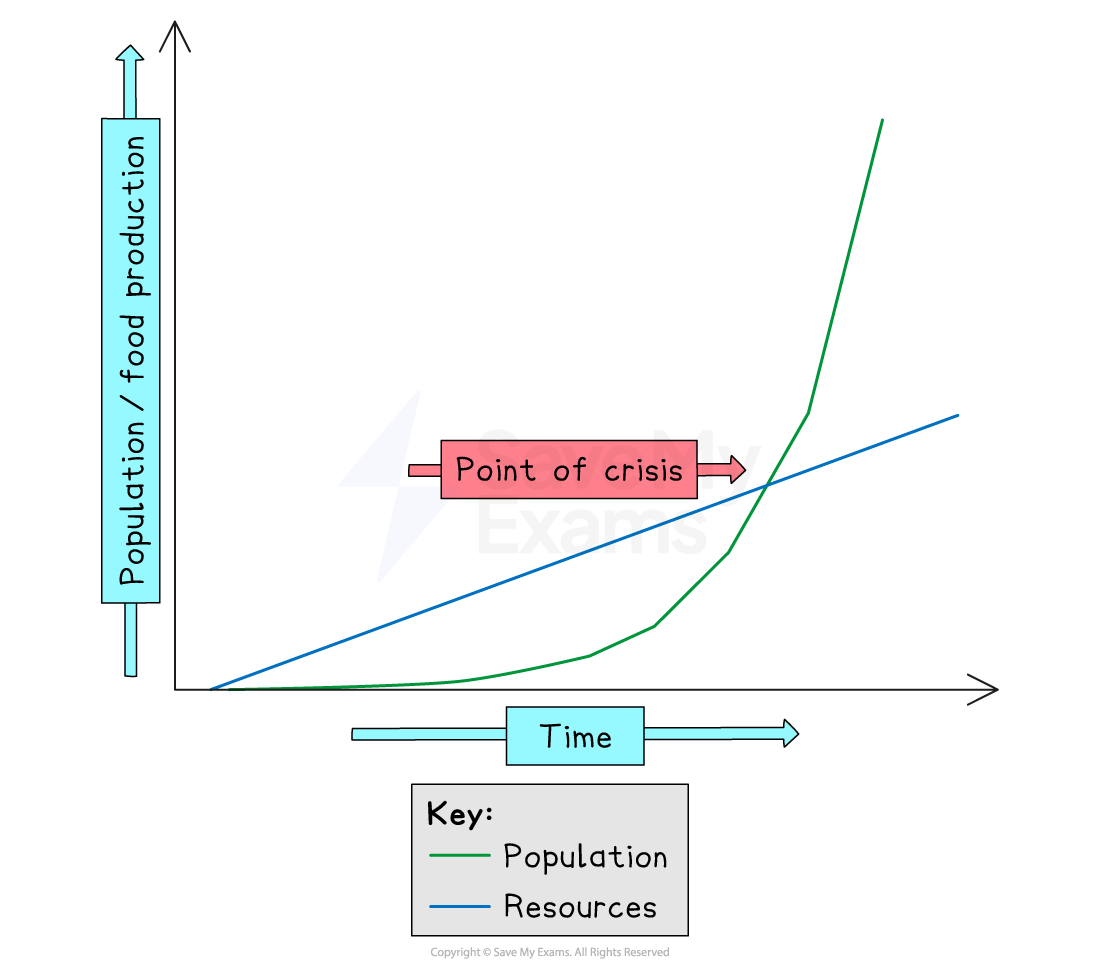
Graph illustrating Malthus' theory
Theories of Ester Boserup
Spec point —
4GE1-S6.067
-
A Danish economist,Ester Boserup put forward her theory in 1965
-
An optimistic view of the relationship between population and resources (specifically food) which states that:
- population growth will stimulate developments in technology to increase food production
- more efficient resources will be discovered/used
- renewable resources will replace non-renewable
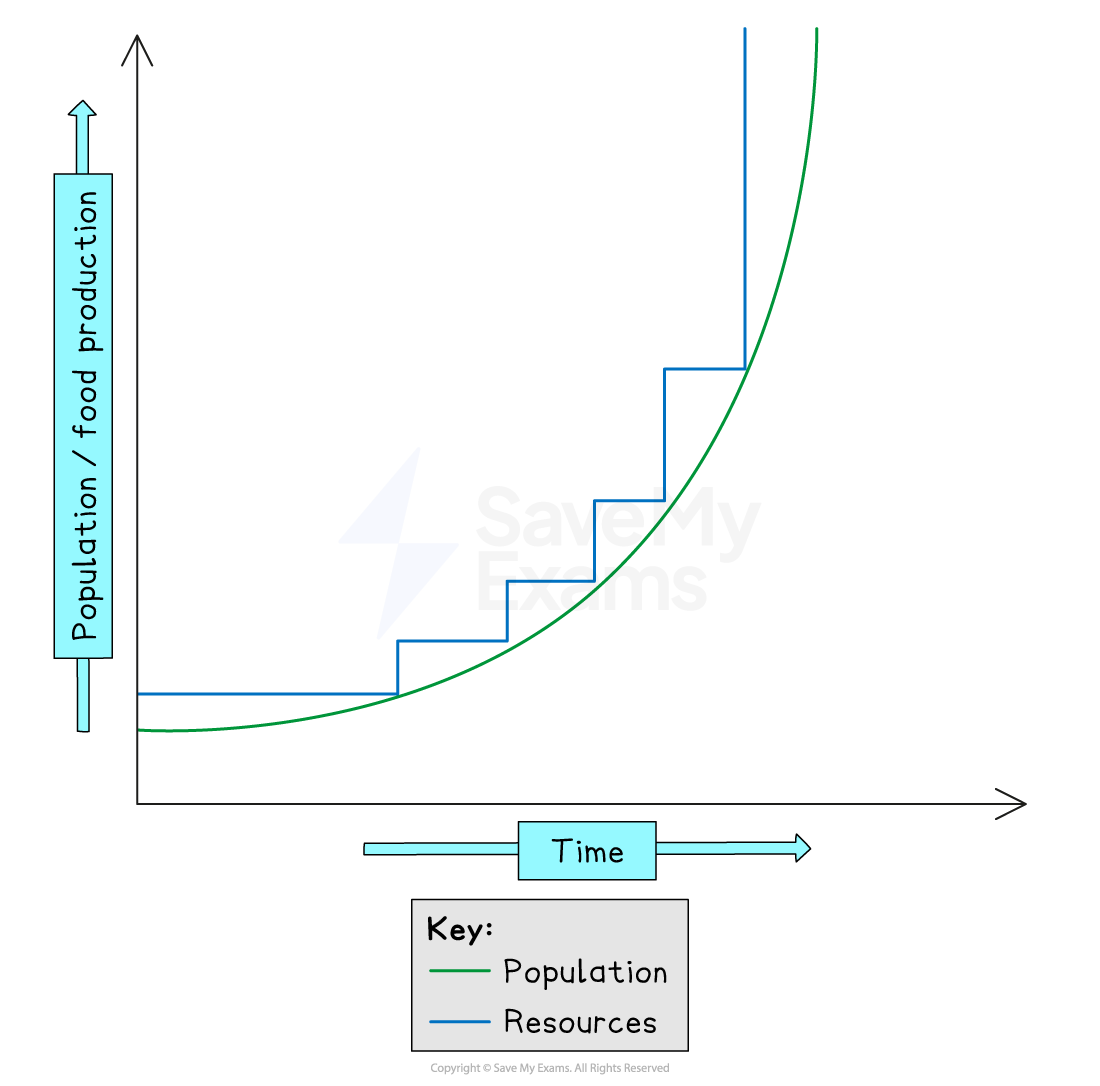
Graph illustrating Boserup's theory
Exam Hint Remember Malthus and Boserup both focus on food resources. However, the ideas can be applied to other resources.
Was this revision note helpful?