Explaining Rates (Edexcel IGCSE Chemistry)
Guided lessons are live for this note
Work through it step by step — key points, depth layers, a worked example and self-checks.
Spec point — explain the effects of changes in surface area of a solid, concentration of a solution, pressure of a gas and temperature on the rate of a reaction in terms of particle collision theory
Explaining rates of reaction
-
Increasing the number of successful collisions means that a greater proportion of reactant particles collide to form product molecules.
-
We have seen previously that the following factors influence the rate of reaction
- Increasing concentration
- Increasing temperature
- Increase the surface area of a solid reactant
- Use of a catalyst
-
We can use collision theory to explain why these factors influence the reaction rate:
How increasing concentration affects rate
-
Increasing the concentration of a solution increases the rate of reaction
-
Increasing the concentration means that there are more reactant particles in a given volume
- This causes more collisions per second
- Leading to more frequent and successful collisions per second
- Therefore, the rate of reaction increases
-
If you double the number of particles, you will double the number of collisions per second
-
The number of collisions is proportional to the number of particles present
Diagram showing the effect of increasing concentration
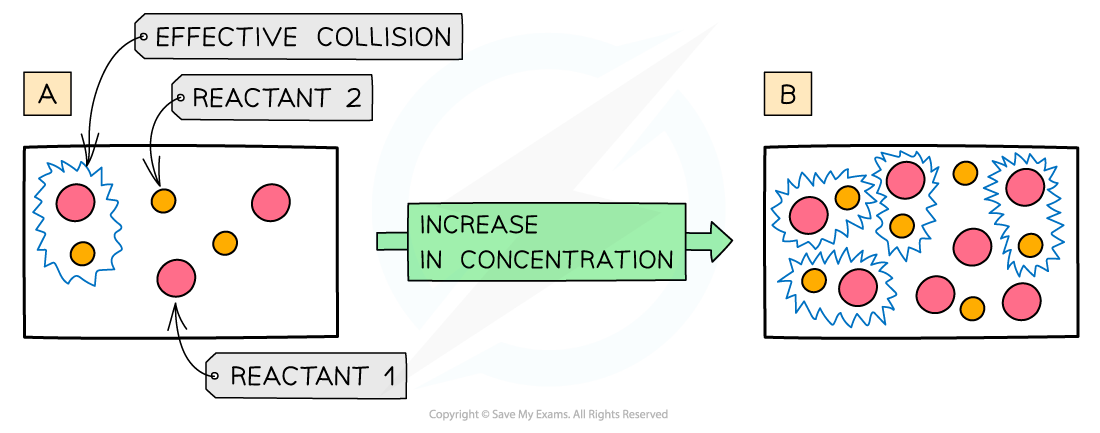
A higher concentration of particles in (b) means that there are more particles present in the same volume than (a) so the number of collisions and successful collisions between particles increases causing an increased rate of reaction
How increasing pressure affects rate
-
Increasing the pressure of a gas increases the rate of reaction
-
Increasing the pressure means that there are the same number of reactant particles in a smaller volume
- This causes more collisions per second
- Leading to more frequent and successful collisions per second
- Therefore, the rate of reaction increases
Diagram showing the effect of increasing pressure
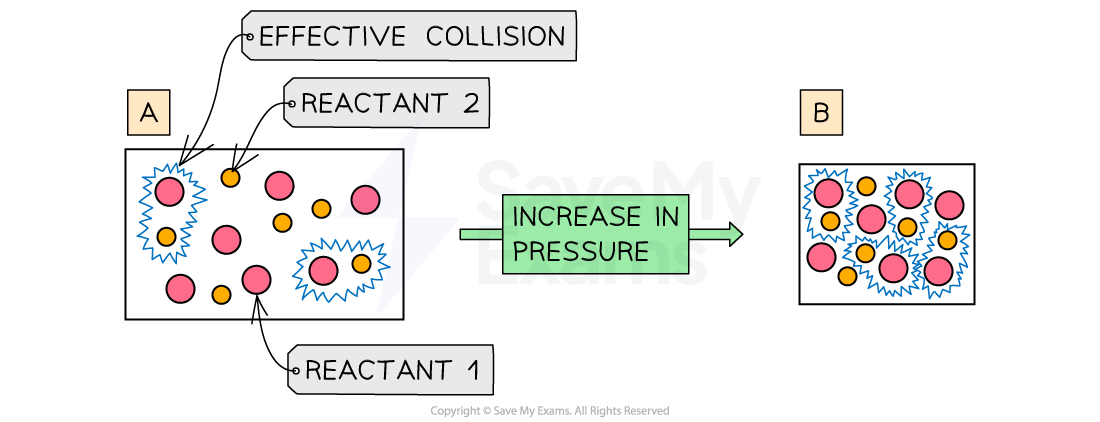
The higher pressure (b) means that there are the same number of particles present in a smaller volume than (a) so the number of collisions and successful collisions between particles increases causing an increased rate of reaction
How increasing temperature affects rate
-
Increasing the temperature increases the rate of reaction
-
Increasing the temperature means that the particles have more kinetic energy
- This causes more collisions per second
- Leading to more frequent and successful collisions per second
- Therefore, the rate of reaction increases
-
The effect of temperature on collisions is not so straightforward as concentration or surface area; a small increase in temperature causes a large increase in rate
-
For aqueous and gaseous systems, a rough rule of thumb is that for every 10 oC increase in temperature, the rate of reaction approximately doubles
Diagram showing the effect of increasing temperature
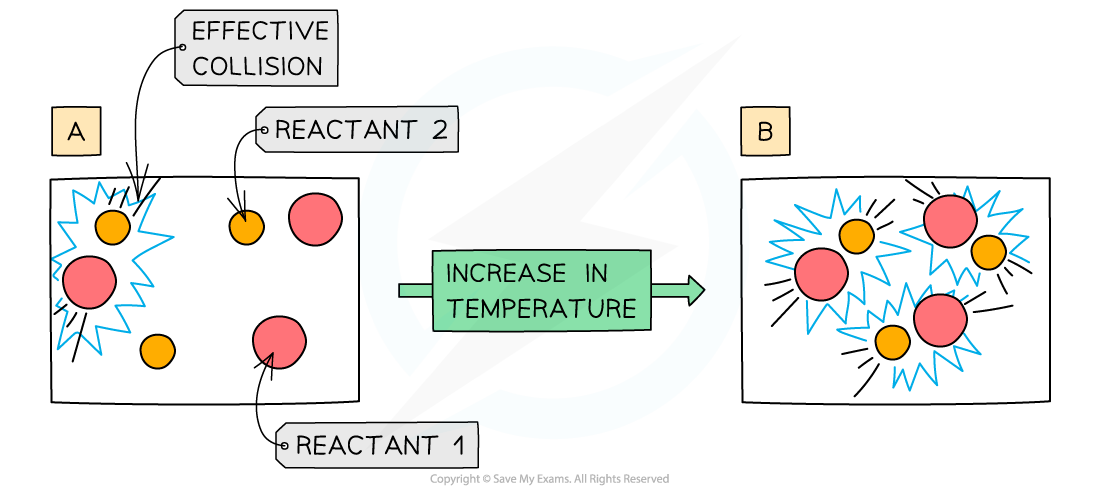
An increase in temperature causes an increase in the kinetic energy of the particles. The number of successful collisions increases
How increasing the surface area affects rate
-
Increasing the surface area increases the rate of reaction
-
Increasing the surface area means that a greater surface area of particles will be exposed to the other reactant
- This causes more collisions per second
- Leading to more frequent and successful collisions per second
- Therefore, the rate of reaction increases
-
If you double the surface area, you will double the number of collisions per second
Diagram showing the effect of increasing surface area
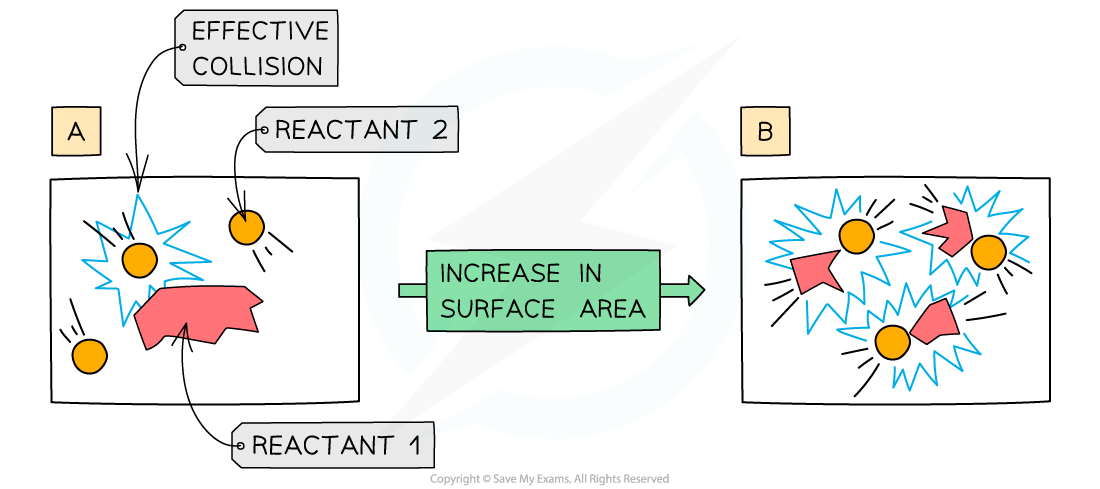
An increase in surface area means more collisions per second
Exam Hint Temperature affects reaction rate by increasing the number of collisions and the energy of the collisions. Of the two factors, the increase in energy is the more important one.
Was this revision note helpful?
Build on this topic