Exothermic & Endothermic
2 guided lessons · 18 checks · 3. Physical Chemistry → Energetics
Guided lessons for this note
Which concept don't you understand yet?
We'll explain it simply and check your understanding. Pick any lesson — any order works.
0 of 18 checks correct so far
Lesson 1 of 2
Spotting exothermic and endothermic changes
Every reaction either warms or cools its surroundings, and a thermometer reveals which of the two is happening. This lesson builds the two labels chemists use and ties each label to the temperature direction you observe.
What you know already
From Gases in the Atmosphere you already know that burning fuels pours heat into the air. This note sorts chemical reactions into those that give heat out and those that take heat in, and shows how a thermometer tells them apart. It closes with the energy bookkeeping rule that makes every temperature reading meaningful.
Key points of understanding
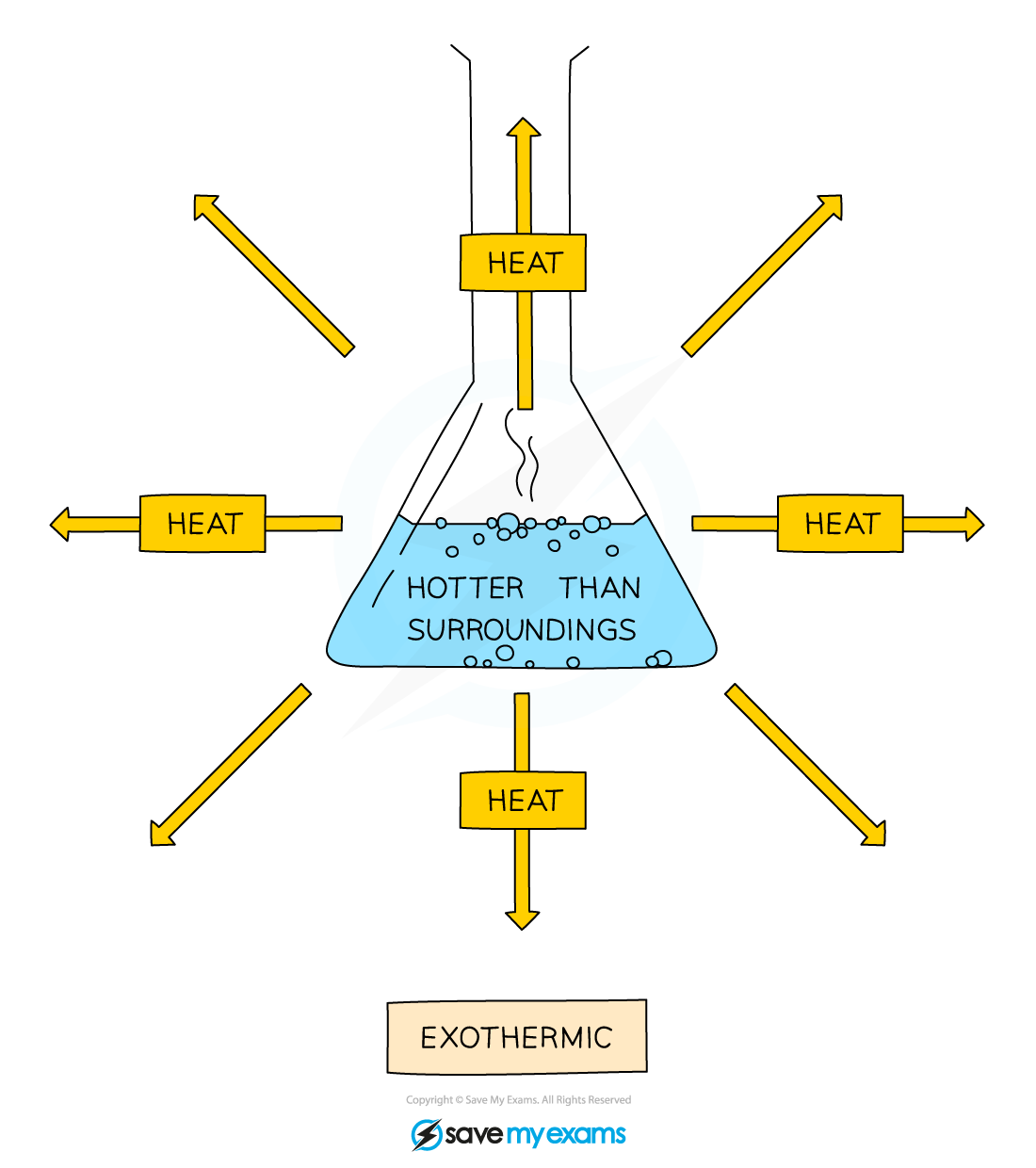
- Exothermic reactions give heat energy out to the surroundings, raising the temperature of the reaction mixture.
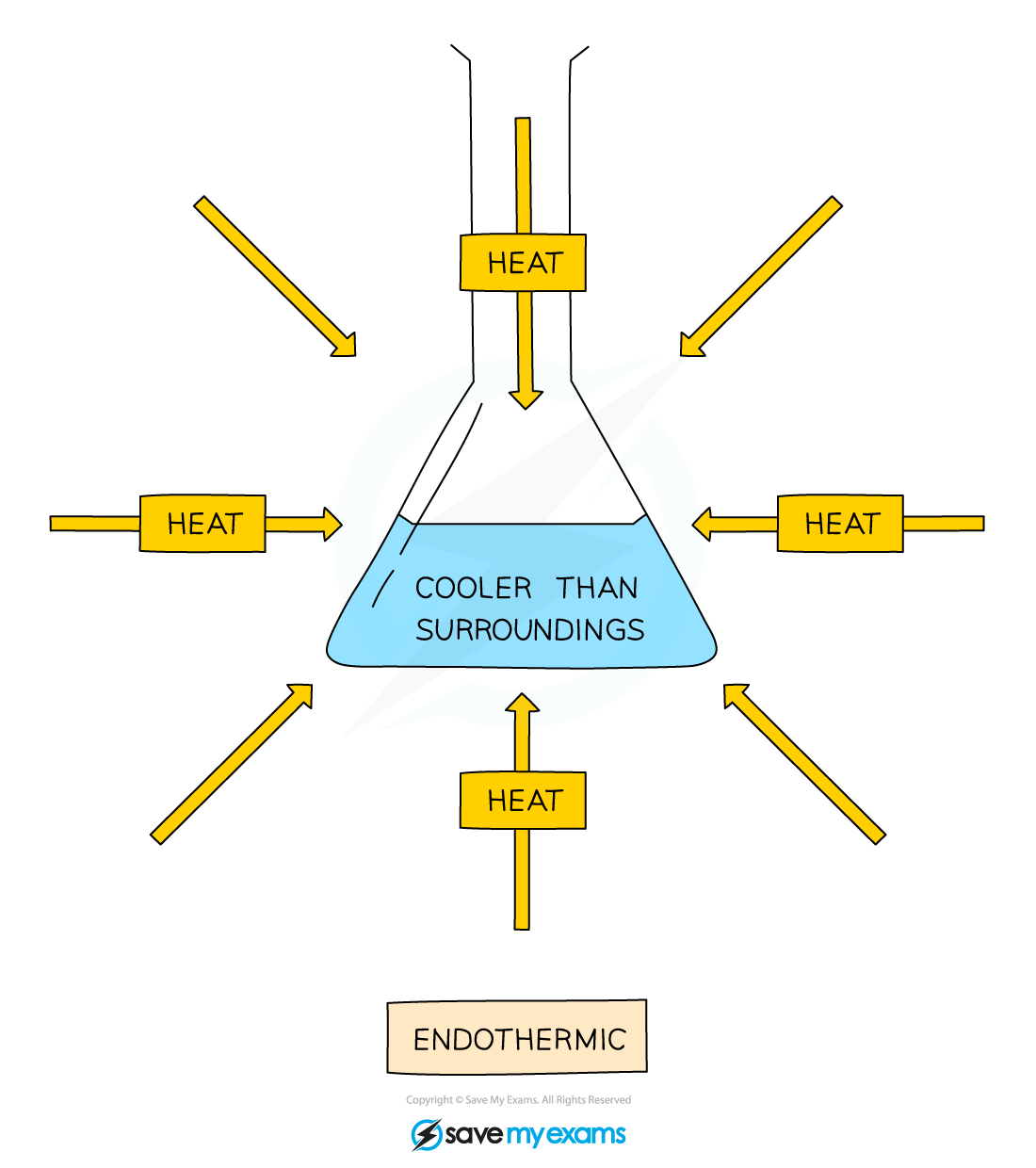
- Endothermic reactions take heat in from the surroundings, so the temperature of the reaction mixture falls.
- Neutralisation and combustion always give energy out, while displacement reactions can transfer energy either way.
- A thermometer measures the heat change, so it reveals whether a reaction is exothermic or endothermic.
- Energy is conserved in reactions, so the products end up with less energy than the reactants when heat is released.
Choose a confidence level to continue.
Prefer to read it all at once? Show the full lesson as a page
1.Spotting exothermic and endothermic changes
Every reaction either warms or cools its surroundings, and a thermometer reveals which of the two is happening. This lesson builds the two labels chemists use and ties each label to the temperature direction you observe.
Key points
- Exothermic reactions give heat energy out to the surroundings, raising the temperature of the reaction mixture.
- Endothermic reactions take heat in from the surroundings, so the temperature of the reaction mixture falls.
- Neutralisation and combustion always give energy out, while displacement reactions can transfer energy either way.
- A thermometer measures the heat change, so it reveals whether a reaction is exothermic or endothermic.
- Energy is conserved in reactions, so the products end up with less energy than the reactants when heat is released.
Guided content from the SME authoring corpus — note rn_x5m8QBWxtKvxQ9sx, pinned at 51a6ed34e715 · promoted SyllabAI/syllabai-resources e967e75f1339