Formation of Ions
2 guided lessons · 18 checks · 1. Principles of Chemistry → Ionic Bonding
Guided lessons for this note
Which concept don't you understand yet?
We'll explain it simply and check your understanding. Pick any lesson — any order works.
0 of 18 checks correct so far
Lesson 1 of 2
Formation of Ions
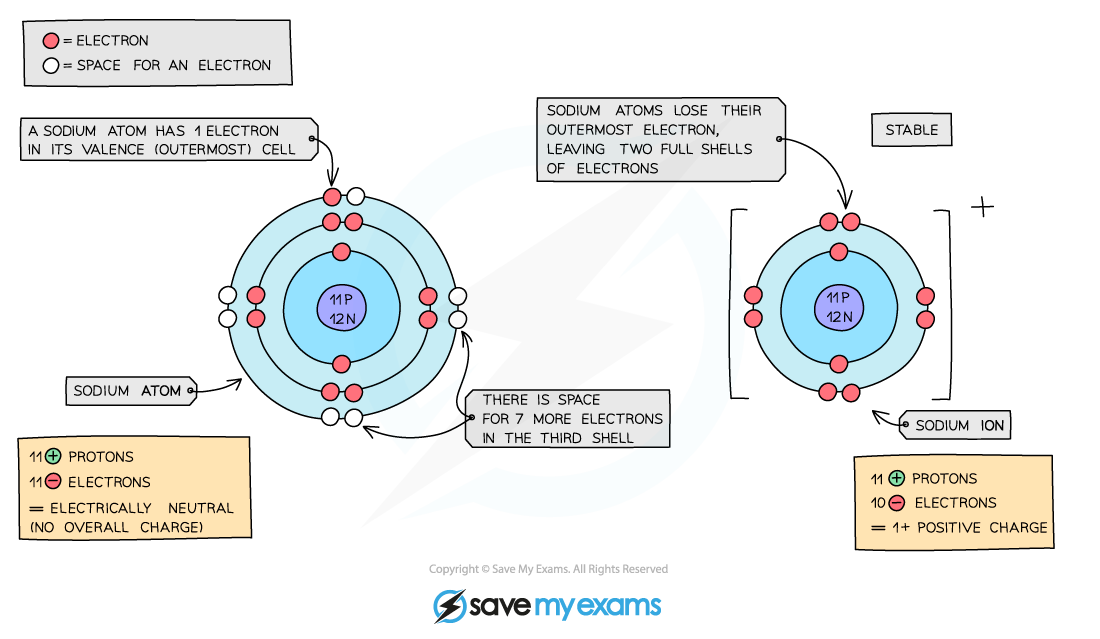
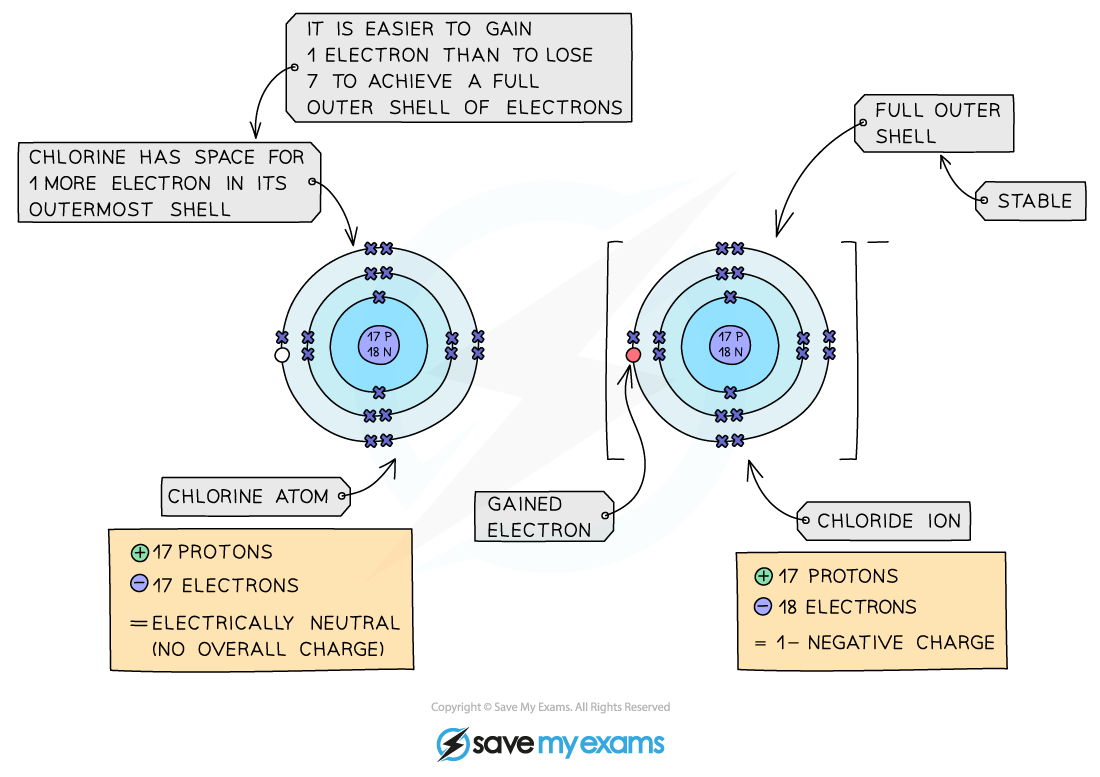
When an atom loses or gains electrons it stops being neutral and becomes an ion - a charged particle. Atoms make this trade to reach a full outer shell, the stable arrangement the noble gases already hold. Lose electrons and the charge is positive; gain them and it is negative.
What you know already
Atomic structure is old ground: protons and electrons counted, shells filled two-eight-eight. This note puts that picture to work - when atoms give up or take in electrons to reach a full outer shell, the balance between protons and electrons tips and charged particles called ions appear.
Key points of understanding
- An ion is an atom or group of atoms that carries an electric charge after losing or gaining electrons.
- The loss or gain of electrons happens so the atom can reach a full outer shell.
- Ions of group 1, 2, 3, 5, 6 and 7 elements end with a noble gas electronic structure.
- The noble gases named in the note are helium, neon and argon.
- Every metal atom loses electrons and becomes a positive ion; every non-metal gains electrons and becomes a negative ion.
Choose a confidence level to continue.
Prefer to read it all at once? Show the full lesson as a page
1.Formation of Ions
When an atom loses or gains electrons it stops being neutral and becomes an ion - a charged particle. Atoms make this trade to reach a full outer shell, the stable arrangement the noble gases already hold. Lose electrons and the charge is positive; gain them and it is negative.
Key points
- An ion is an atom or group of atoms that carries an electric charge after losing or gaining electrons.
- The loss or gain of electrons happens so the atom can reach a full outer shell.
- Ions of group 1, 2, 3, 5, 6 and 7 elements end with a noble gas electronic structure.
- The noble gases named in the note are helium, neon and argon.
- Every metal atom loses electrons and becomes a positive ion; every non-metal gains electrons and becomes a negative ion.
Guided content from the SME authoring corpus — note rn_mbcBZkygY4YpG2bf, pinned at da18433ed9e8 · promoted SyllabAI/syllabai-resources e967e75f1339