Ionic compounds: Bonds, Structure & Properties
2 guided lessons · 18 checks · 1. Principles of Chemistry → Ionic Bonding
Guided lessons for this note
Which concept don't you understand yet?
We'll explain it simply and check your understanding. Pick any lesson — any order works.
0 of 18 checks correct so far
Lesson 1 of 2
Ionic bonding & giant ionic lattices
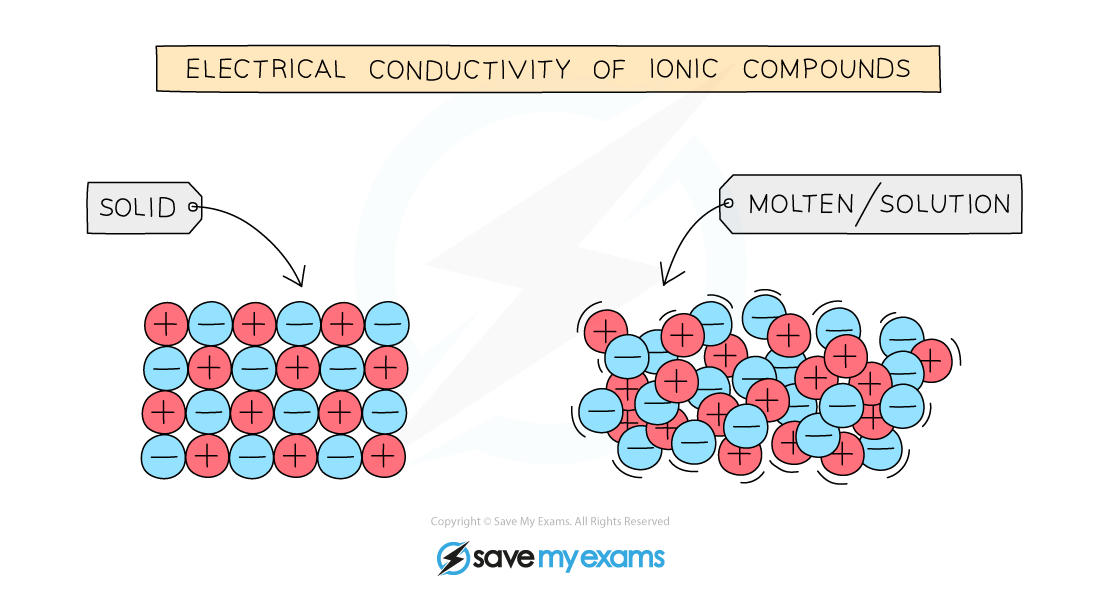
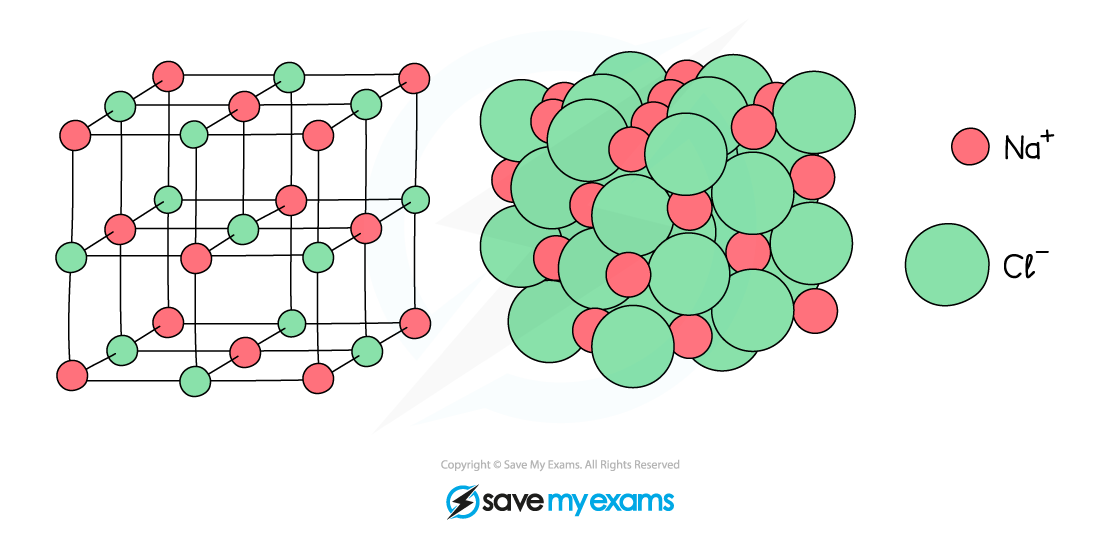
An ionic solid is a tightly packed arrangement of alternating positive and negative ions, held in place by strong electrostatic forces that act in every direction. Those forces are the ionic bonds. Because the ions build a giant lattice with a fixed alternating pattern, melting the solid means overcoming attractions that run through the whole structure, which is why the melting points are high.
What you know already
From Ionic Bonding you already know how metal atoms hand electrons to non-metal atoms, leaving positive and negative ions. This note follows those ions into the solid they build: the forces that hold the structure together, why so much heat is needed to melt it, and why the same solid refuses to conduct until it is melted or dissolved.
Key points of understanding
- An ionic compound packs positive and negative ions alternately into a regular giant lattice.
- Strong electrostatic forces of attraction between opposite charges hold the lattice together in all directions.
- High melting and boiling points follow, because the forces need a large amount of thermal energy to overcome.
- The larger the charges on the ions, the stronger the forces and the higher the melting point.
- Magnesium oxide, with 2+ and 2- ions, melts at a higher temperature than sodium chloride with its single charges.
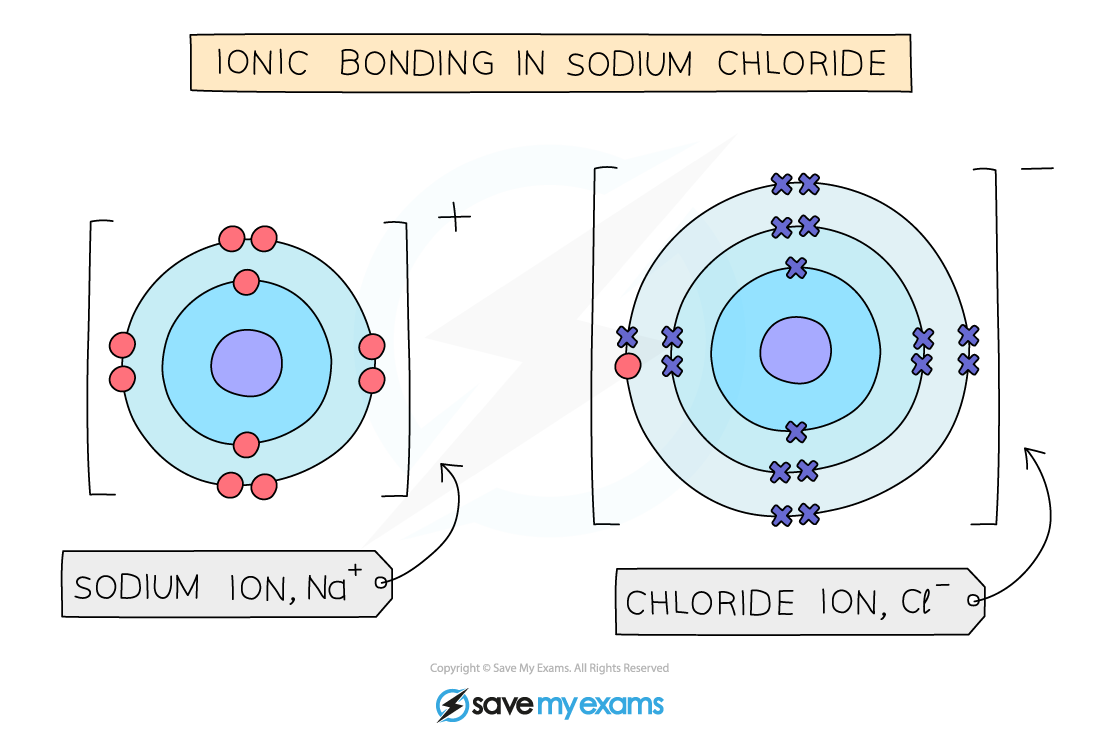
Electrostatic forces of attraction exist between the oppositely charged ions
Choose a confidence level to continue.
Prefer to read it all at once? Show the full lesson as a page
1.Ionic bonding & giant ionic lattices
An ionic solid is a tightly packed arrangement of alternating positive and negative ions, held in place by strong electrostatic forces that act in every direction. Those forces are the ionic bonds. Because the ions build a giant lattice with a fixed alternating pattern, melting the solid means overcoming attractions that run through the whole structure, which is why the melting points are high.
Electrostatic forces of attraction exist between the oppositely charged ions
Key points
Guided content from the SME authoring corpus — note rn_jVwPmjqHbqQkXcjG, pinned at fa1f302050ba · promoted SyllabAI/syllabai-resources e967e75f1339