Indicators
2 guided lessons · 18 checks · 2. Inorganic Chemistry → Acids, Alkalis & Titrations
Guided lessons for this note
Which concept don't you understand yet?
We'll explain it simply and check your understanding. Pick any lesson — any order works.
0 of 18 checks correct so far
Lesson 1 of 2
Indicators
Two-colour indicators distinguish acids from alkalis by showing a different colour in each. Litmus is the natural example, extracted from lichens, while phenolphthalein and methyl orange are synthetic compounds with very sharp colour changes. That sharpness is why synthetic indicators mark the endpoint of titrations, and why litmus, which drifts through purple, is kept for dipping papers instead.
What you know already
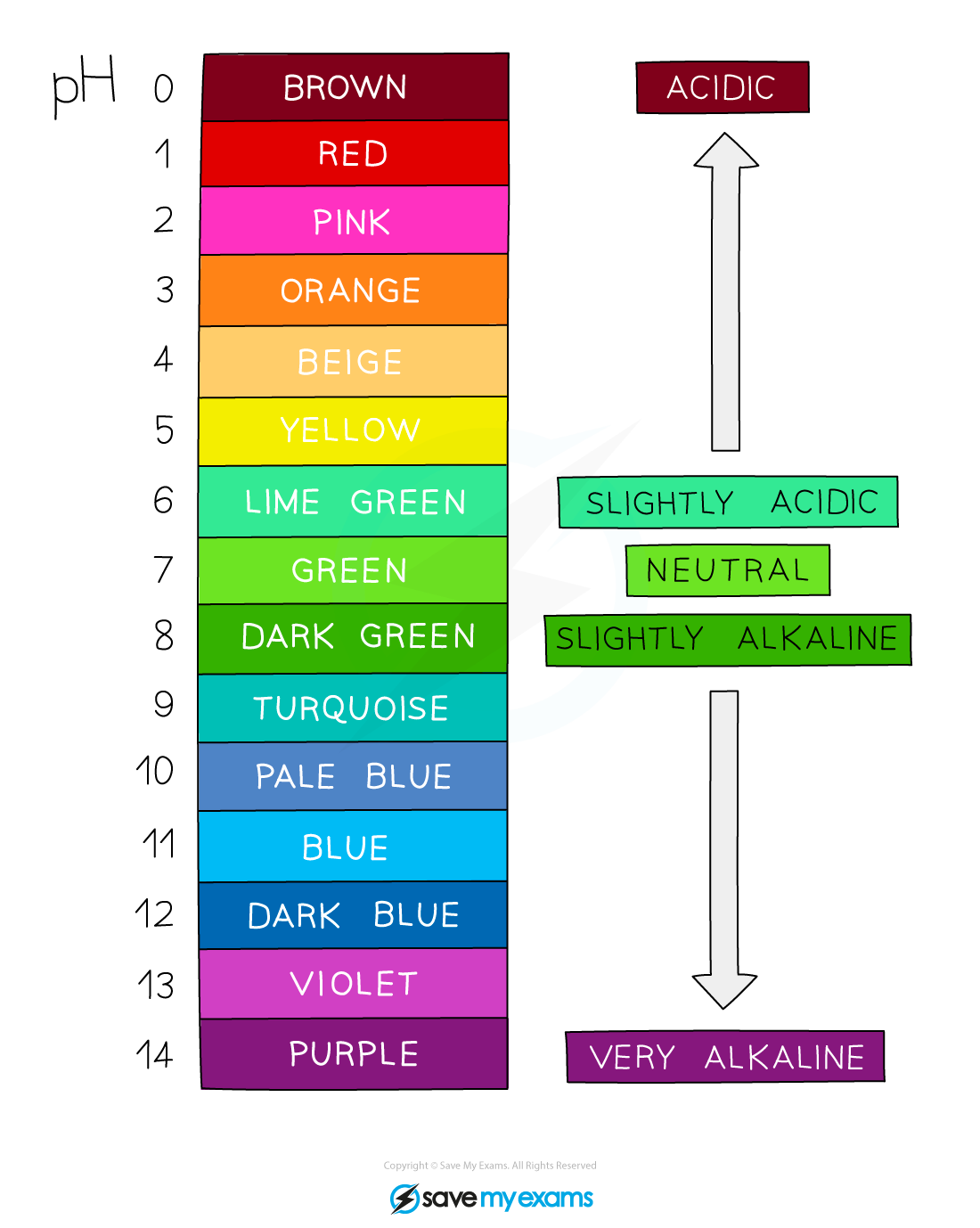
From Acids, Alkalis & Titrations you know that solutions run from strongly acidic through neutral to strongly alkaline. Chemists need quick ways to tell which is which, and to mark the exact moment an acid has been neutralised. This note covers litmus and the synthetic indicators, the pH scale, and universal indicator for estimating pH values.
Key points of understanding
- Litmus is a natural indicator extracted from lichens.
- Phenolphthalein and methyl orange are synthetic indicators used in acid-alkali titrations.
- Synthetic indicators show the endpoint because their colour change is very sharp.
- Litmus is unsuitable for titrations because it passes through a purple transition colour.
- Litmus comes as red and blue paper for dipping into solutions or testing gases.
Choose a confidence level to continue.
Prefer to read it all at once? Show the full lesson as a page
1.Indicators
Two-colour indicators distinguish acids from alkalis by showing a different colour in each. Litmus is the natural example, extracted from lichens, while phenolphthalein and methyl orange are synthetic compounds with very sharp colour changes. That sharpness is why synthetic indicators mark the endpoint of titrations, and why litmus, which drifts through purple, is kept for dipping papers instead.
Key points
- Litmus is a natural indicator extracted from lichens.
- Phenolphthalein and methyl orange are synthetic indicators used in acid-alkali titrations.
- Synthetic indicators show the endpoint because their colour change is very sharp.
- Litmus is unsuitable for titrations because it passes through a purple transition colour.
- Litmus comes as red and blue paper for dipping into solutions or testing gases.
Guided content from the SME authoring corpus — note rn_dTP52nzhYb96XrJx, pinned at 286b5ac81d43 · promoted SyllabAI/syllabai-resources e967e75f1339