Covalent Bonds: Dot & Cross Diagrams
2 guided lessons · 18 checks · 1. Principles of Chemistry → Covalent Bonding
Guided lessons for this note
Which concept don't you understand yet?
We'll explain it simply and check your understanding. Pick any lesson — any order works.
0 of 18 checks correct so far
Lesson 1 of 2
Diatomic molecules
Diatomic molecules contain exactly two atoms, and their dot-and-cross diagrams are the simplest covalent drawings. Hydrogen shares one pair, chlorine shares one pair, oxygen shares two pairs and nitrogen shares three. Hydrogen chloride follows the hydrogen pattern, with one pair shared between a hydrogen atom and a halogen atom.
What you know already
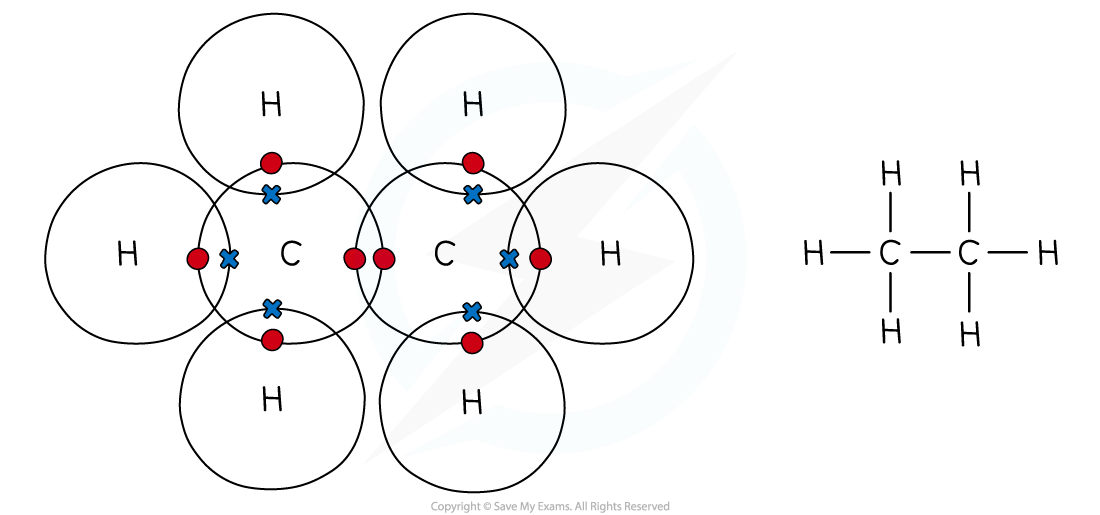
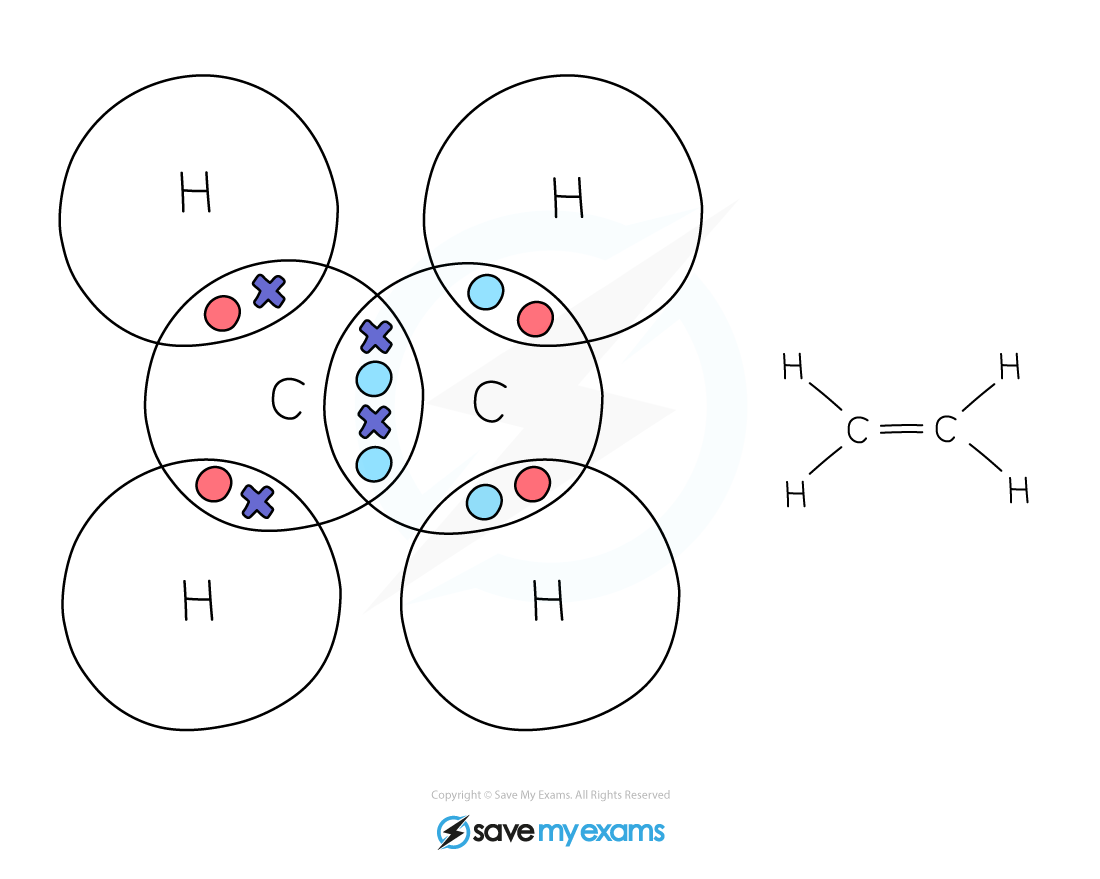
From the earlier note in Covalent Bonding you know that a covalent bond is a shared pair of electrons between two non-metal atoms. This note puts that idea on paper: dot-and-cross drawings for the small molecules the exam names, from hydrogen and the halogens through water, ammonia and carbon dioxide, up to methane and its two-carbon relatives.
Key points of understanding
- A diatomic molecule contains exactly two atoms, such as H2, Cl2, O2, N2 or HCl.
- Hydrogen and the halogens form single covalent bonds, so one pair is shared in each of H2 and Cl2.
- Oxygen shares two pairs, giving a double bond, and nitrogen shares three pairs, giving a triple bond.
- Hydrogen chloride shares one pair between the hydrogen atom and the halogen atom.
- Each shared pair in the drawing uses one electron from each atom, keeping the donor symbols visible.
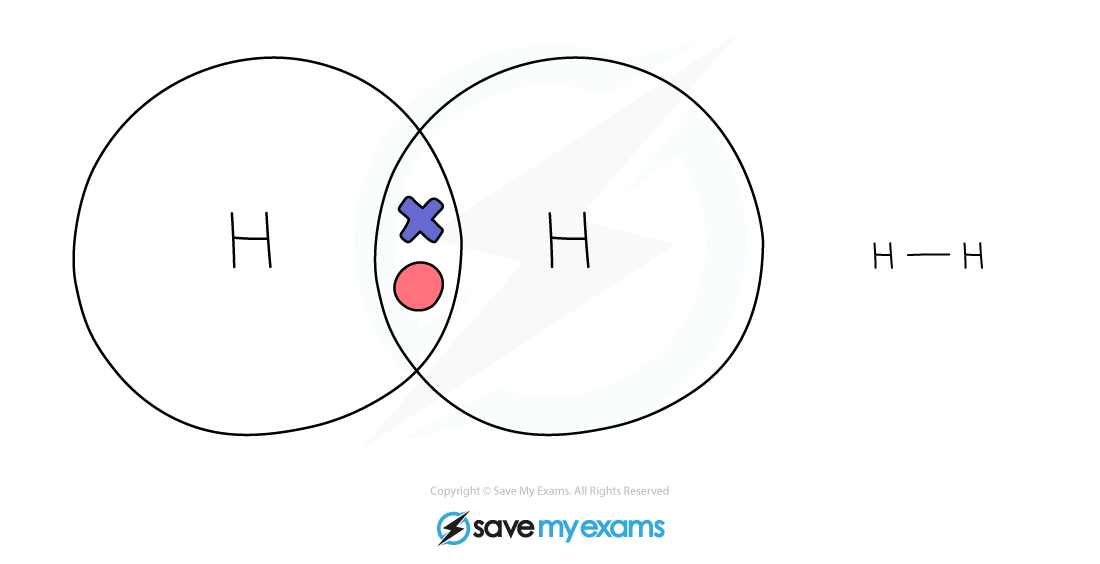
Dot & cross representation of a molecule of hydrogen
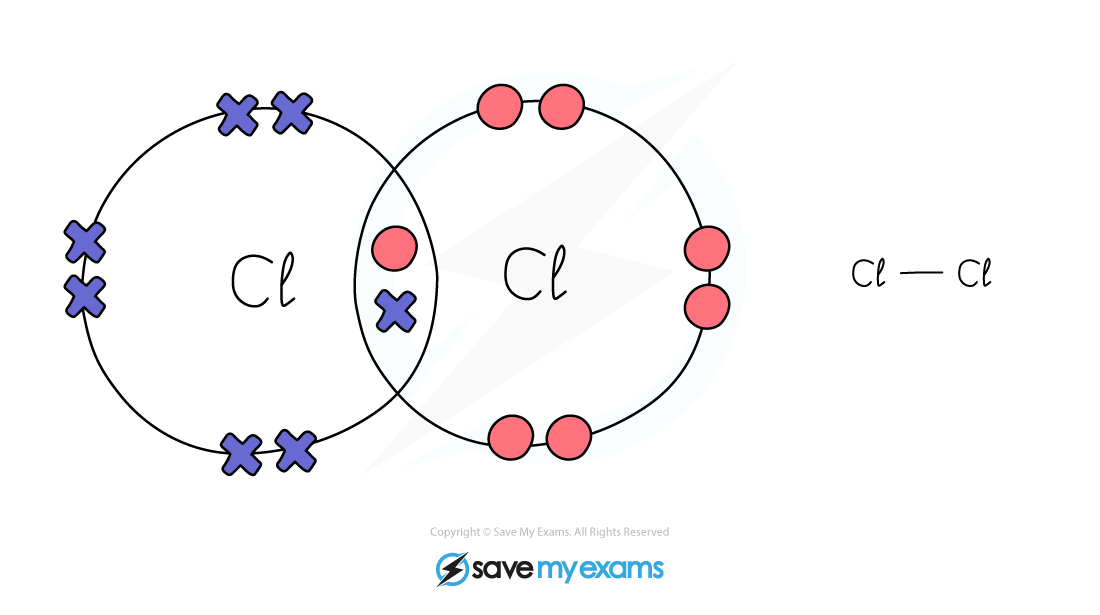
Dot & cross representation of a molecule of chlorine
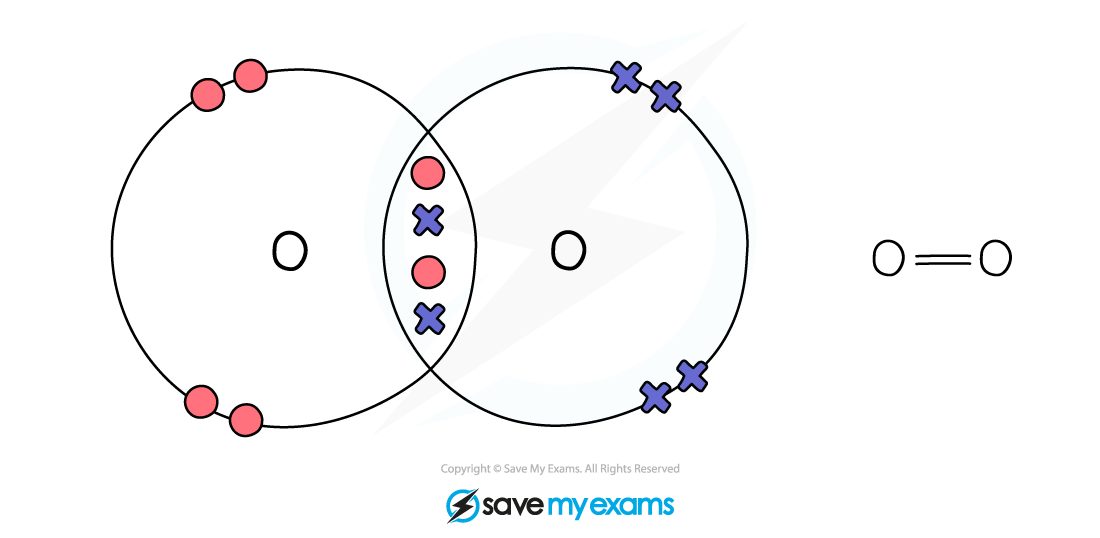
Dot & cross representation of a molecule of oxygen
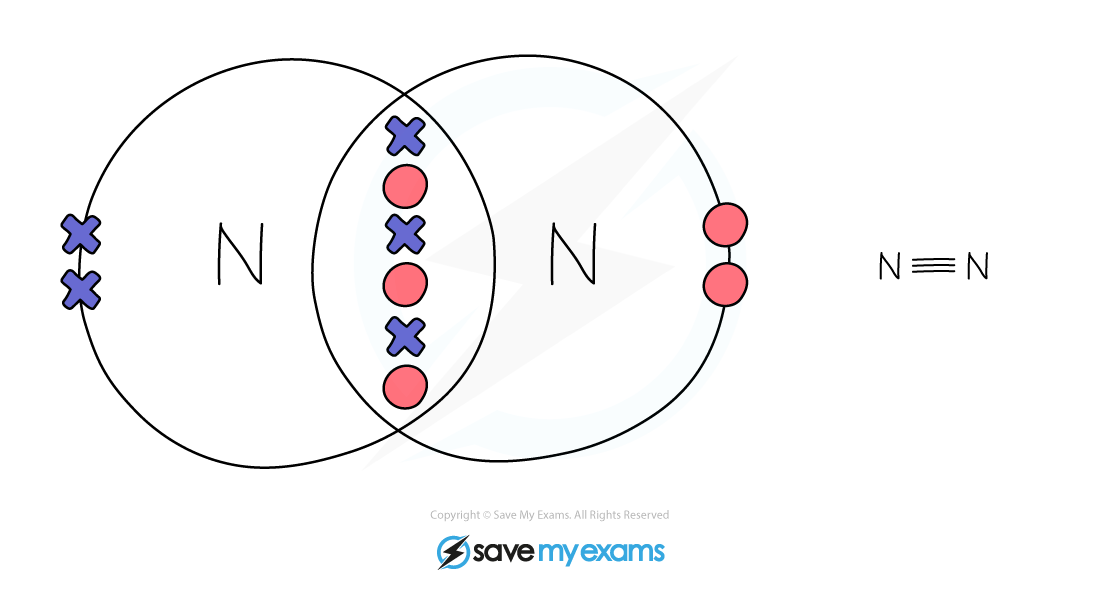
Dot & cross representation of a molecule of nitrogen
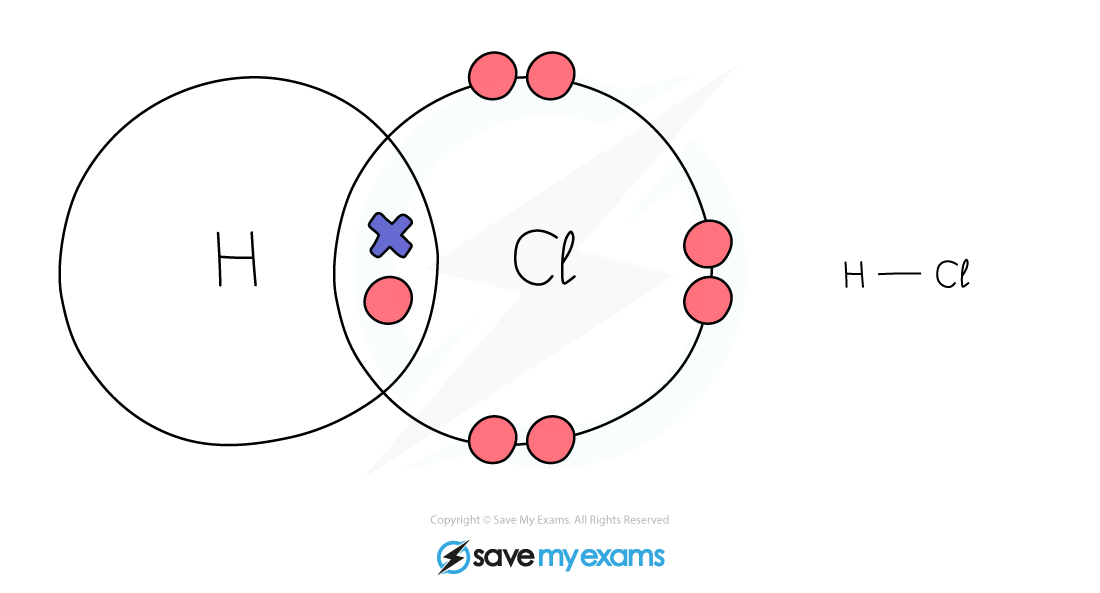
Dot & cross representation of a molecule of hydrogen chloride
Choose a confidence level to continue.
Prefer to read it all at once? Show the full lesson as a page
1.Diatomic molecules
Diatomic molecules contain exactly two atoms, and their dot-and-cross diagrams are the simplest covalent drawings. Hydrogen shares one pair, chlorine shares one pair, oxygen shares two pairs and nitrogen shares three. Hydrogen chloride follows the hydrogen pattern, with one pair shared between a hydrogen atom and a halogen atom.
Dot & cross representation of a molecule of hydrogen
Dot & cross representation of a molecule of chlorine
Dot & cross representation of a molecule of oxygen
Guided content from the SME authoring corpus — note rn_MVnFKDMVkswzpmpw, pinned at fa1f302050ba · promoted SyllabAI/syllabai-resources e967e75f1339