Alloys
2 guided lessons · 18 checks · 2. Inorganic Chemistry → Extraction & Uses of Metals
Guided lessons for this note
Which concept don't you understand yet?
We'll explain it simply and check your understanding. Pick any lesson — any order works.
0 of 18 checks correct so far
Lesson 1 of 2
Alloys
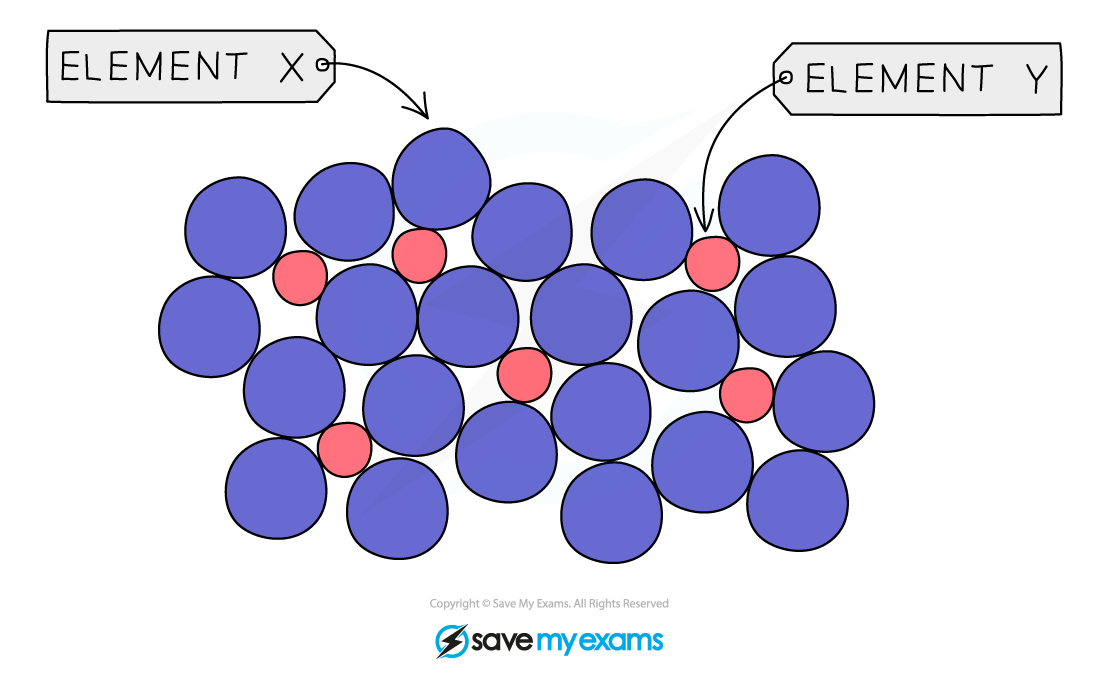
Alloys are mixtures: a metal combined with one or more other elements, usually other metals or carbon. Steel, for example, is iron mixed with carbon. The blend often behaves very differently from the metals inside it: it can be stronger and harder, and it resists corrosion and extreme temperatures better. These enhanced properties are why alloys often beat pure metals in real uses.
What you know already
From Extraction & Uses of Metals you have seen steel types doing jobs that pure iron cannot. This note explains why: alloys are mixtures whose different-sized atoms spoil the tidy atomic pattern of a pure metal, making the layers harder to slide. It also names brass, the classic copper-zinc alloy.
Key points of understanding
- Alloys are mixtures: either several metals together, or a metal with a non-metal such as carbon.
- Steel is made from iron mixed with carbon.
- Alloys are often stronger and harder than the metals they contain.
- Many alloys resist corrosion or withstand extreme temperatures.
- Brass, a common alloy, contains 70% copper and 30% zinc.
Choose a confidence level to continue.
Prefer to read it all at once? Show the full lesson as a page
1.Alloys
Alloys are mixtures: a metal combined with one or more other elements, usually other metals or carbon. Steel, for example, is iron mixed with carbon. The blend often behaves very differently from the metals inside it: it can be stronger and harder, and it resists corrosion and extreme temperatures better. These enhanced properties are why alloys often beat pure metals in real uses.
Key points
- Alloys are mixtures: either several metals together, or a metal with a non-metal such as carbon.
- Steel is made from iron mixed with carbon.
- Alloys are often stronger and harder than the metals they contain.
- Many alloys resist corrosion or withstand extreme temperatures.
- Brass, a common alloy, contains 70% copper and 30% zinc.
Guided content from the SME authoring corpus — note rn_MMkxbt9y3M3XvXrc, pinned at 286b5ac81d43 · promoted SyllabAI/syllabai-resources e967e75f1339