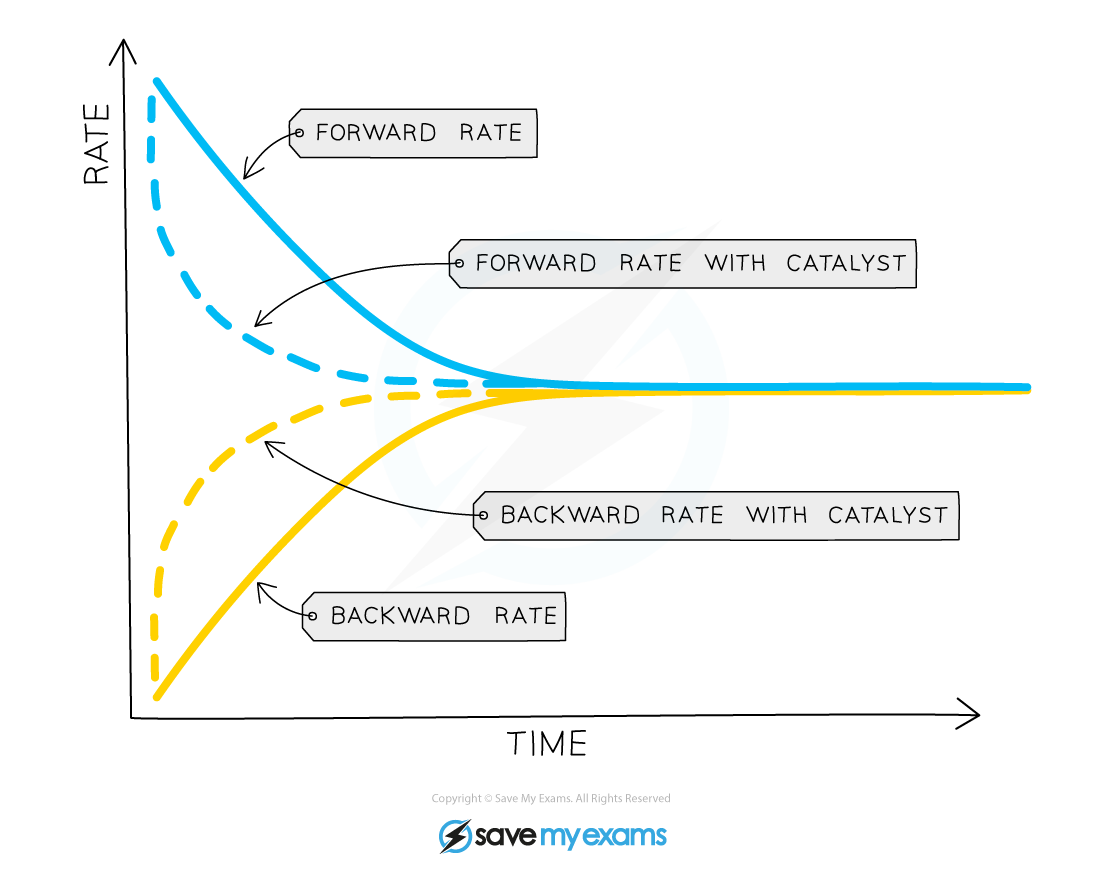
The Position of Equilibrium
3 guided lessons · 27 checks · 3. Physical Chemistry → Reversible Reactions & Equilibria
Guided lessons for this note
Which concept don't you understand yet?
We'll explain it simply and check your understanding. Pick any lesson — any order works.
0 of 27 checks correct so far
Lesson 1 of 3
Equilibrium position and temperature
How much of each chemical survives at equilibrium depends on the conditions around the flask. This lesson introduces the principle chemists use to predict the shift and applies it to temperature changes.
What you know already
From Reversible Reactions you already know that changes can run both ways at once. This note asks where the balance point sits, how temperature and pressure shove it, and why a catalyst cannot move it at all. Colour-change equilibria make the shifting balance visible to the eye.
Key points of understanding
- The balance of reactants and products at equilibrium answers to the conditions.
- A shift to the right means the forward reaction is favoured and more products form.
- A shift to the left means the reverse reaction is favoured and more reactants form.
- Raising the temperature shifts the equilibrium in the direction of the endothermic reaction.
- Lowering the temperature shifts the equilibrium in the direction of the exothermic reaction.
Choose a confidence level to continue.
Prefer to read it all at once? Show the full lesson as a page
1.Equilibrium position and temperature
How much of each chemical survives at equilibrium depends on the conditions around the flask. This lesson introduces the principle chemists use to predict the shift and applies it to temperature changes.
Key points
- The balance of reactants and products at equilibrium answers to the conditions.
- A shift to the right means the forward reaction is favoured and more products form.
- A shift to the left means the reverse reaction is favoured and more reactants form.
- Raising the temperature shifts the equilibrium in the direction of the endothermic reaction.
- Lowering the temperature shifts the equilibrium in the direction of the exothermic reaction.
Guided content from the SME authoring corpus — note rn_DRQXrcSrmgQ7jcbZ, pinned at 51a6ed34e715 · promoted SyllabAI/syllabai-resources e967e75f1339