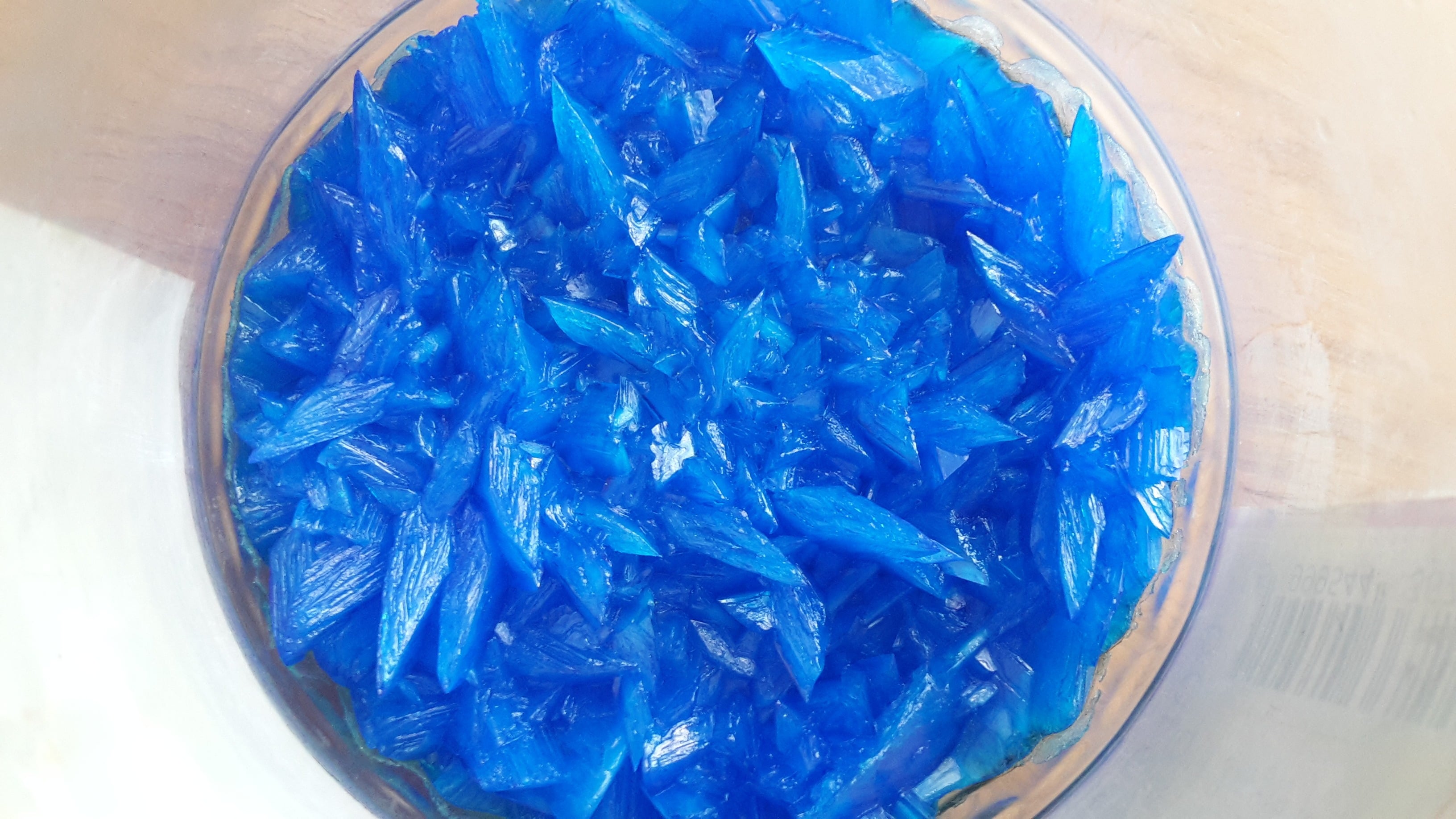
Prepare a Soluble Salt
2 guided lessons · 18 checks · 2. Inorganic Chemistry → Acids, Bases & Salt Preparations
Guided lessons for this note
Which concept don't you understand yet?
We'll explain it simply and check your understanding. Pick any lesson — any order works.
0 of 18 checks correct so far
Lesson 1 of 2
Prepare a soluble salt
A soluble salt can be made by warming an acid with an insoluble base such as a metal oxide. The base is added until some of it is left over, which guarantees the acid has all reacted, and the leftover solid is then filtered away. What remains is a solution of the salt alone, ready to be concentrated and crystallised.
What you know already
From Bases you already know that metal oxides and hydroxides neutralise acids to form a salt and water. This note turns that chemistry into a working method: how to prepare, purify and crystallise a soluble salt starting from an insoluble base.
Key points of understanding
- A soluble salt forms when an acid reacts with an insoluble base.
- The insoluble base is added in excess so that all of the acid reacts.
- Filtration removes the excess solid, leaving only the salt and water in solution.
- Heating evaporates water until small crystals begin to appear, usually when about half the water has gone.
- Slow evaporation over several days lets larger crystals grow.
Choose a confidence level to continue.
Prefer to read it all at once? Show the full lesson as a page
1.Prepare a soluble salt
A soluble salt can be made by warming an acid with an insoluble base such as a metal oxide. The base is added until some of it is left over, which guarantees the acid has all reacted, and the leftover solid is then filtered away. What remains is a solution of the salt alone, ready to be concentrated and crystallised.
Key points
- A soluble salt forms when an acid reacts with an insoluble base.
- The insoluble base is added in excess so that all of the acid reacts.
- Filtration removes the excess solid, leaving only the salt and water in solution.
- Heating evaporates water until small crystals begin to appear, usually when about half the water has gone.
- Slow evaporation over several days lets larger crystals grow.
Guided content from the SME authoring corpus — note rn_6ZCysv9GnNQmc3w2, pinned at a8889009338b · promoted SyllabAI/syllabai-resources e967e75f1339