Making inverse functions
Excerpt: Here we revisit the algebraic process of finding an inverse for a function, and explore the importance of specifying the domain and when we need to restrict the domain in order to make a function invertible.
Function machines
Starting with a function defined for as any real number, we can represent it as a function machine. We put in at the left and get out at the right.

The inverse function, , is such that if we put in we’ll get out . Fill in the boxes below so that if you put in at the right, you get out at the left.

To find out what the inverse function is, use the same machine, put in at the right and see what comes out at the left. The expression that comes out at the left is equal to .
In other words, is what we get by rearranging to make the subject. We can then simply replace each with an to find .
Solution
If we had written
, then we would have
The second function machine above tells us that putting
into
we get out
, so
Complete the following.
Rearranging
Find the inverse of each of these functions, either by drawing a function machine or by rearranging the formula.
The symbols define the domain of the function and mean can be any real number.
Solution
Now try these
Note we have chosen functions that can be written as simple function machines. There are many functions which cannot be written like this and many which cannot be inverted algebraically. Can you think of some examples?
Defining domains
What is if ?
What if you also knew that ?
If then could be or , but by restricting to , we ensure there is a single solution to the equation . (Of course, we could have restricted in other ways to ensure that there was a single solution.)
Answer
The need for one-to-one
Let’s think about this quadratic problem in terms of functions and consider the function where can be any real number. The domain of is and the range is the interval or in other words .
The function is many-to-one, which you can see from the graph of below. For instance, the inputs and both give the same output value, namely .
The inverse function, , would be one that ‘undoes’ the effects of , but what value should we get for ? We would want it to provide both values, and , making it a one-to-many relation but we do not consider things with more than one output to be functions.
This seems to imply that but the indicates one-to-many behaviour, so is not actually a function.
What happens if we try to invert the function algebraically?
See the resource What relation are you? for more about many-to-one and one-to-many relations.
Restricting the domain
If we define a new function, , with the same rule as but with its domain restricted to , then this function is one-to-one (also known as injective).
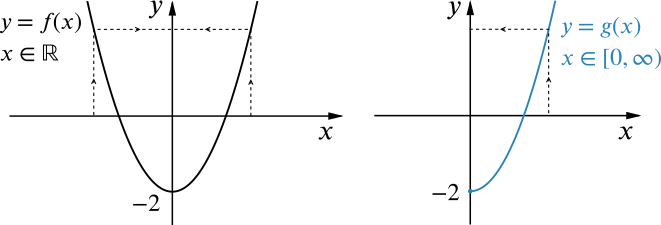
This means that
is invertible and we can write its inverse function as
How did I know to use the positive rather than the negative square root?
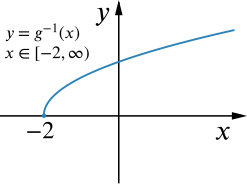
Notice that,
- Function has the same range as so any value that can be obtained as output from can also be obtained from .
- The domain of is , which is the range of .
- The range of is , which is the domain of .
We chose to restrict the domain of to , but we could instead have chosen to restrict it to . What would the graph of then look like? What would its range have been? Would it be invertible?
Another function is defined as . What is its range and what is its inverse function?
This alternative has range , which is the same as before. It is still one-to-one, but now we see that we need to take the negative square root to find the inverse of , because the domain of is . and therefore
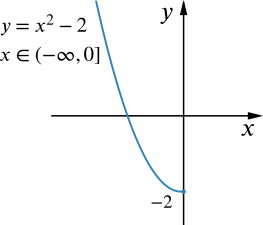
Notice that the domain of is the range of and vice versa.
For the function
, since it has domain
, we will have to take the positive square root to find its inverse.
Answers
Definitions
When we say that two functions, and , are inverses we mean that each one “undoes” the action of the other. Applying one and then the other (either way round) will take us back to our starting value.
Algebraically we can say that,
- for all values of in the domain of , and
- for all values of in the domain of .
In order to achieve this, not only must be one-to-one on its entire domain, but also the domain of must be the same as the range of and vice-versa. Below, we shall explore why this is.
There is a concept of a one-sided inverse, where one of the above bullet points is true but not the other. However, we are only going to consider cases where they are inverses both ways round.
Matching domains and ranges
Function machines
We can represent the composition of a function and its inverse as a function machine.
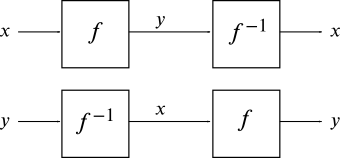
In the middle of the first diagram, the output of becomes the input of , and so the range of must match the domain of . The second machine shows that the domain of must match the range of .
Graphs
Another way to think about this is to consider the graph above of the function . Starting at a value of in the domain of we find by tracking vertically from the -axis to the curve then horizontally to the -axis.
As is the inverse, the same graph also represents . Starting at a value on the -axis we track the same path in reverse to find our value. As it is the same graph, the range of possible outputs from must be the same as the domain of possible inputs to and vice-versa.
A diagrammatic approach
We can draw a diagram to represent the function , as we did in What relation are you?.
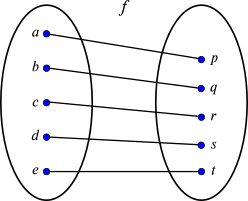
The dots on the left represent the domain of and as is a one-to-one function, there is at most one arrow coming into each dot on the right. We have also chosen to make the right hand set be exactly the range of , so every dot has an arrow coming into it.
What would the diagram for look like, and how does this show that the domain of is the range of and vice versa?
The arrows are all reversed to get the inverse function:
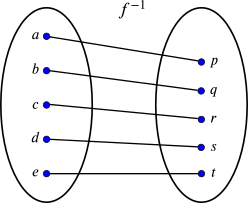
It is clear from these diagrams that the domain of , which is the left set, is the range of , while the range of , which is the right set, is the domain of .
Solution
Invertible sort
Below are graphs of twelve functions. Some are invertible on the domain shown and some are not. Can you sort them out?
You might think about…
- is the function one-to-one or many-to-one?
- how could you restrict the domain to make an invertible function?
- can you find a restricted domain that makes an invertible function with the same range as the unrestricted function?
Graph 1 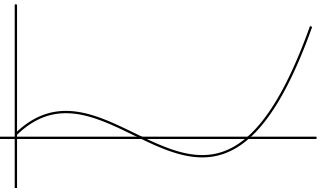
Graph 2 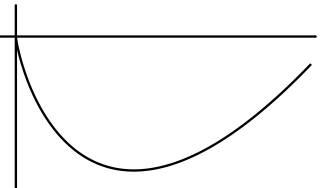
Graph 3 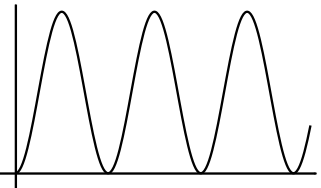
Graph 4 
Graph 5 
Graph 6 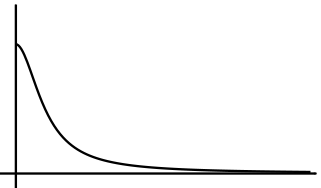
Graph 7 
Graph 8 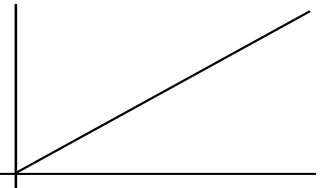
Graph 9 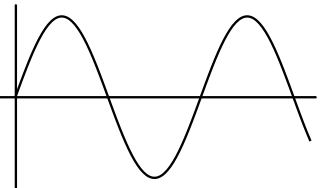
Graph 10 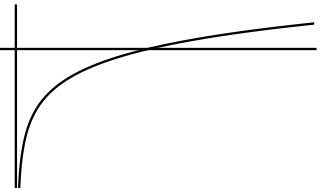
Graph 11 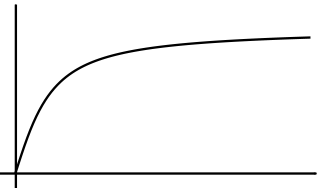
Graph 12