Predicting Shapes & Angles (Edexcel IAL Chemistry)
Exam board Pearson Edexcel · IALUpdated 2026-07-02
Spec point —
3.19
Predicting Shapes & Angles
-
You will need to know and explain the shapes of the following molecules:
- BeCl2
- BCl3
- CH4
- NH3
- NH4+
- H2O
- CO2
- PCl5 (g)
- SF6
- C2H4
-
In order to write the correct shapes and structures of the molecules listed we need to consider the number of valence electrons
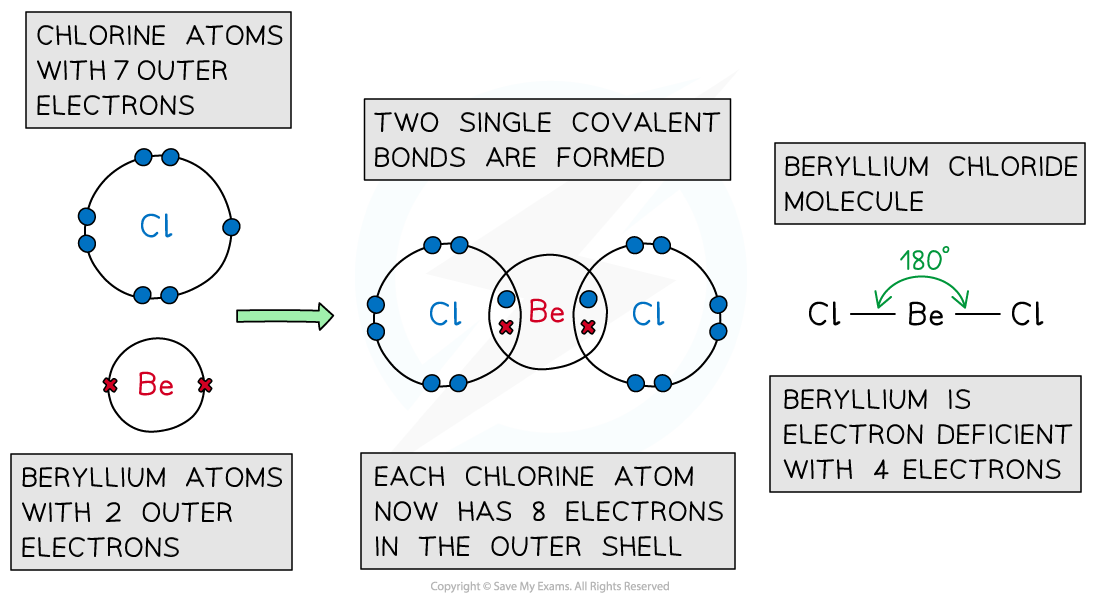
BeCl2
- Beryllium is in group 2, so has 2 valence electrons; Cl is in group 17, so has 7 valence electrons
- Both electrons are used to form covalent bonds with Cl and there are no lone pairs
- Accommodating less than 8 electrons in the outer shell means than the central atom is ‘electron deficient’
- This gives a linear shape with bond angles of 180°
BCl3
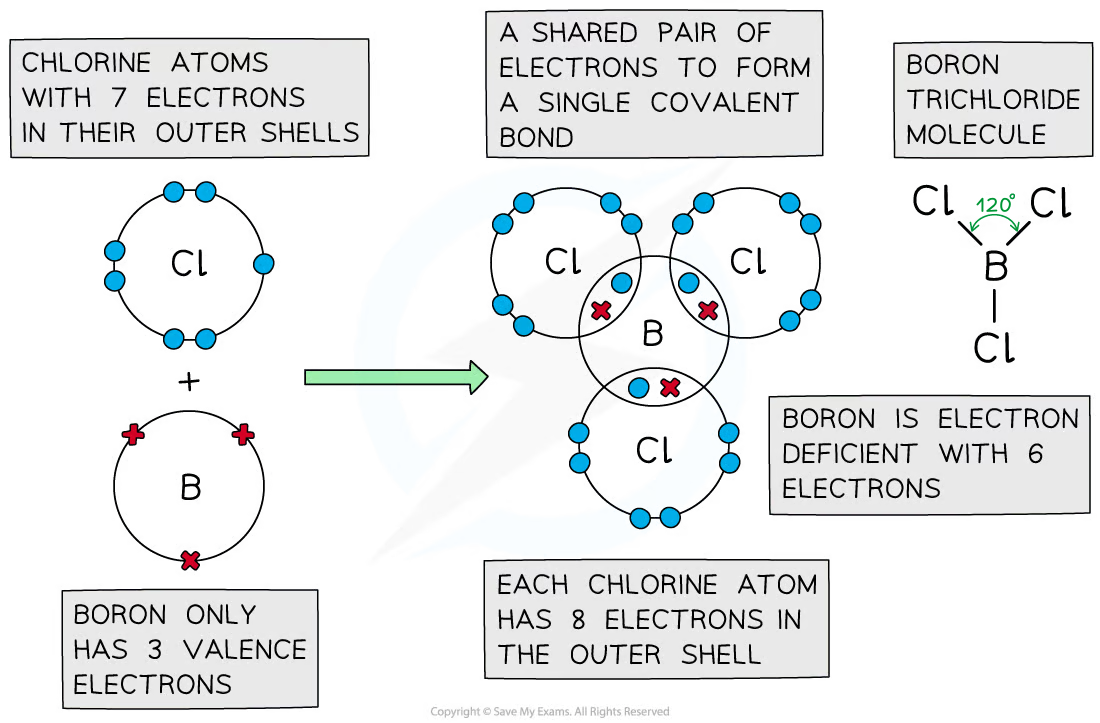
- Boron is in group 13, so has 3 valence electrons; Cl is in group 17, so has 7 valence electrons
- All 3 electrons are used to form covalent bonds with Cl and there are no lone pairs
- Accommodating less than 8 electrons in the outer shell means than the central atom is ‘electron deficient’
- This gives a trigonal planar shape with bond angles of 120°
CH4& NH3
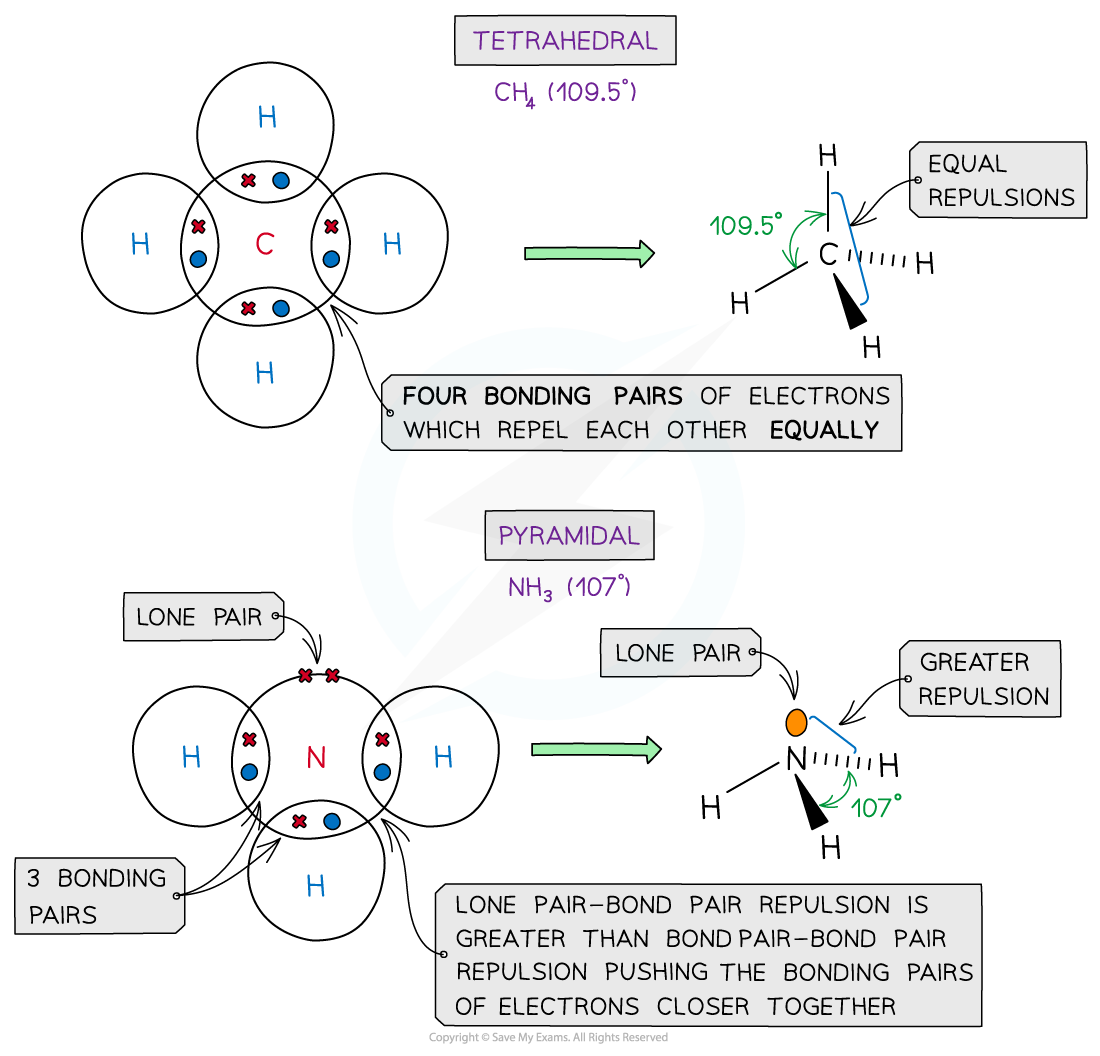
- Carbon is in group 14, so has 4 valence electrons; H is in group 1, so has 1 valence electron
- All 4 electrons are used to form covalent bonds with H
- This gives a tetrahedral arrangement with a bond angle of 109.5°
- Nitrogen is in group 15, so has 5 valence electrons
- Only 3 electrons are used to form covalent bonds with H and 2 are unbonded as a lone pair
- This gives a trigonal pyramid arrangement with a bond angle of 107°
NH4+
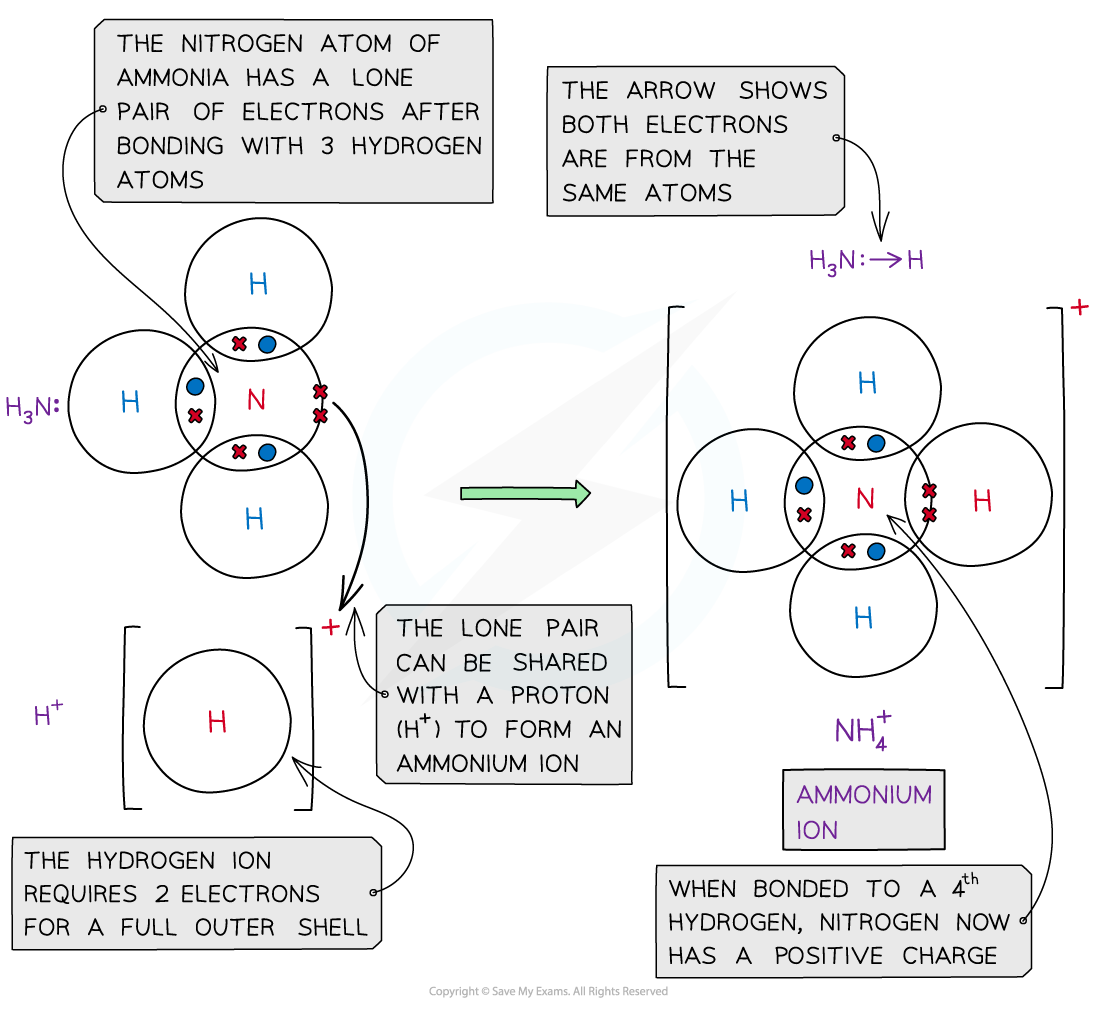
- Nitrogen is in group 15, so has 5 valence electrons; H is in group 1, so has 1 valence electron
- Only 3 electrons are used to form covalent bonds with H and 2 are used to form a dative covalent bond
- This gives a tetrahedral arrangement
- With a bond angle of 109.5° (similar to CH4)
The NH4+ion
Other examples
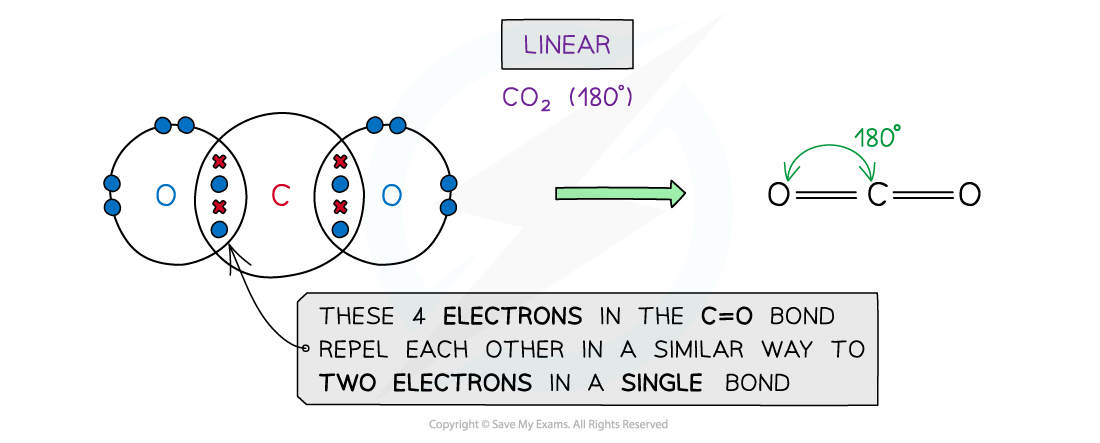
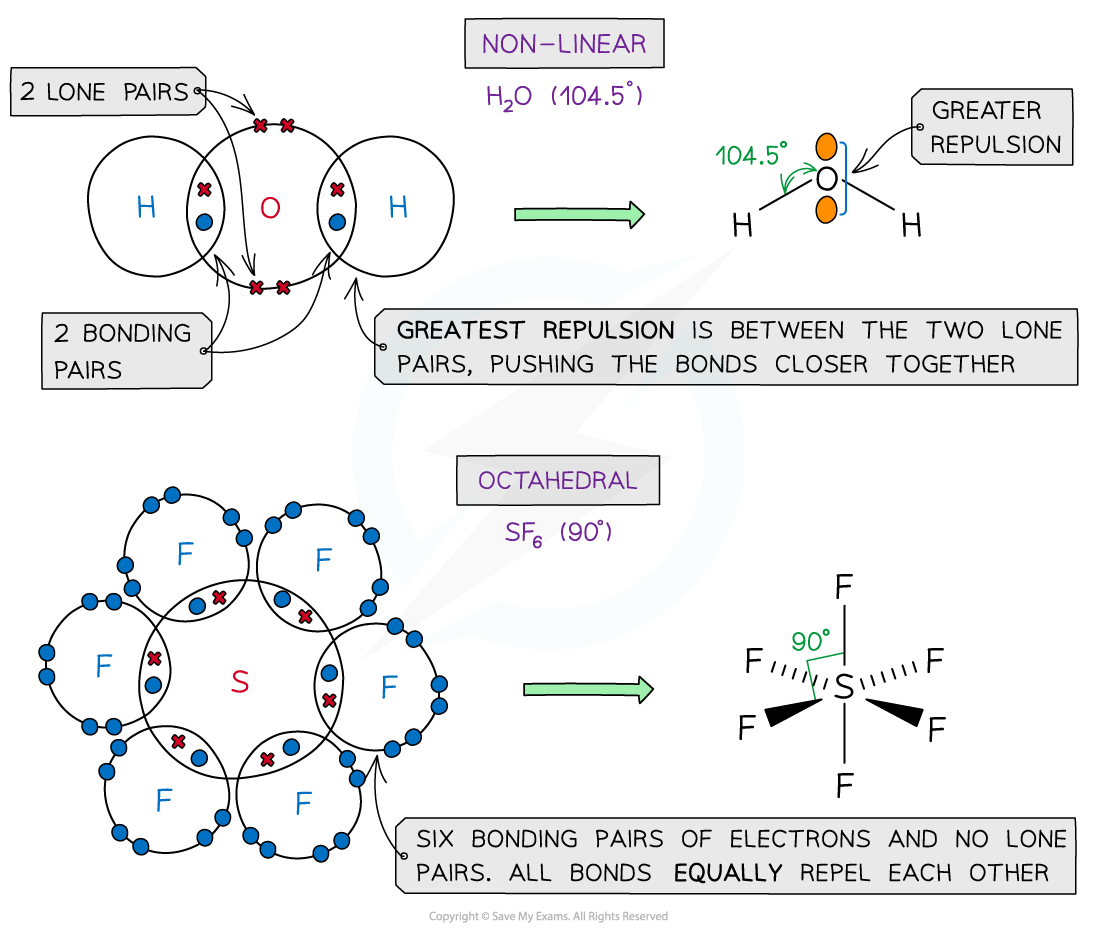
PCl5(g)
-
Phosphorus is in group 15, so has 5 valence electrons; Cl is in group 17, so has 7 valence electrons
- All 5 electrons are used to form covalent bonds with Cl and there are no lone pairs
- This gives a trigonal (or triangular)bipyramidal shape
- With bond angles of 120° and 90°
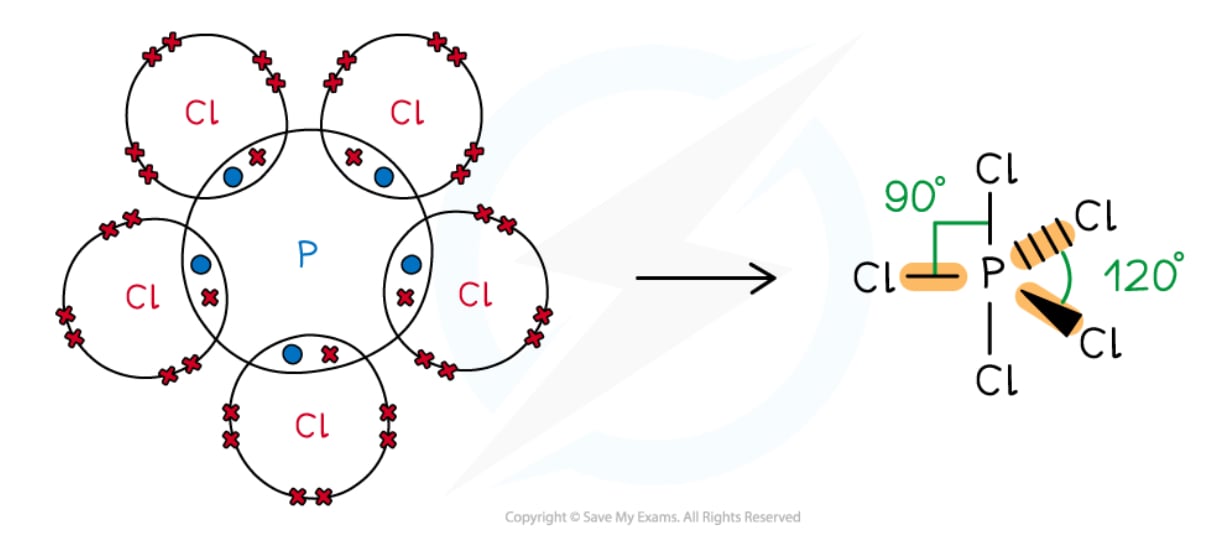
Phosphorus pentachloride molecule
C2H4
- Each carbon atom is in group 14, so has 4 valence electrons, each hydrogen atom is in group 1 so has 1 valence electron
- This gives a total of 12 electrons
- There are 4 C-H bonds which use 8 electrons
- This leaves 4 electrons which are involved in the C=C
- Therefore the overall shape is trigonal planar as there are three regions of electron density for each carbon atom
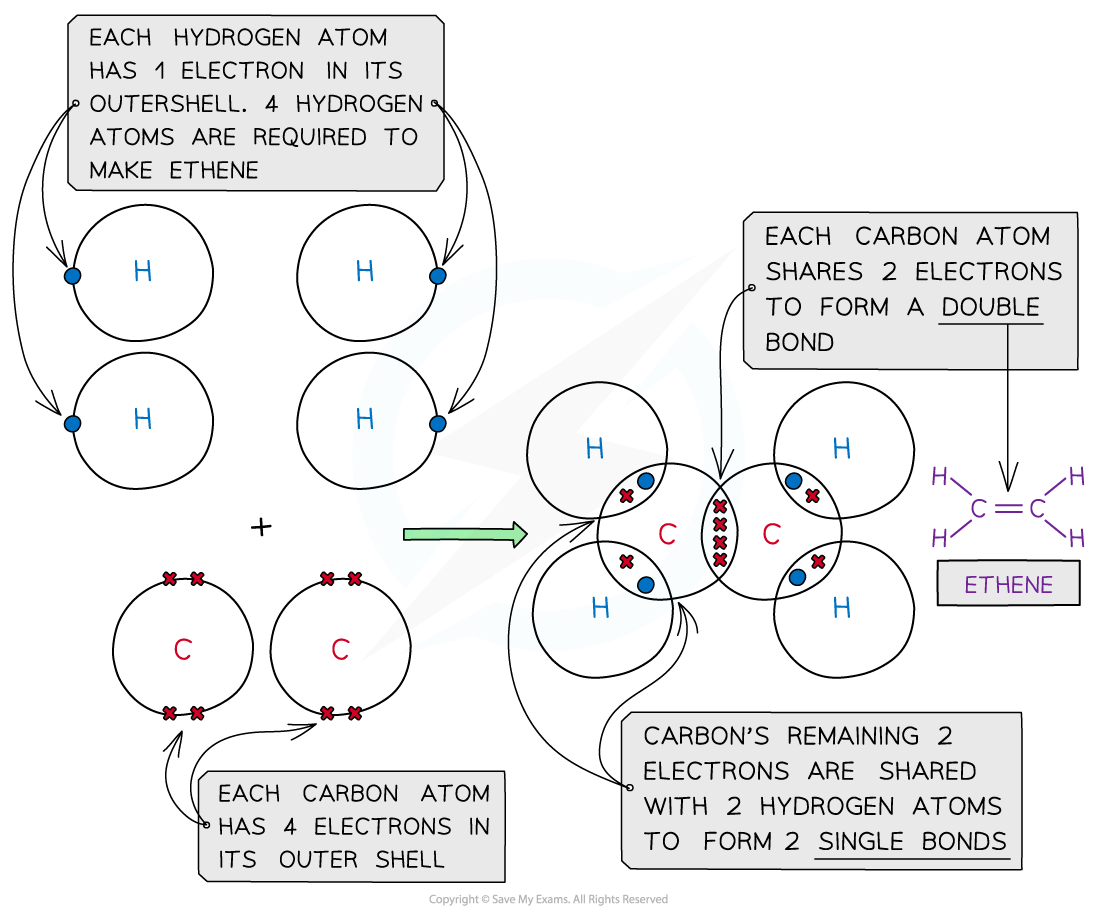
Ethene molecule
Was this revision note helpful?
Build on this topic