Nomenclature & Classification (Edexcel IAL Chemistry)
IUPAC Nomenclature
Spec point —
4.5
- Systematic nomenclature can be used to name organic compounds and therefore make it easier to refer to them
- The alkanes provide the basis of the naming system and the stem of each name indicates how many carbon atoms are in the longest chain in one molecule of the compound
Nomenclature of Organic Compounds Table
| Number of C atoms | Molecular formula of straight-chain alkane | Name of alkane | Stem used in naming |
|---|---|---|---|
| 1 | CH4 | methane | meth- |
| 2 | C2H6 | ethane | eth- |
| 3 | C3H8 | propane | prop- |
| 4 | C4H10 | butane | but- |
| 5 | C5H12 | pentane | pent- |
| 6 | C6H14 | hexane | hex- |
| 7 | C7H16 | heptane | hept- |
| 8 | C8H18 | octane | oct- |
| 9 | C9H20 | nonane | non- |
| 10 | C10H22 | decane | dec- |
- If there are any side-chains or functional groups present, then the position of these groups is indicated by numbering the carbon atoms in the longest chain starting at the end that gives the lowest possible numbers in the name
- The hydrocarbon side-chain is shown in brackets in the structural formula
CH3CH (CH3) CH2CH3
- The side-chain is named by adding ‘-yl’ to the normal alkane stem
- This type of group is called an alkyl group
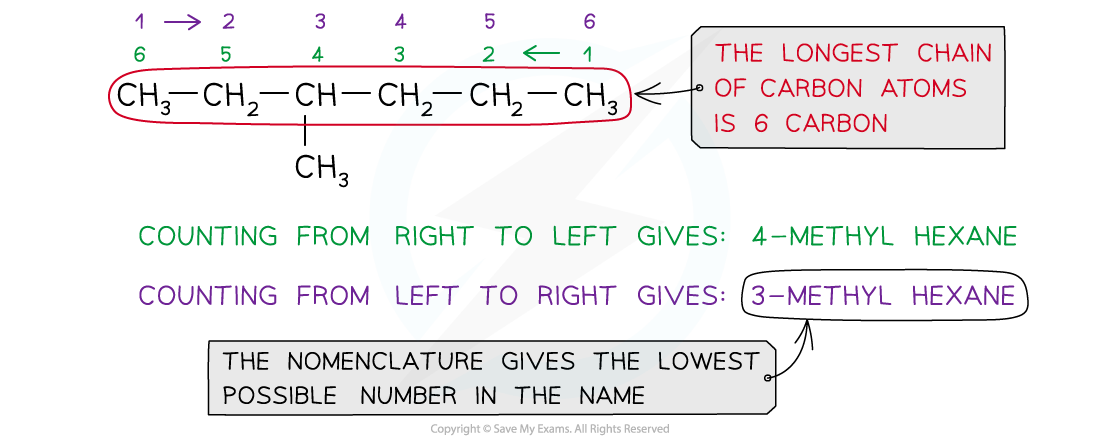
Naming Side Chains
- If there are more than one of the same alkyl side-chain or functional groups, di- (for two), tri- (for three) or tetra- (for four) is added in front of its name
- The adjacent numbers have a comma between them
- Numbers are separated from words by a hyphen
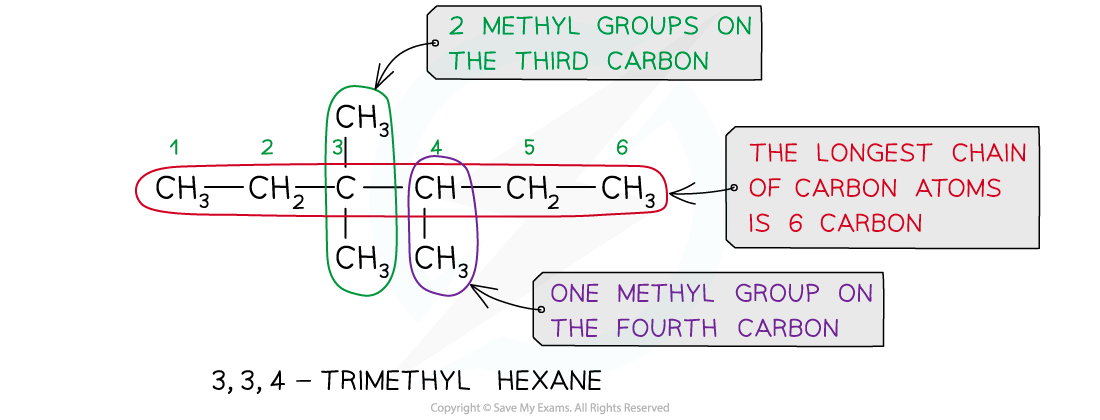
Naming Multiple Side Chains
- If there is more than one type of alkyl side-chain, they are listed in alphabetic order
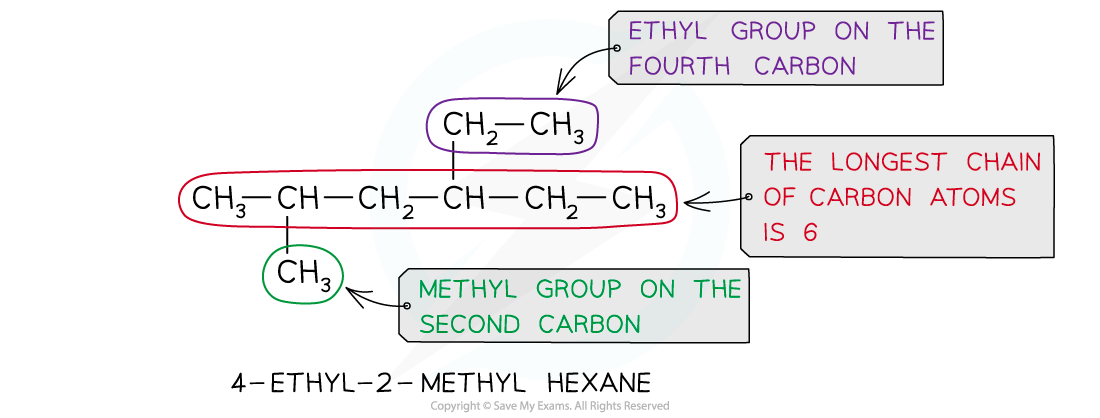
Naming Side Chains in Alphabetical Order
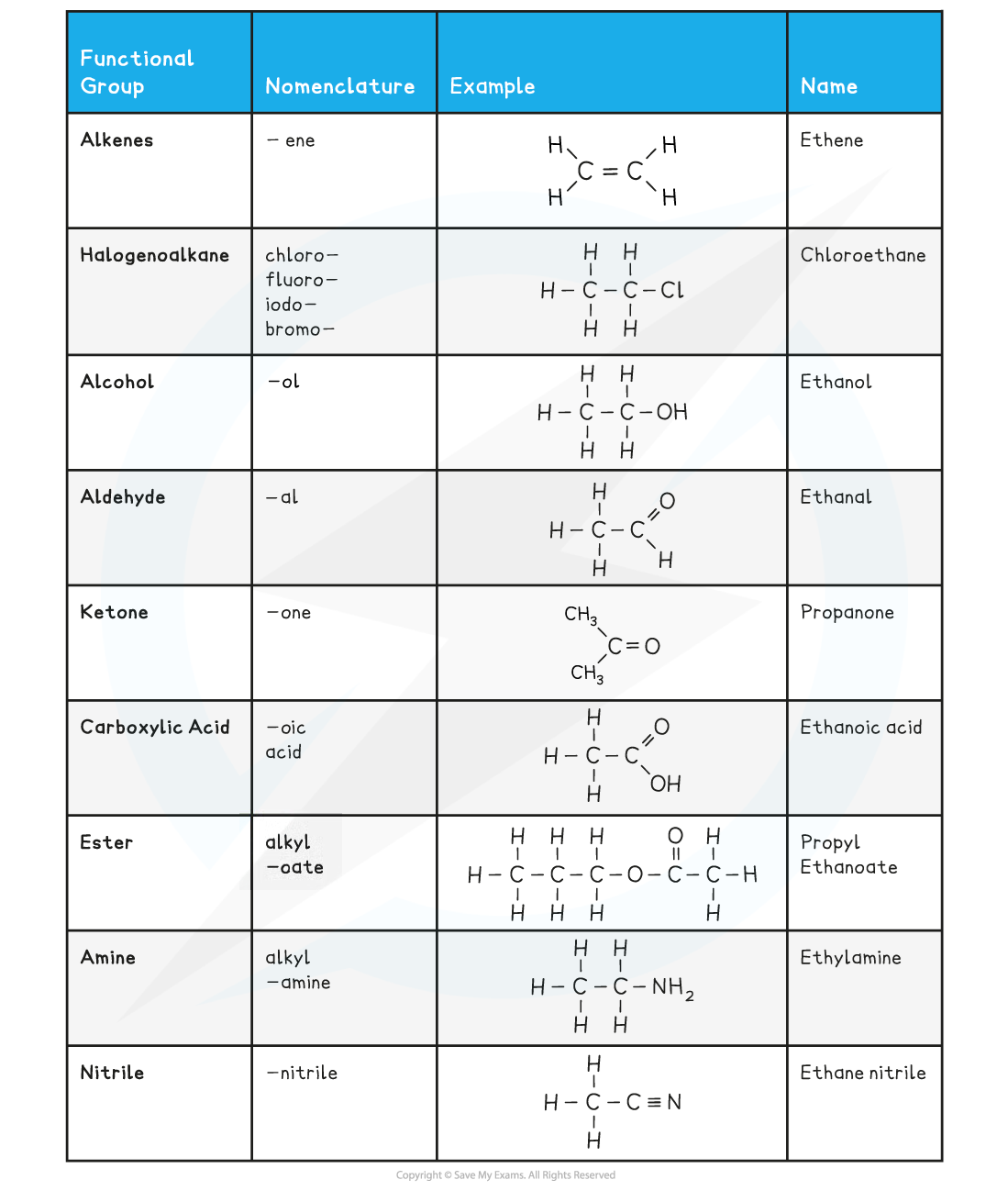
Functional Groups & their Nomenclature Table
Worked Example Naming organic molecules Name the following molecules using correct systematic nomenclature:
Answer
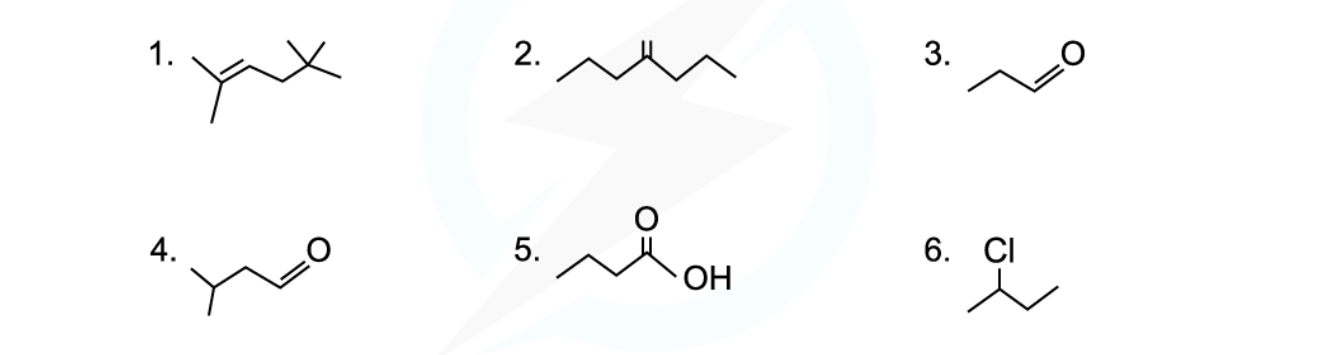
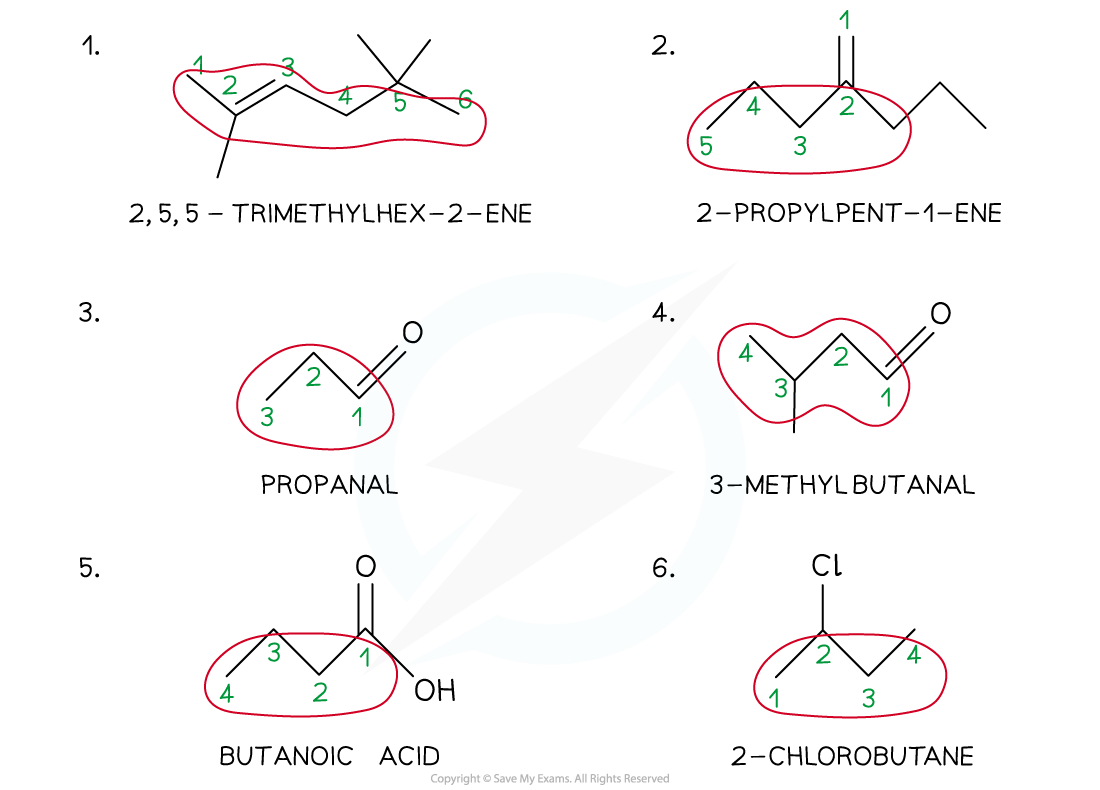
Reaction Classification
Spec point —
4.6
-
We can classify reactions into different types
- An addition reaction is an organic reaction in which two (or more) molecules combine to give a single product with no other products
- A substitution reaction is a reaction that involves replacing an atom or group of atoms by another
- An elimination reaction is a reaction in which a small molecule (such as H2O or HCl) is removed from an organic molecule
- A hydrolysis reaction is a reaction in which a compound is broken down by water (it can also refer to the breakdown of a substance by dilute acids or alkali)
- A condensation reaction is a reaction in which two organic molecules join together and in the process eliminate small molecules (such as H2O or HCl)
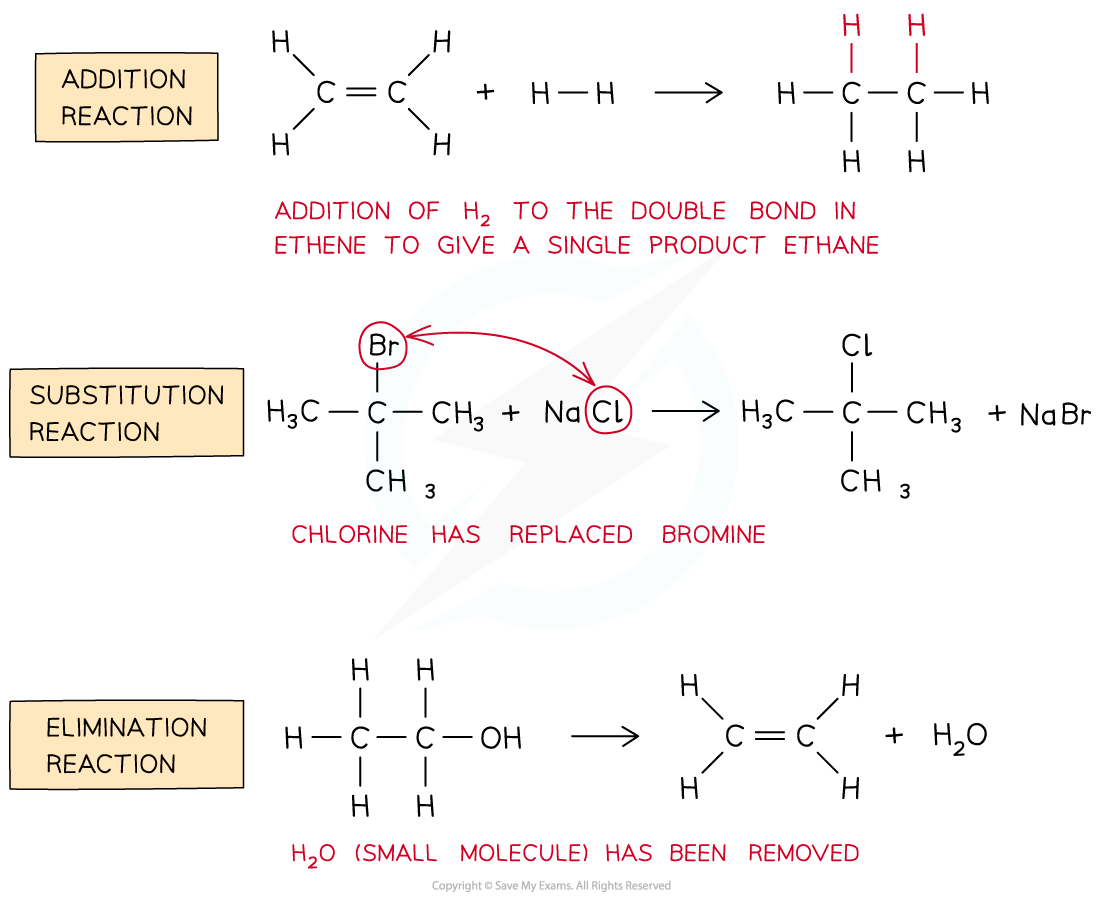
The different types of reactions in organic chemistry
Oxidation & reduction
-
An oxidation reaction is a reaction in which oxygen is added, electrons are removed or the oxidation number of a substance is increased
- In organic chemistry it often refers to the addition of oxygen or removal of hydrogen atoms to a substance
- In equations for organic redox reactions, the symbol [O] can be used to represent one atom of oxygen from an oxidising agent
-
A reduction reaction is a reaction in which oxygen is removed, electrons are added or the oxidation number of a substance is decreased
- In organic chemistry it often refers to the removal of oxygen or addition of hydrogen atoms to a substance
- In equations for organic redox reactions, the symbol [H] can be used to represent one atom of hydrogen from a reducing agent
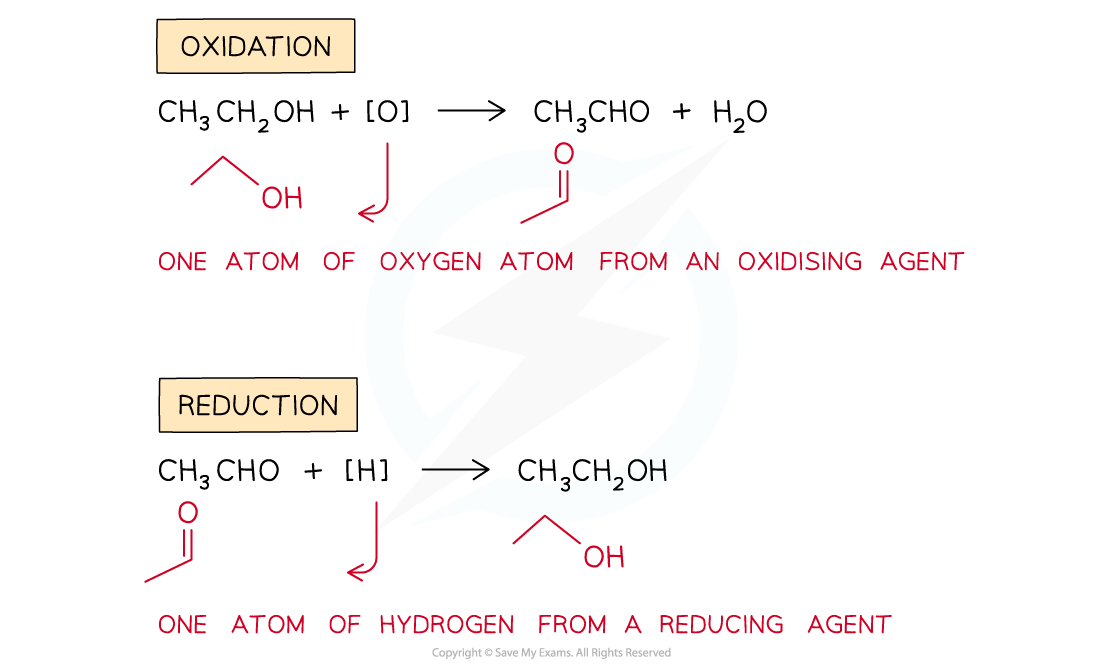
In organic chemistry oxidation is often the gain of oxygen or loss of hydrogen atoms and reduction is the gain of hydrogen and loss of oxygen atoms
Polymerisation
- In the AS level course all the polymerisation reactions covered are examples of addition polymerisation
- Addition polymerisation is the reaction in which many monomers containing at least one C-C double bond form long chains of polymers as the only product
Was this revision note helpful?