Acid & Alkaline Hydrolysis of Esters (Edexcel IAL Chemistry)
Spec point —
15.15
Acid & Alkaline Hydrolysis of Esters
Hydrolysis of Esters - Acid
- The reverse of the esterification reaction is called hydrolysis
- Ester hydrolysis is a useful reaction for creating biodegradable plastics
- Esters can be hydrolysed to reform the carboxylic acid and alcohol or salts of carboxylic acids by using either dilute acid (e.g. sulfuric acid) or alkali(e.g. sodium hydroxide) and heat
- When an ester is heated under reflux with acid an equilibrium mixture is established, meaning that the hydrolysis reaction is not complete
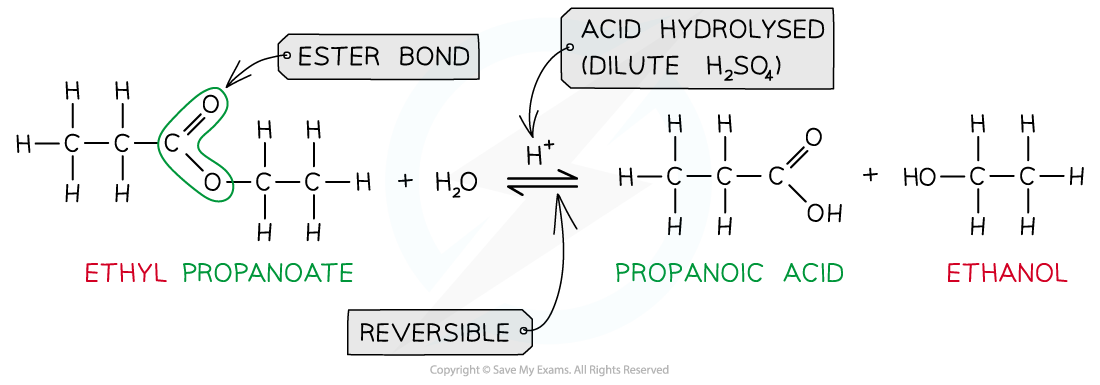
Ester hydrolysis by dilute acid is a reversible reaction forming carboxylic acid and alcohol
Hydrolysis of Esters - Alkaline
-
However, heating the ester under reflux with dilute alkali (e.g. sodium hydroxide) is an **irreversible **reaction as the ester is fully hydrolysed and the reaction goes to completion
-
The ester directly reacts with the alkali (NaOH) to produce to form a** carboxylate salt** and alcohol in an irreversible step
-
The sodium carboxylate salt requires further acidification to turn into a carboxylic acid
- The sodium carboxylate (-COO-) ion needs to get protonated by an acid (such as HCl) to form the carboxylic acid (-COOH)
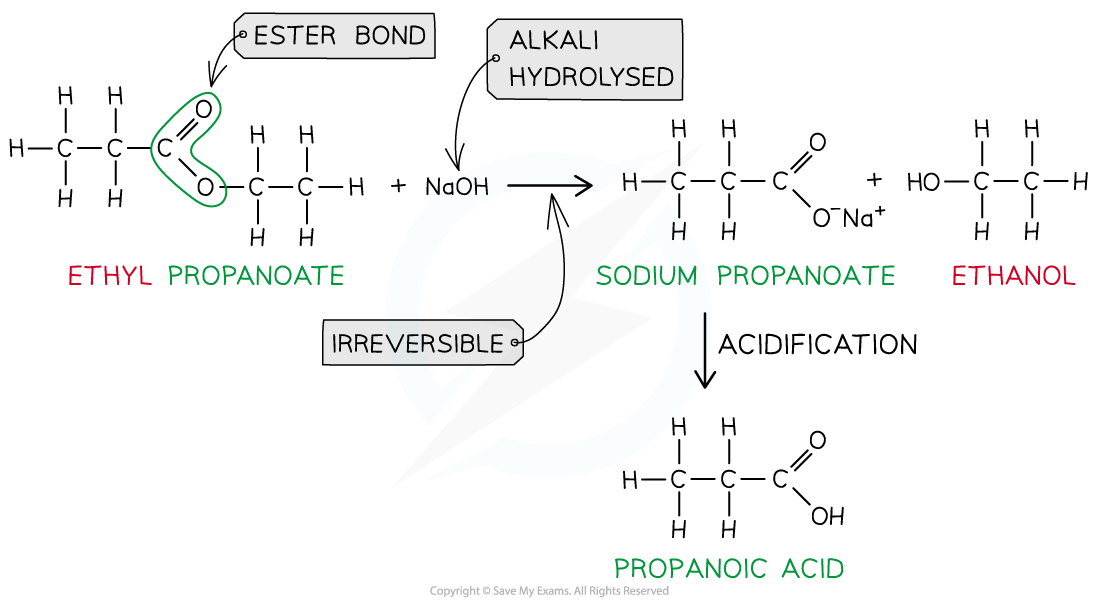
Ester hydrolysis by dilute alkali is an irreversible reaction forming a sodium carboxylate salt and alcohol
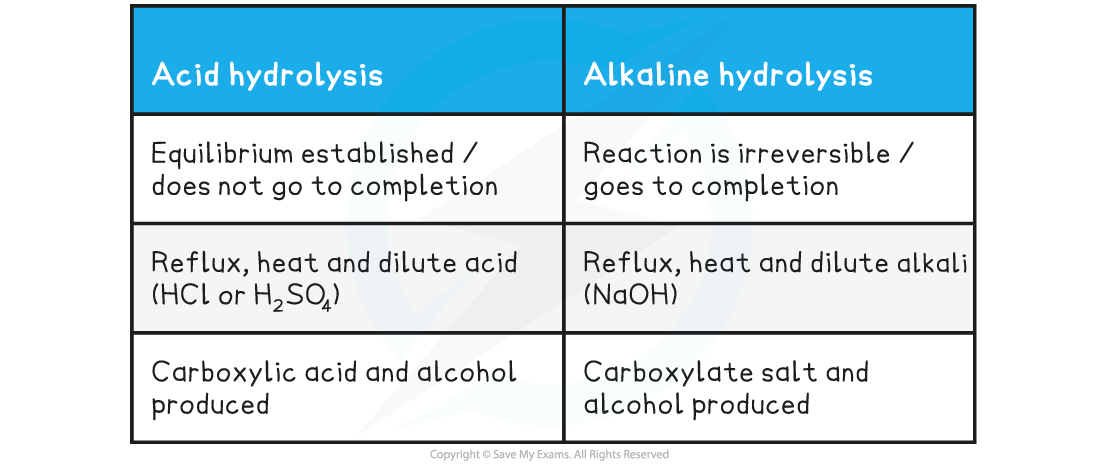
Table showing differences in Hydrolysis of Esters
Worked Example Name the products and write equations for the following hydrolysis reaction:
- Ethyl ethanoate with hot dilute sulfuric acid solution
- Methyl propanoate by hot sodium hydroxide solution
Answer:
Answer 1: Ethanoic acid and ethanol
CH3COOCH2CH3 + H2O ⇌ CH3COOH + CH3CH2OH
Answer 2: Sodium propanoate and methanol
CH3CH2COOCH3 + NaOH → CH3CH2COONa + CH3OH
Was this revision note helpful?