Culturing Microorganisms (Edexcel IAL Biology)
Spec point —
6.1
Culturing Microorganisms
-
Most microorganisms are only visible using a microscope
-
For microbe investigations it is therefore necessary to culture microorganisms
- This grows enough microorganisms to make measurements during investigations
- E.g. bacteria reproduce by cloning themselves, so when they are grown on agar gel they form a colony of identical individuals that is visible to the naked eye
-
Microorganisms must be provided with everything they need to grow such as
-
Nutrients
-
Oxygen
- Note that anaerobic microorganisms would require the absence of oxygen
-
Optimum pH
-
Favourable temperature
-
-
Microorganisms should be cultured with great care
- There is always the risk that a *mutation *could lead to the formation of pathogenic strains
- Pathogenic bacteria from the environment could contaminate the bacterial culture being investigated
-
Remember to
-
Follow health and safety precautions
-
Ensure that all equipment are sterilised before culturing the bacteria
- Sterilising involves killing microorganisms, e.g. by heating to a high temperature or the use of antimicrobial chemicals
-
Keep the culture in the laboratory
-
Seal cultures in a plastic bag and sterilise at high temperature and pressure before disposal
-
Culturing steps
-
Obtain a supply of the type of microorganism to be cultured
-
Provide them with the correct type of nutrients to facilitate growth
- A nutrient growth medium (plural media) containing carbon, nitrogen, and minerals is typically used
- The medium could be in the form of a liquid culture or a solid nutrient agar, a type of gel extracted from seaweed
-
Ensure that the nutrient medium is kept under sterile conditions until use
-
By adjusting the type of nutrients in the medium, conditions will be created for the optimal growth of a certain type of microorganism; this is known as a selective medium
- Selective media can be used to identify mutant strains of microorganisms or those that are resistant to antibiotics
- They are also useful for identifying genetically modified microorganisms
-
Microorganisms are introduced to a growth medium using inoculation with a sterilised inoculation loop
-
Inoculation can be used to transfer microorganisms between media, e.g.
- From agar gel into a liquid culture flask
- From a liquid culture flask onto agar gel
-
The new medium should be sealed or covered to avoid contamination from microorganisms in the air; if growing aerobic microorganisms any seal or cover should not be airtight
- Flasks can be sealed with a sterile cotton wool stopper
- Petri dishes can be covered with a lid
-
Label the medium clearly and incubate at around 20 °C to prevent the growth of pathogenic microorganisms
- Microorganisms that are pathogenic to humans will grow best at around 37 °C
- In a hospital or research laboratory a higher temperature might be used to obtain faster results
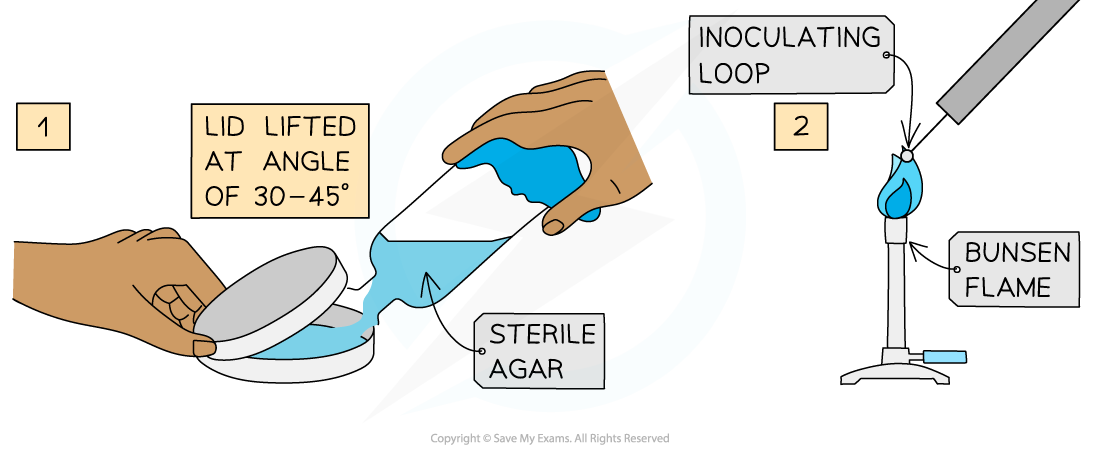
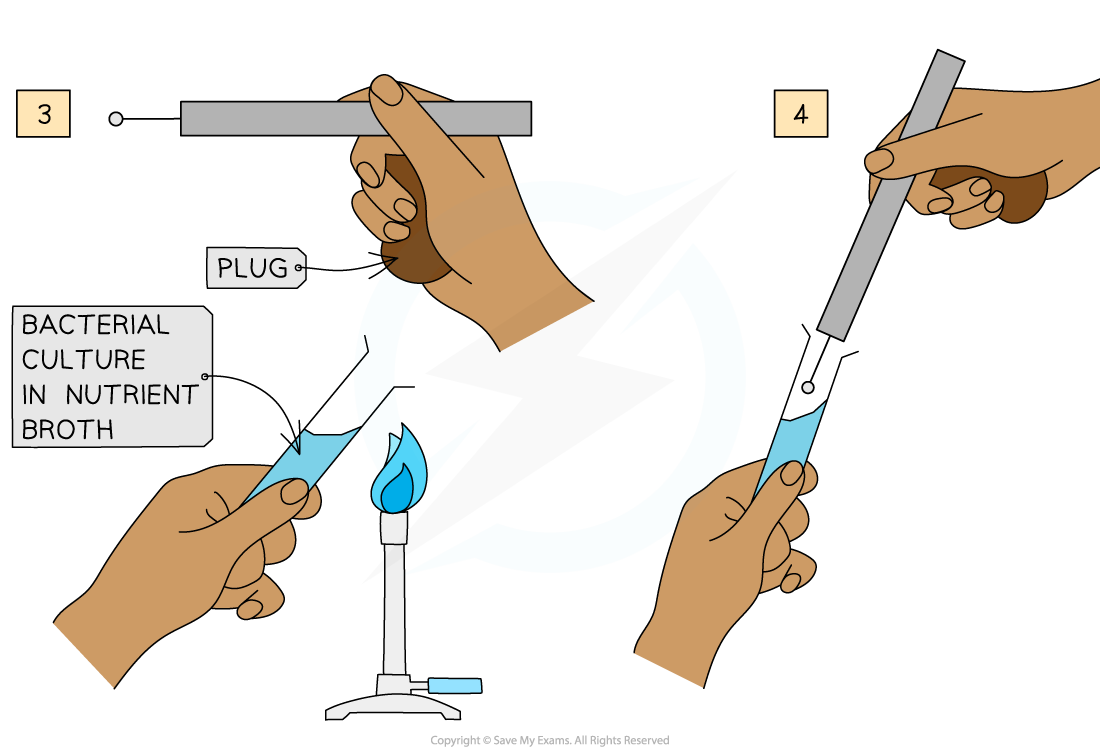
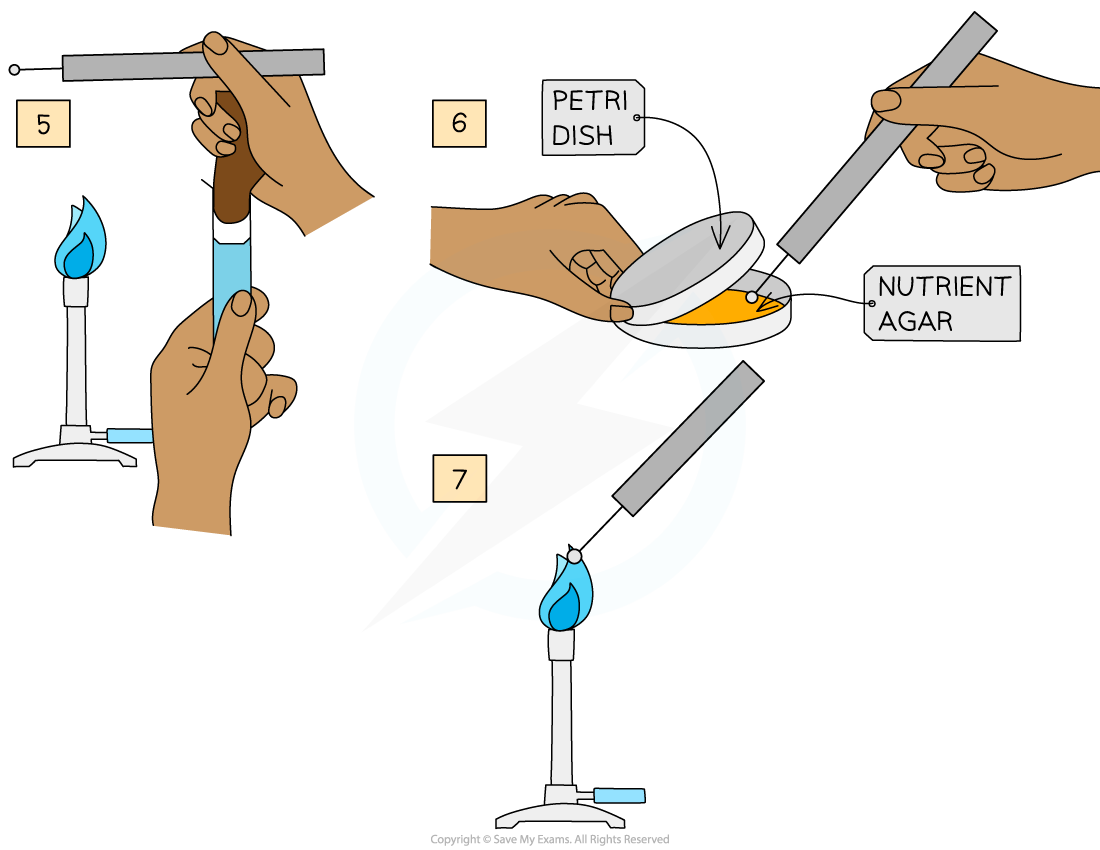
A metal inoculating loop can be used to transfer microorganisms from a liquid broth medium onto an agar gel medium. A Bunsen burned enables sterilisation of the loop between uses.
Growing a single type of microorganism
-
In order to grow a single type of microorganism, or a pure culture, the specific microorganism must be isolated
-
This can be done by using knowledge about the needs of the microorganism to be cultured or those of microorganisms that may contaminate the culture
-
Examples include
- Growing the culture under either aerobic or anaerobic conditions to reduce the variety of microorganisms in the culture
- Using a selective medium that is tailored to the specific requirements of the desired microorganism
- Indicator media can provide a colour change to distinguish desired colonies from the rest
-
Being able to isolate pathogenic microorganisms is useful in the diagnosis and treatment of diseases
Was this revision note helpful?