Atherosclerosis (Edexcel IAL Biology)
Spec point —
1.10
Atherosclerosis
-
There are a number of diseases of the heart, or cardiovascular diseases, that can affect blood vessels in different ways
-
Atherosclerosis, also known as hardening of the arteries, is caused primarily by damage to the delicate endothelium of an artery followed by an inflammatory response
- It is a progressive disease, meaning that it can worsen over time
-
In a healthy artery the endothelium is smooth and unbroken to reduce friction between blood and the inside of the artery
-
The steps involved in atherosclerosis are
-
Damage, e.g. by high blood pressure, is caused to the endothelium
- Damage can also occur as a result of high levels of certain types of cholesterol, smoking, diabetes, obesity, and old age
-
An inflammatory response occurs and white blood cells, such as macrophages, accumulate in the damaged area
-
Lipids and cholesterol clump together with the macrophages under the endothelium and form fatty streaks
- This is one of the first signs of atherosclerosis
-
Platelets can also add to the fatty deposit
- Platelets are fragments of red blood cells involved in the blood clotting process
-
The collection of cholesterol, lipids, macrophages and platelets accumulate under the endothelium
- The structure forms a plaque known as an atheroma
-
The atheroma narrows the lumen of the artery, reducing and restricting blood flow and thereby raising blood pressure
-
Over time the plaque can calcify and harden, reducing elasticity of the artery wall and further increasing blood pressure
-
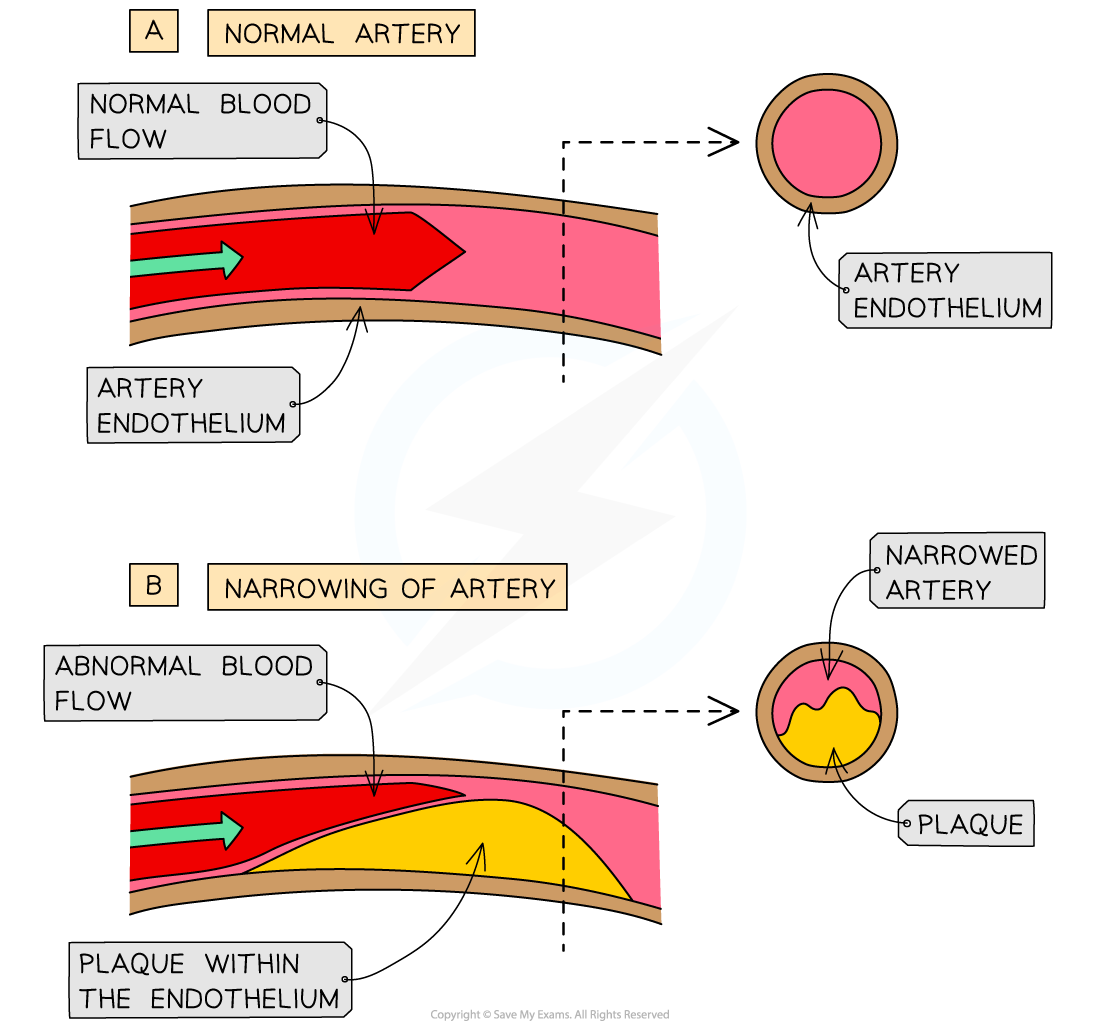
Atherosclerosis is the process by which atheroma plaques form in the endothelium of arteries
Was this revision note helpful?