Blood Clotting (Edexcel IAL Biology)
Spec point —
1.11
Blood Clotting
-
Blood clotting is an important process; it prevents excess blood loss, the entry of pathogens, and provides a barrier, or scab, under which wound healing can occur
-
A break in the mucous membranes or skin membranes causes the release of molecules that trigger a chemical cascade, which results in blood clotting
-
The chemical cascade involves a large number of steps and several plasma proteins
-
The process of blood clotting involves
- Platelets release thromboplastin, which acts as an enzyme
- Calcium ions from the plasma, along with thromboplastin, trigger the conversion of soluble prothrombin protein into the enzyme thrombin
- Thrombin catalyses the conversion of the soluble protein fibrinogen to the insoluble protein fibrin
- Fibrin fibres mesh and tangle together, trapping platelets and red blood cells
- A blood clot is formed
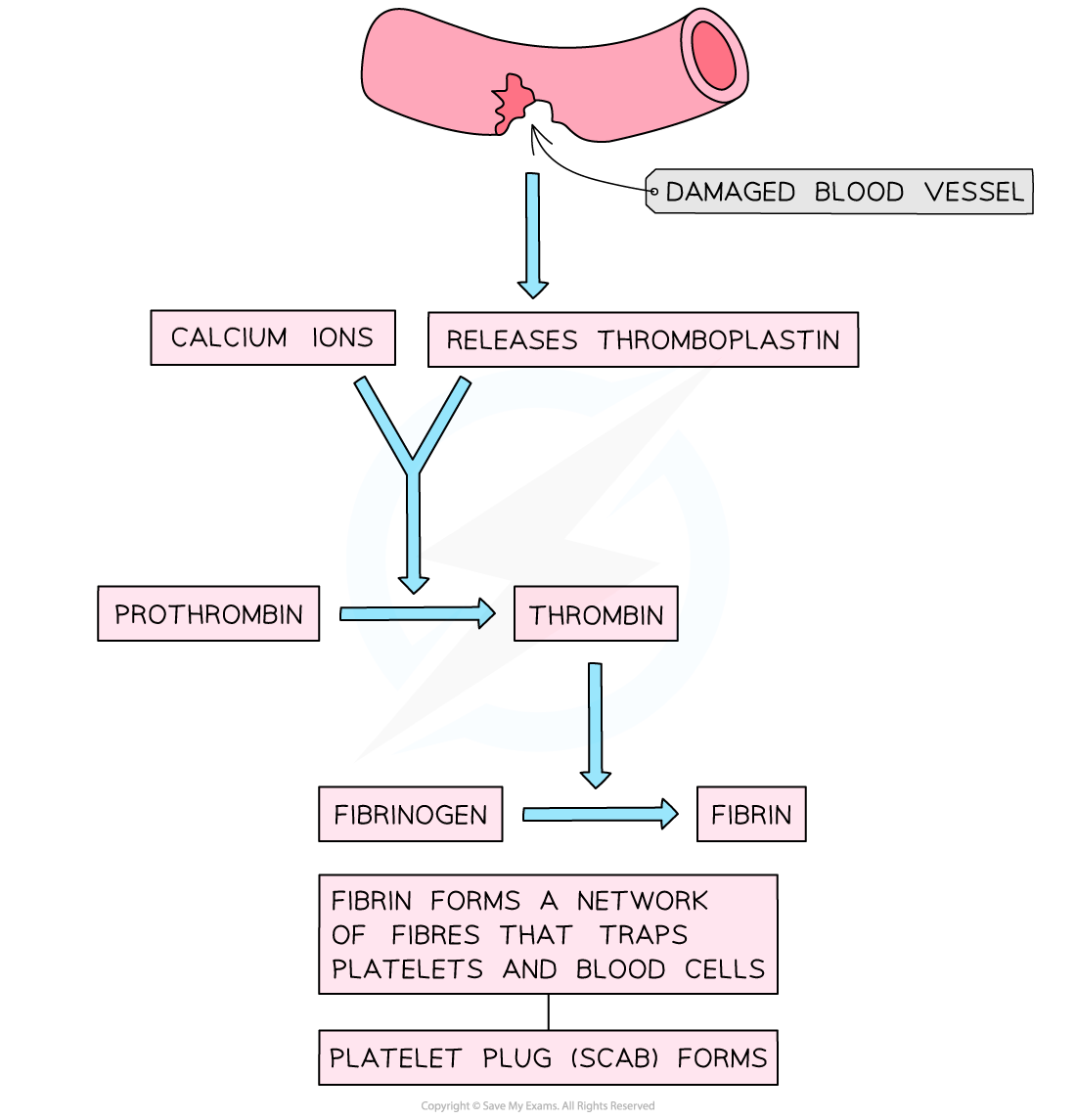
Blood clotting is brought about by a cascade of chemical reactions
Blood clots and atheromas
-
Atheromas can increase the risk of blood clotting
- The plaque deposit of an atheroma can rupture through the endothelium of the artery, damaging the endothelium and forming a rough surface
- The damage to the endothelium triggers the process of blood clotting
-
The combination of atheromas and blood clotting can be dangerous to an individual
-
The blood clot that forms can completely block the artery
- Blood clots reduce blood flow, which restricts the movement of oxygen in the blood, therefore reducing the respiration of the surrounding cells, tissues and organs
- The blood clots can dislodge and travel to different blood vessels in the body; if they reach the brain, this can cause a stroke to occur
- A blood clot that forms within a blood vessel, obstructing blood flow, is called a thrombus
-
-
Blood clotting can also lead to
- Heart attack
- Deep vein thrombosis
Stroke
-
A stroke is a sudden loss of brain function in a localised area due to disruption of blood flow to the brain
- A blood clot leads to a blockage of the arteries supplying the brain
- This leads to reduced blood flow and delivery of oxygen to the cells of the brain, reducing respiration
- Cells in the affected part of the brain cannot produce ATP and their function is reduced
-
A stroke caused by a blood clot is called an ischemic stroke
Heart attack
-
Coronary heart disease (CHD) is caused by the formation of atheromas and blood clots in the coronary arteries
- The coronary arteries flow over the surface of the heart, supplying the heart muscle itself with blood
-
Blood flow to certain areas of the heart is restricted and delivery of oxygen to the affected cells decreases, thereby reducing respiration in these cells
- The cells can no longer produce ATP
- The cells can no longer contract, reducing the force generated by the heart when it beats
- The cells can die, causing permanent damage to heart tissue
-
This leads to a myocardial infarction, also known as a heart attack
-
Complete heart failure may occur if large areas of the heart are affected by blood clots; this can be fatal
-
Symptoms of a heat attack include
- Chest pain
- Shortness of breath
- Sweating
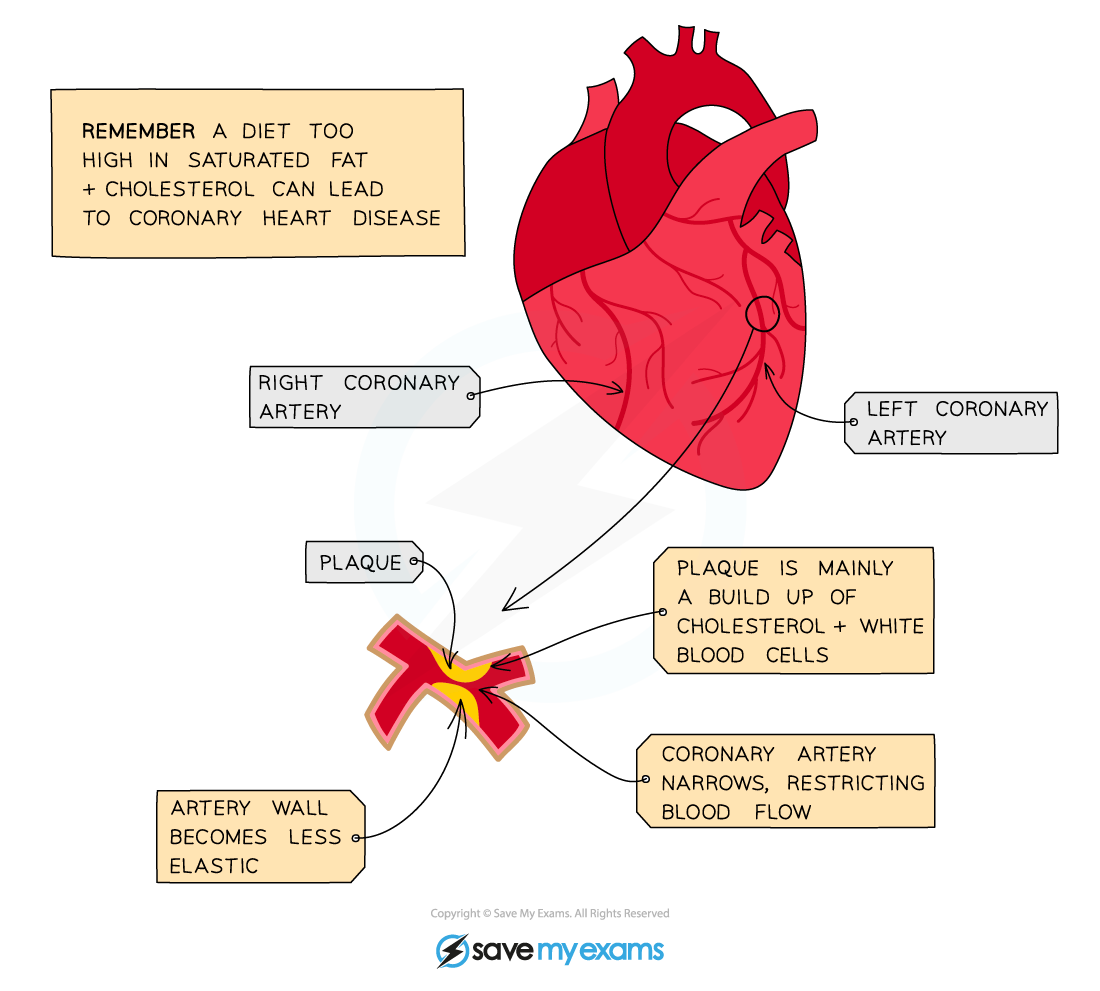
Atheroma and blood clots in the coronary arteries can restrict blood flow to the heart muscle, leading to a heart attack
Deep vein thrombosis
-
If a blood clot forms in a vein deep inside the body, it is known as deep vein thrombosis (DVT)
-
This is most common in the veins of the legs
-
Causes include
- prolonged inactivity
- old age
- some medications
Was this revision note helpful?