Circuit Diagrams & Circuit Components (Cambridge International IGCSE Physics)
Circuit components
Spec point —
4.3.1· Draw and interpret circuit diagrams containing
- cells, batteries, power supplies, generators,
- potential dividers, resistors (fixed and variable), thermistors (NTC only), light-dependent resistors (LDRs),
- switches,
- heaters,
- lamps, motors, bells
- ammeters, voltmeters,
- magnetising coils, transformers, fuses and relays, and know how these components behave in the circuit
Circuit components
What are circuit symbols?
-
The diagram below shows the circuit symbols that could be used in circuit diagrams to represent circuit components
- Students are expected to know what each component is and how it behaves in a circuit
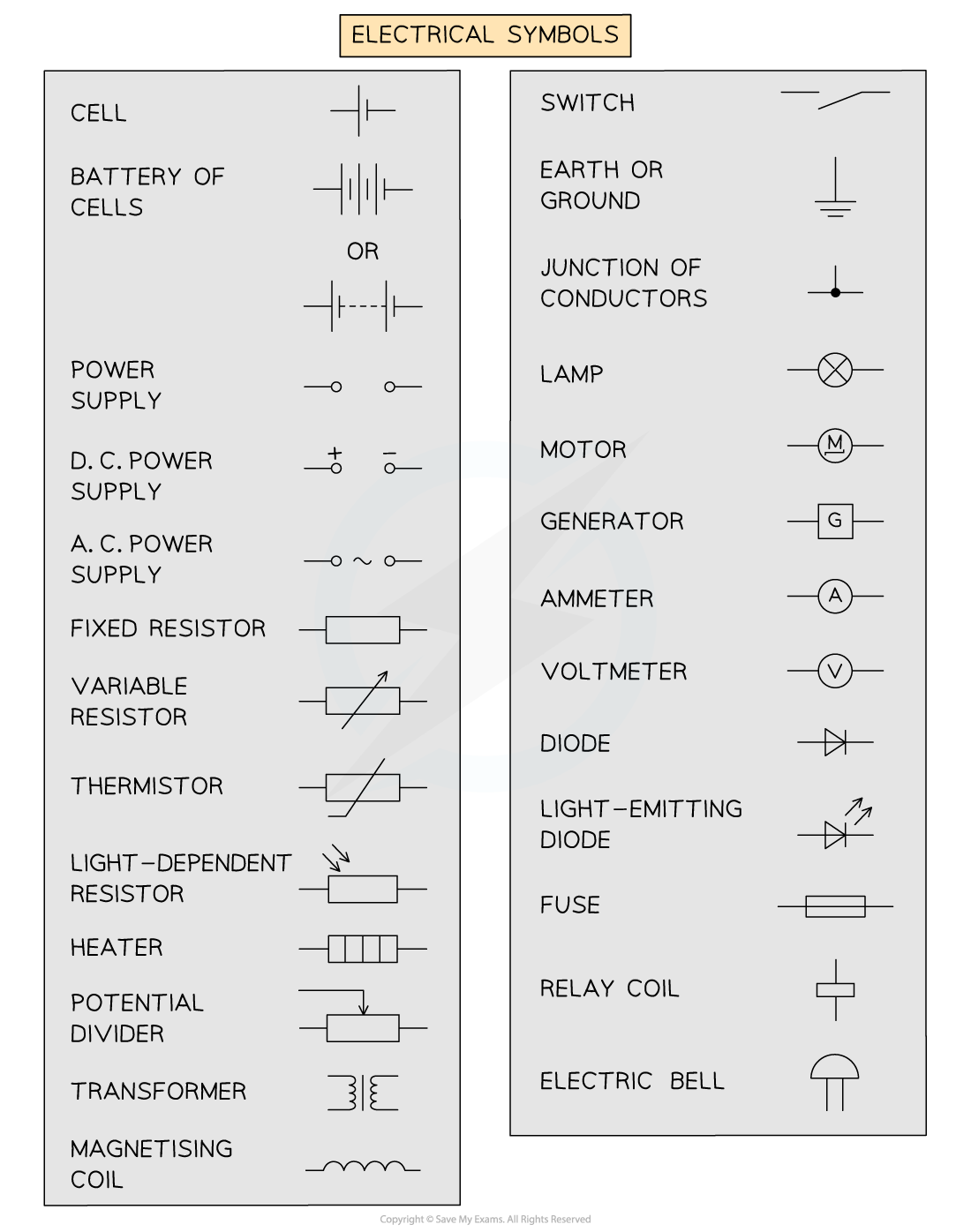
Circuit symbols represent these components in circuit diagrams
Types of circuit components
Power supplies
- Cells, batteries, power supplies and generators all supply current to the circuit
Resistors
- Potential dividers, fixed and variable resistors, thermistors and light-dependent resistors (LDRs) are all used to control current
Thermistors
-
A thermistor is a non-ohmic conductor and a temperature-dependent resistor
-
The resistance of a thermistor changes depending on its temperature
- As the temperature increases, the resistance of a thermistor decreases and vice versa
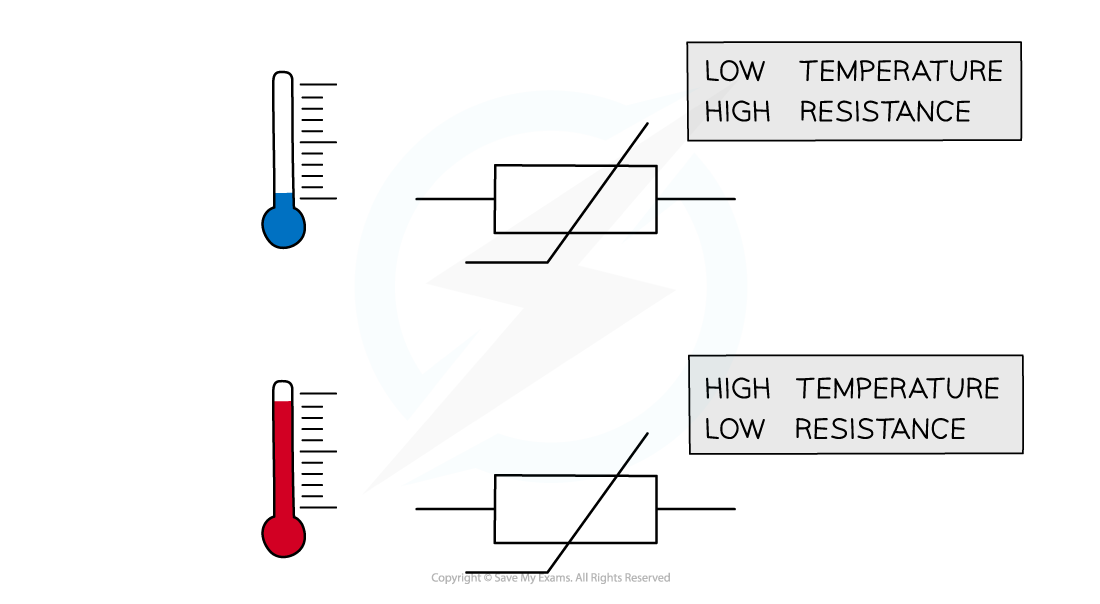
The resistance through a thermistor is dependent on its temperature
Light-dependent resistors
- A light-dependent resistor (LDR) is a non-ohmic conductor and sensory resistor
- Its resistance automatically changes depending on the light energy falling onto it (illumination)
- As the light intensity increases, the resistance of an LDR decreases
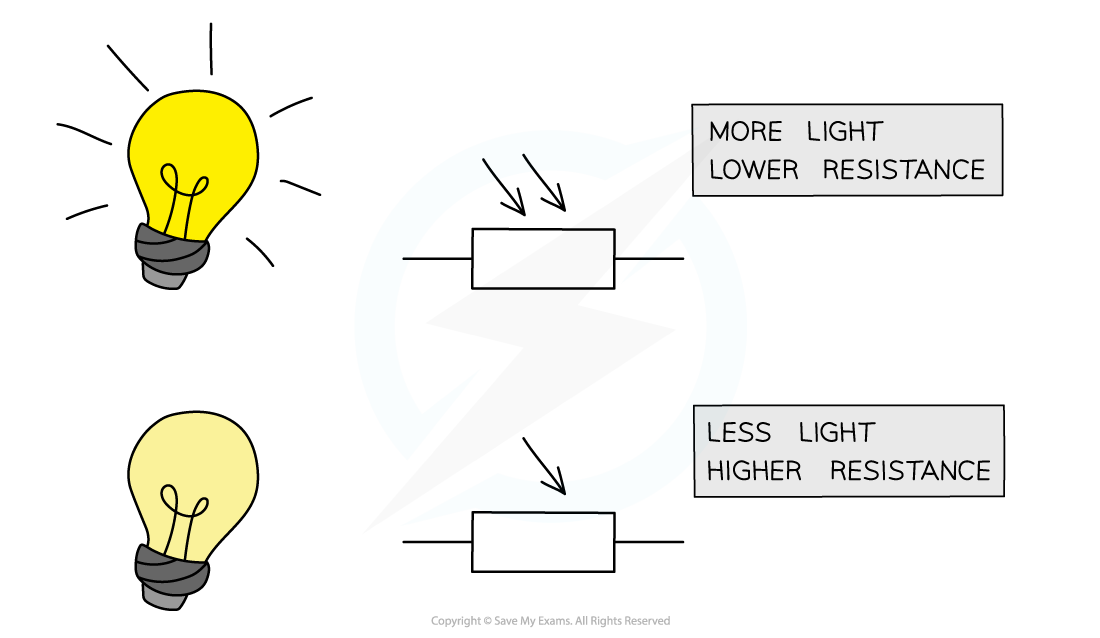
Resistance of an LDR depends on the light intensity falling on it
Meters
-
Ammeters and voltmeters are used to measure the current and potential difference
- Ammeters are always connected in series whilst voltmeters are always connected in parallel
Switches and functional components
-
Switches open and close a circuit and determine whether current can flow
-
Functional components perform specific roles when current passes through them:
- Motors rotate
- Lamps emit light
- Heaters transfer thermal energy
- Bells emit a sound
Electromagnetic components
-
Magnetising coils, relays and transformers use electromagnetic effects
- Relays use a small current in one circuit to switch on a much larger current in another
- Transformers 'step up' and 'step down' current and potential difference
Fuses
- Fuses protect expensive components from current surges and act as a safety measure against fire
Diodes
Spec point —
4.3.1· Draw and interpret circuit diagrams containing diodes and light-emitting diodes (LEDs), and know how these components behave in the circuit
Extended Tier Only
- In addition to the above, the circuit symbol for a diode must also be recognised and drawn:

A diode is a component that only allows a current in one direction
-
Diodes are occasionally drawn with a horizontal line running through the middle of them
-
Diodes only allow current to flow through them in one direction (see the diagram below)
- This is the direction that the triangle points in the diagram
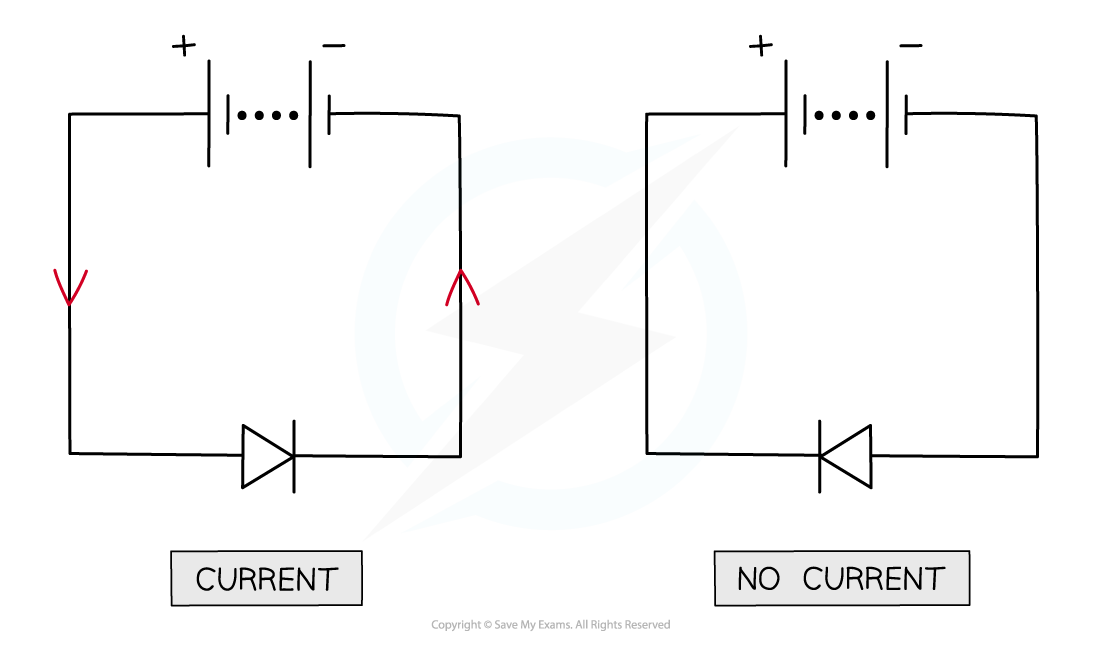
When travelling in the same direction as the diode, current can flow. If the diode is flipped, it now prevents current from flowing in the circuit
- Light-emitting diodes (LEDs) behave in exactly the same way, but they emit light when current flows through them
Was this revision note helpful?
Build on this topic