Electric Charge (Cambridge International IGCSE Physics)
Positive & negative charges
Spec point —
4.2.1· State that:
-
there are positive and negative charges
-
positive charges repel other positive charges,
-
negative charges repel other negative charges,
-
positive charges attract negative charges (Core)
-
State that charge is measured in coulombs (Extended)
Positive & negative charges
-
There are two types of electric charge: positive and negative
-
Inside an atom, there are:
- negatively charged electrons
- positively charged protons
- neutral (no charge) neutrons
-
Atoms contain equal numbers of protons and electrons as they have equal and opposite charges
-
These charges cancel out so the overall charge of an atom is zero
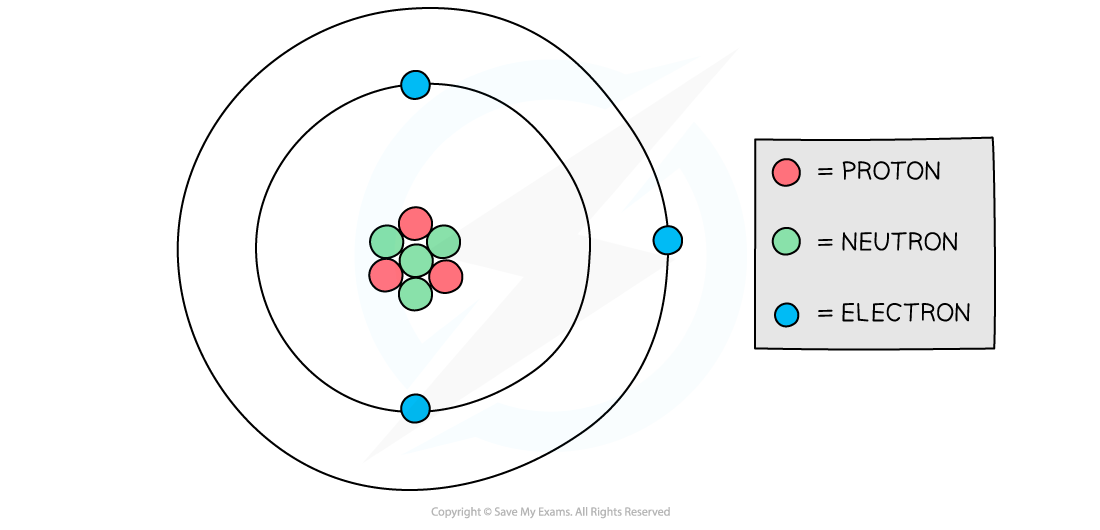
The number of negative electrons in an atom balances the number of positive protons
Attraction and repulsion
-
When two charges are close together, they exert a force on each other
-
This could be:
- attractive (the objects get closer together)
- repulsive (the objects move further apart)
Electric forces between charges
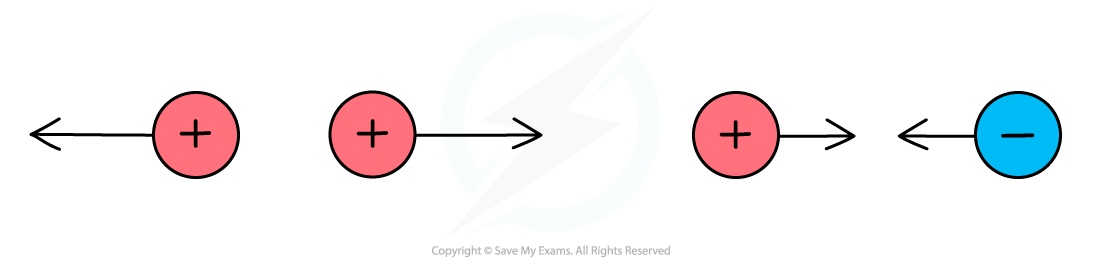
Opposite charges attract, like charges repel
-
Whether two objects attract or repel depends on their charge
- If the charges are the opposite, they will attract
- If the charges are the same, they will repel
Attraction or repulsion summary table
| Charge of object 1 | Charge of object 2 | Attract or repel? |
|---|---|---|
| positive | positive | repel |
| positive | negative | attract |
| negative | positive | attract |
| negative | negative | repel |
-
The table shows that:
- Positive charges repel other positive charges and attract negative charges
- Negative charges repel other negative charges and attract positive charges
Extended Tier Only
- Electric charge is measured in units called coulombs (C)
Exam Hint Remember the saying “opposites attract” when answering questions about forces between charged particles.
While electrostatic forces share many similarities with magnetic forces, they are different phenomena – do not confuse the two.
Was this revision note helpful?
Build on this topic