Uses of Electromagnetic Waves (Cambridge International IGCSE Physics)
Spec point —
3.3.2· Describe typical uses of the different regions of the electromagnetic spectrum including: (a) radio waves; radio and television transmissions, astronomy, radio frequency identification (RFID) (b) microwaves; satellite television, mobile phones (cell phones), microwave ovens (c) infrared; electric grills, short range communications such as remote controllers for televisions, intruder alarms, thermal imaging, optical fibres (d) visible light; vision, photography, illumination (e) ultraviolet; security marking, detecting fake bank notes, sterilising water (f) X-rays; medical scanning, security scanners (g) gamma rays; sterilising food and medical equipment, detection of cancer and its treatment
Uses of electromagnetic waves
Uses of radio and microwaves
-
The main uses of radio and microwaves are for wireless communication
- Many things people often assume use radio waves actually use microwaves (e.g., Wi-Fi, radar, mobile phones, satellite communications)
-
At very high intensities, microwaves can also be used to heat food
- This is what happens in a microwave oven
Uses of infrared
-
Warm objects emit infrared radiation
-
Infrared can be detected using thermal imaging cameras:
- in security cameras, for research, and also in medicine
-
Remote controls have small infrared LEDs that send invisible signals to an infrared receiver on a device such as a TV
-
Infrared travels down fibre optic cables more efficiently than visible light
- So most fibre optic communication systems use infrared
Uses of visible light
- Visible light is the only part of the electromagnetic spectrum that the human eye can see
- Visible light is used for photography, videography, and illumination
Uses of ultraviolet light
-
Ultraviolet is responsible for giving the skin a suntan, which is the body’s way of protecting itself against ultraviolet rays
-
When certain substances are exposed to ultraviolet light, they absorb and re-emit it as visible light (making them glow)
- This process is known as fluorescence
- Fluorescence can be used to secretly mark things using special ink
- Most bank notes have invisible fluorescent markings on them
-
Fluorescent light bulbs also use this principle to emit visible light
Uses of X-rays
-
The most obvious use of X-rays is in medicine
-
X-rays pass through body tissues but are absorbed by denser body parts, such as bones
- Bones absorb X-rays, leaving a shadow that can be seen using photographic film
Uses of gamma rays
-
Gamma rays are used to kill cells and living tissue
-
This property is utilised in both cancer detection and treatment
- If gamma rays are carefully aimed at cancerous tissue, they can be effective at destroying the cancerous cells
-
Gamma rays can also be used to sterilise food and medical equipment by killing off the bacteria
Typical uses of the different regions of the electromagnetic spectrum
| Wave | Use |
|---|---|
| Radio | Radio and television transmissions Astronomy Radio frequency identification (RFID) |
| Microwave | Satellite television Mobile (cell) phones Microwave ovens |
| Infrared | Electric grills Television remote controllers Intruder alarms Thermal imaging Optical fibres |
| Visible light | Vision Photography Illumination |
| Ultraviolet | Security marking Detecting fake bank notes Sterilising water |
| X-rays | Medical scanning Security scanners |
| Gamma rays | Sterilising food Sterilising medical equipment Detection of cancer Treatment of cancer |
Summary of the uses and dangers of the electromagnetic spectrum
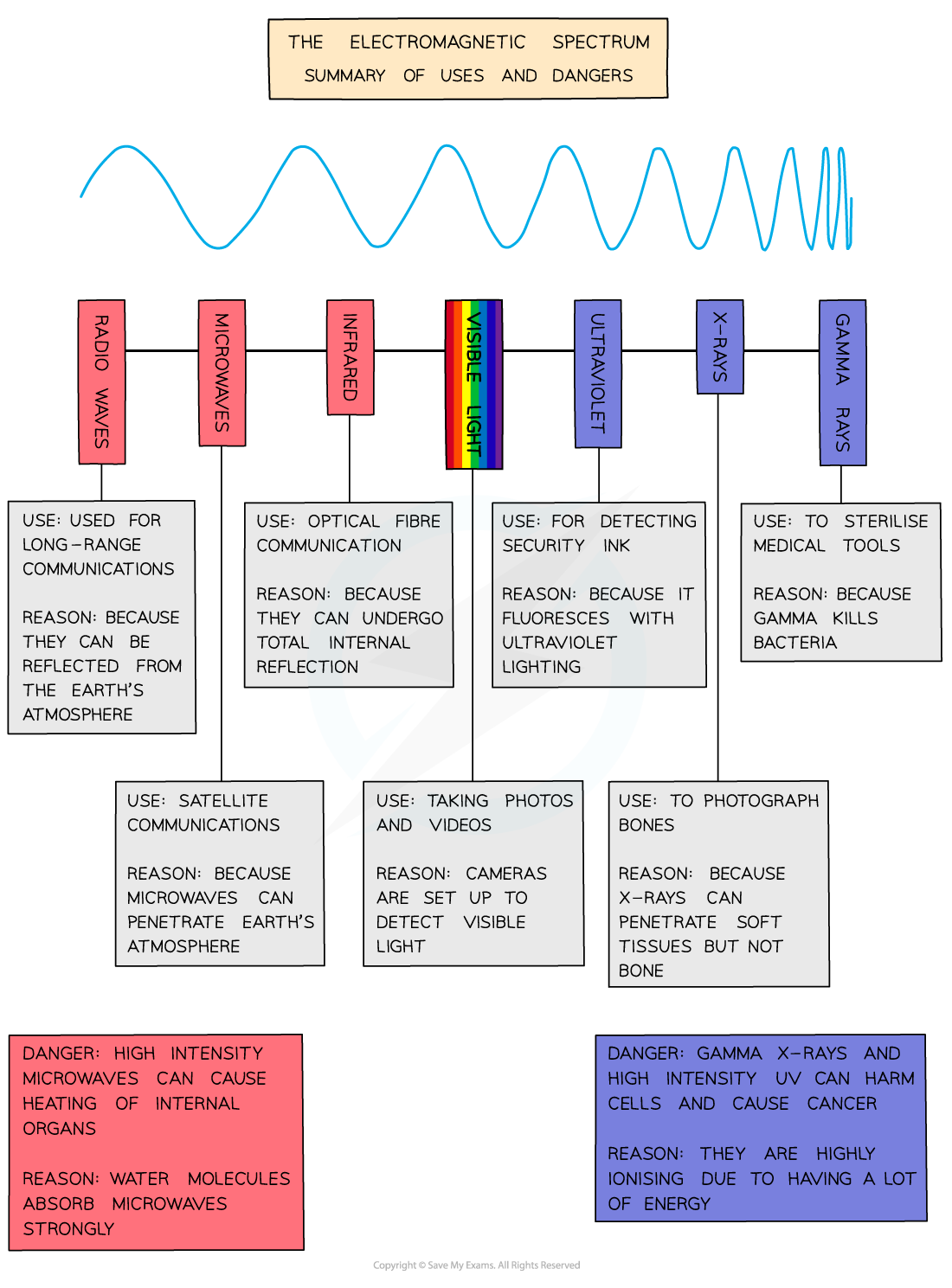
Uses and dangers of the electromagnetic spectrum
Was this revision note helpful?
Build on this topic