The Importance of the Nazi–Soviet Pact (Cambridge International IGCSE History)
The USSR's Aims for the Nazi-Soviet Pact
-
The Versailles Settlement created the Polish Corridor
- This gave Poland access to the sea
- It cut Germany’s territory into two separate areas
-
After Hitler invaded Czechoslovakia in March 1939, it was clear that Hitler would attempt to gain the Polish Corridor for Germany
-
Hitler and Stalin (the leader of the USSR) were enemies because:
-
They believed in opposite ideologies
- Hitler was **Fascist. This is a far right-wing **belief
- Stalin was** Communist. This is a far** left-wing belief
-
They had different aims for Europe
- Hitler wanted Germany to dominate Europe
- Stalin wanted to gain land to implement communism
-
They had fought on opposite sides in the Spanish Civil War
- Hitler had supported General Franco and the right-wing rebels
- Stalin had sent equipment to the left-wing government
-
-
On 23rd August 1939, Germany and the USSR formed the Nazi-Soviet Pact
- It is also known as the Molotov-Ribbentrop Pact
- The signing of the pact shocked the world
Why Did Stalin Sign the Pact?
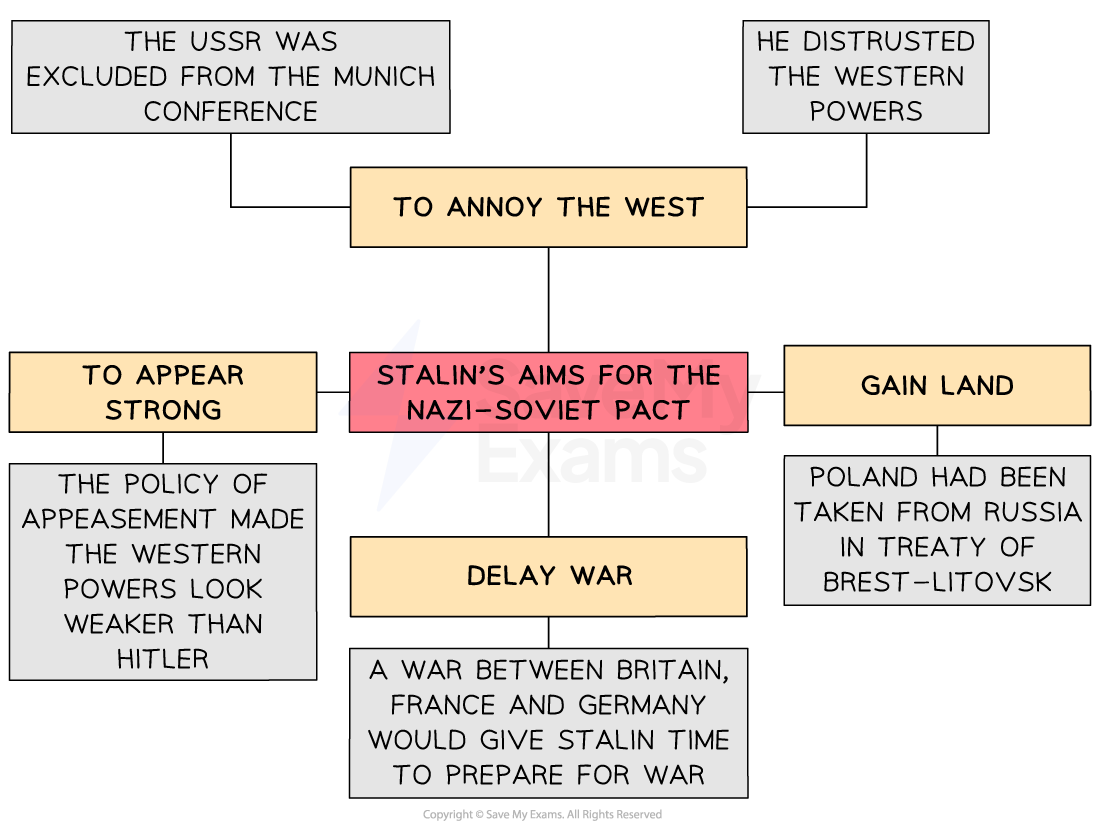
A concept map showing what Stalin hoped to achieve from the Nazi-Soviet Pact
Worked Example Explain why Stalin entered the Nazi-Soviet Pact in 1939
6 marks
Final answer: Partial answer:
One reason why Stalin entered the Nazi-Soviet Pact was to give him time to rearm (1). The pact would mean Germany would focus on fighting with Britain and France rather than the USSR (1). This was a big motivation for Stalin to sign the pact. This is because he could focus Soviet industry on producing armaments. He knew that Hitler would break the pact to pursue *Lebensraum (1).
Exam Hint In Paper One, ‘explain why’ questions are worth either six or ten marks. For full marks in this question, an examiner is looking for two fully explained reasons as to why Stalin entered the Nazi-Soviet Pact. Use the PEE structure in your answer:
- P - Make a point about the question
- E - Use evidence that supports the point that you have made
- E - Explain why this evidence caused Stalin to sign the pact. Avoid repeating the point again. Explain how this factor motivated Stalin to side with Hitler rather than stand up against him.
Germany's Aims for the Nazi-Soviet Pact
-
Hitler sent a telegram to Stalin on 20th August asking for the pact. This was surprising because:
-
The USSR had a large Jewish population
- It was a common, but incorrect, belief that many Soviet communists were Jewish
-
Hitler considered the Slavs, people who lived in Eastern Europe, as subhuman
-
Taking the USSR’s territory was necessary to fulfil Hitler’s foreign policy aim of Lebensraum
-
Why Did Hitler Sign the Pact?
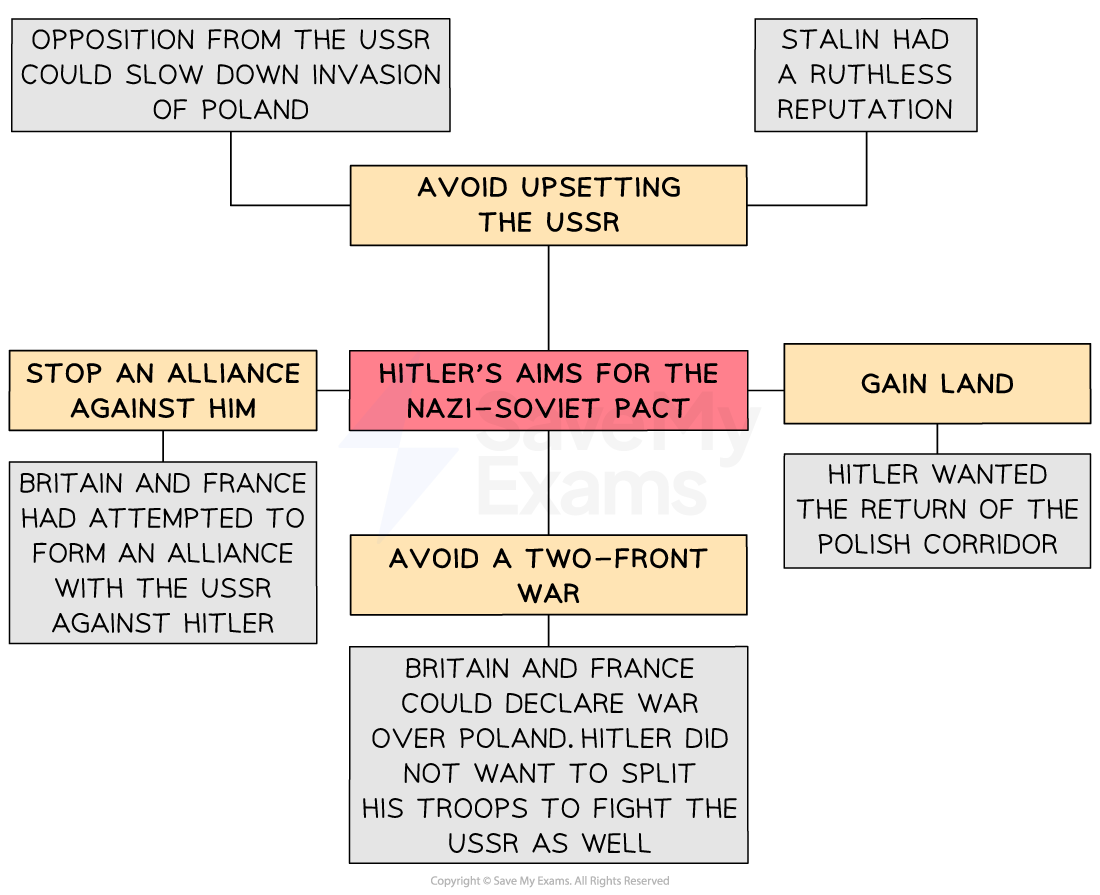
A concept map showing what Hitler hoped to achieve from the Nazi-Soviet Pact
Terms of the Nazi-Soviet Pact
| Date | Terms | Impacts |
|---|---|---|
| August 1939 | - A non-aggression pact *between Germany and the USSR for 10 years - The secret partitioning of Polish territory. Stalin to gain control of Latvia, Lithuania, Estonia and Finland. Germany to gain half of Poland and the city of Danzig | - The public agreement shocked the world, especially Britain and France - Germany invaded Poland nine days after the signing of the pact |
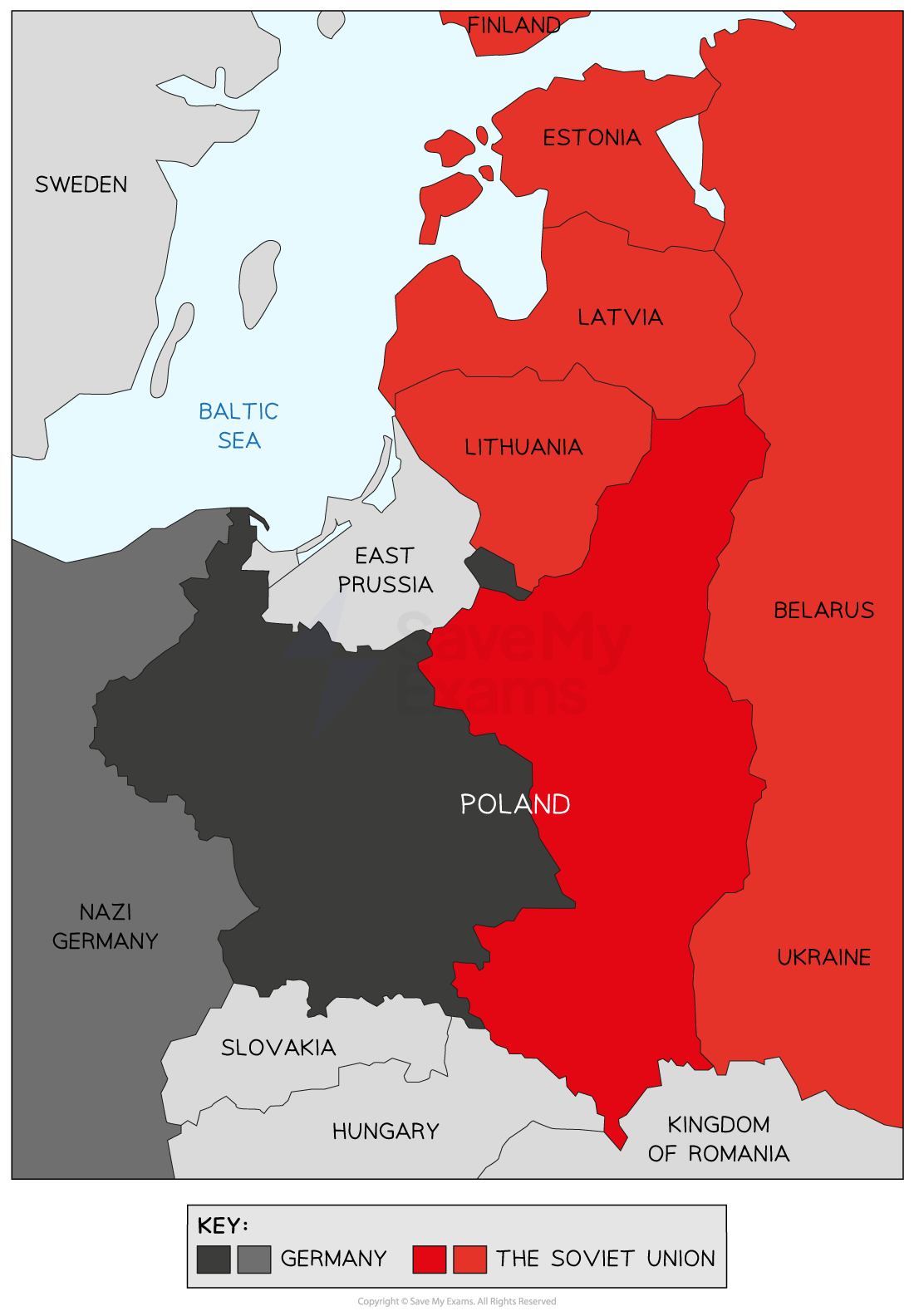
A map showing the partition of Poland and the territory gains agreed in the Nazi-Soviet Pact
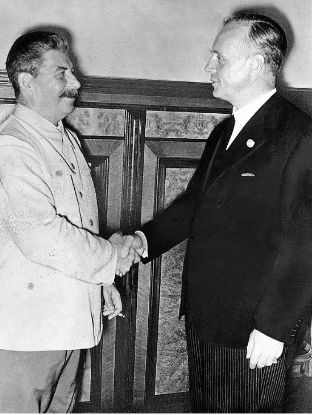
A picture of Joseph Stalin shaking hands with the German Foreign Minister Joachim von Ribbentrop after signing the Nazi-Soviet Pact
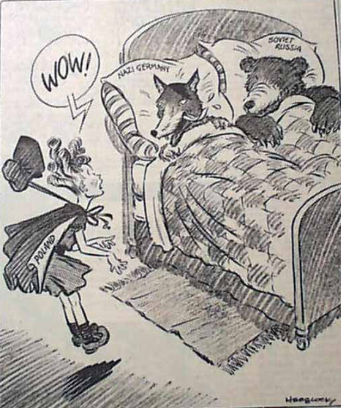
A cartoon in an American newspaper the day after the Nazi-Soviet Pact. It uses the story of Little Red Riding Hood to show the danger of the Nazi-Soviet Pact to Poland
Other Alliances - Anti-Comintern Pact
-
By the time of signing the Nazi-Soviet Pact, Hitler had entered into other alliances that strengthened his position
- In 1936, Germany and Japan signed the Anti-Comintern Pact
| Date | Terms | Impacts |
|---|---|---|
| November 1936 | - An agreement between Japan and Germany to help each other in the fight against communism | - Italy joined the Anti-Comintern Pact in 1937 - Japan, with its large military, was a powerful ally to Hitler |
Other Alliances - The Pact of Steel
-
Germany and Italy entered into a formal alliance called the Pact of Steel in 1939
- Its formal name is the Pact of Friendship and Alliance
- The two countries had signed a friendship treaty in 1936 dubbed the Rome-Berlin Axis
| Date | Terms | Impacts |
|---|---|---|
| May 1939 | - A military alliance that promised to help each other in times of war - To agree peace with another country, both Germany and Italy must agree to the terms - To work together in **war planning and armament | - Triggered the** Tripartite Pact in 1940 , uniting Japan, Italy and Germany - Made Italy a formal ally to Germany, increasing Hitler’s military strength in Europe |
How Did Other Alliances Influence the Nazi-Soviet Pact?
-
Stalin became increasingly worried about the power of Fascism
-
Japan was an old enemy of Russia
- Japan had beaten Russia in a war in 1904
- Japanese-controlled Manchuria bordered the USSR
-
The Nazi-Soviet Pact would give Stalin temporary protection from Japan and Germany
-
-
The pact was doomed to fail
- The Anti-Comintern Pact made it clear that Hitler did not support Communism
- In 1941, Hitler broke the Nazi-Soviet Pact by invading Russia in Operation Barbarossa
Worked Example Study Source A. What impressions does Source A give of the relationship between Hitler and Mussolini? Explain your answer using details of the source
7 marks
**Source A: **From a history book published in 1981
In March 1938, Hitler marched into Austria after notifying Rome only at the very last moment. Italy thus lost the immense advantage of having only a weak buffer state on her northern frontier. Having often promised that he would fight to defend Austrian independence, now in March Mussolini protested he had never said anything so foolish. Hitler had been careful not to tell Mussolini of his plans to extend Germany’s living space and calculated that, as Italy had its hands full in Spain, he could meanwhile take Austria and Czechoslovakia, possibly without offering his partner anything in return. He had gradually been displacing Italy in the commerce of south-eastern Europe. Mussolini was seriously worried and occasionally he spoke of changing sides in Europe. He still hoped to ride several horses at once but such behaviour was irresponsible, unrealistic and hardly that of a potential ally.Final answer: Partial answer:
Source A suggests that Mussolini was worried about his relationship with Hitler (1). The source discusses that, when Hitler enacted Anschluss, he did not inform Mussolini until “the very last moment”. Italy bordered Austria and had promised to protect Austrian independence from Hitler** (1)**. Therefore, the source proves that Anschluss made Mussolini question their relationship with Hitler. He may have needed more reassurance from Hitler which may have motivated Mussolini to enter the Pact of Steel with Germany in 1939 (1).
Exam Hint In this style of question in Paper Two, ensure you read the source carefully. You need to understand the source to discover what the source suggests about Hitler and Mussolini’s relationship. To help you, highlight and annotate important sections of the source. You can also add key knowledge around the quote to plan how you will answer the question.
Was this revision note helpful?