Fossil Fuels (Cambridge International IGCSE Chemistry)
Exam board Cambridge International · IGCSEUpdated 2026-03-30
Common fossil fuels
Spec point —
11.2.1· Name the fossil fuels: coal, natural gas and petroleum Name methane as the main constituent of natural gas State that hydrocarbons are compounds that contain hydrogen and carbon only
Common fossil fuels
- A fuel is a substance which when burned, releases heat energy
- This heat can be transferred into electricity, which we use in our daily lives
- Most common fossil fuels include coal, natural gas and petroleum
- Methane, CH4, is the main constituent of natural gas and is a hydrocarbon
- Hydrocarbons are made from hydrogen and carbon atoms only
Fractional Distillation
Spec point —
11.2.1· nan
Petroleum & fractional distillation
Petroleum
- Petroleum is also called crude oil and is a mixture of hydrocarbons which also contains natural gas
- It is a thick, sticky, black liquid that is found under porous rock (under the ground and under the sea)
The location of crude oil
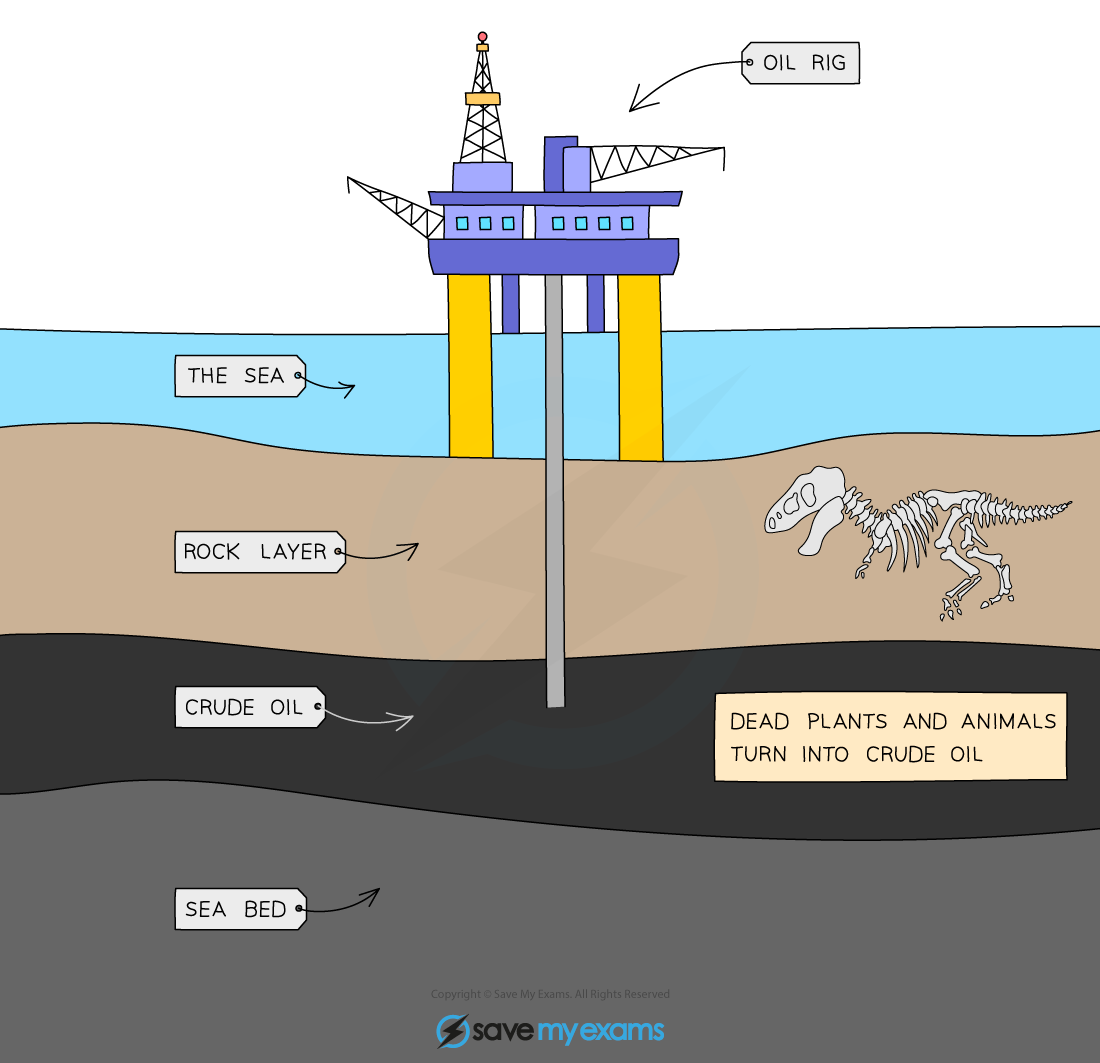
Crude oil is located under the sea
- Petroleum itself as a mixture isn't very useful but each component part of the mixture, called a fraction, is useful and each fraction has different applications
Fractional distillation
- Each fraction consists of groups of hydrocarbons of similar chain lengths
- The fractions in petroleum are separated from each other in a process called fractional distillation
- The molecules in each fraction have similar properties and boiling points, which depend on the number of carbon atoms in the chain
- The size of each molecule is directly related to how many carbon and hydrogen atoms the molecule contains
- Most fractions contain mainly alkanes, which are compounds of carbon and hydrogen with only single bonds between them
Diagram to show fractional distillation
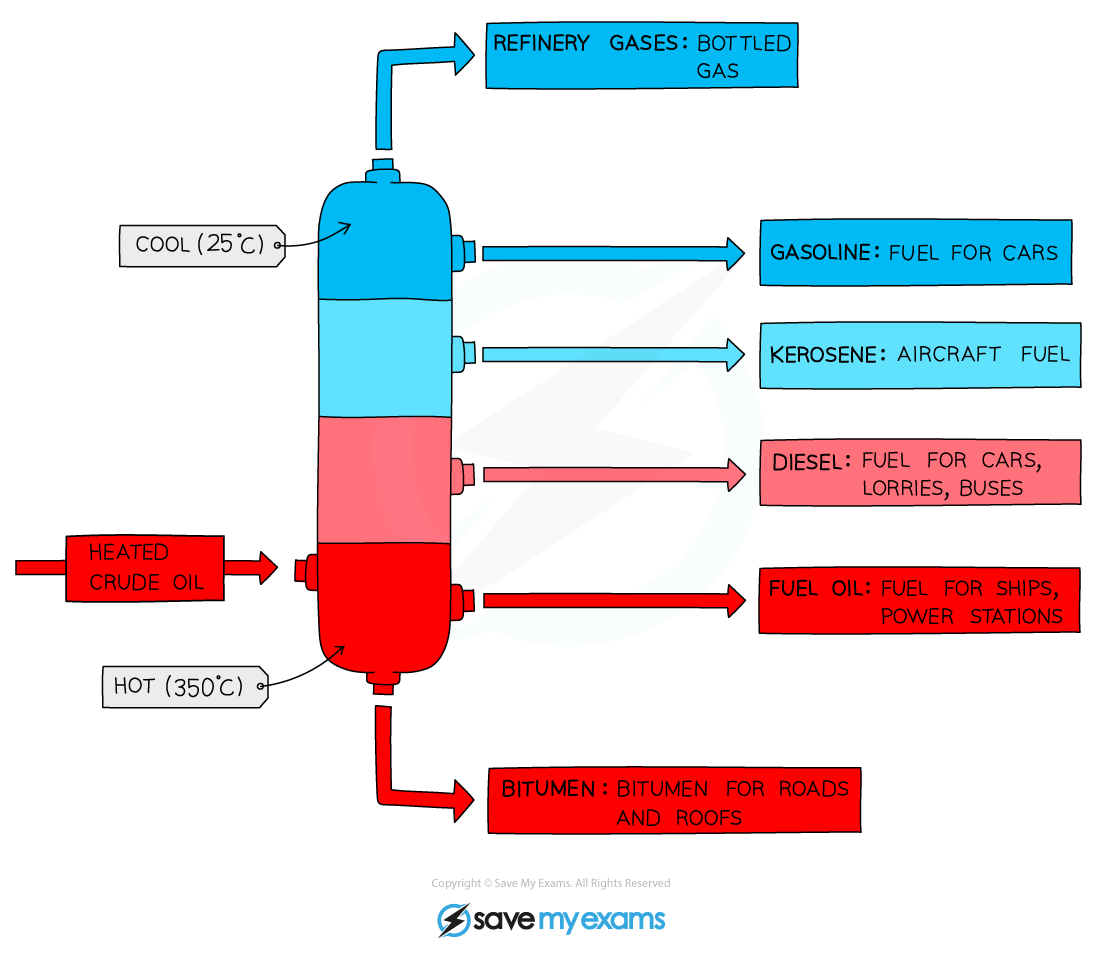
The process separates the fractions according to their boiling point
-
Fractional distillation is carried out in a fractionating column which has a temperature gradient
- It is very hot at the bottom of the column and cooler at the top
-
During the process of fractional distillation:
- The crude oil is heated and vapourises
- The vapours of hydrocarbons enter the column which has a temperature gradient
- The vapours of hydrocarbons with high boiling points condense at the bottom of the column
- The vapours of hydrocarbons with lower boiling points rise up the column and condense at the top
Properties of fractions
-
Viscosity
- This refers to the ease of flow of a liquid.
- High viscosity liquids are thick and flow less easily.
- As the number of carbon atoms increases, the attraction between the hydrocarbon molecules also increases which results in the liquid becoming more viscous with the increasing length of the hydrocarbon chain.
- Going down the column, the viscosity of the fractions increases
-
Melting point/boiling point
- As the molecules get larger, the intermolecular attraction becomes greater.
- More heat is needed to separate the molecules.
- Going down the column, the boiling points of the fractions increases
-
Volatility
- Volatility refers to the tendency of a substance to vaporise.
- As the size of the hydrocarbon increases, the attraction between the molecules increases
- Going down the column, the volatility of the fractions therefore decreases
Uses of Fractions
- Refinery gas: heating and cooking
- Gasoline: fuel for cars (petrol)
- Naphtha: raw product for producing chemicals
- Kerosene: for making jet fuel (paraffin)
- Diesel: fuel for diesel engines (gas oil)
- Fuel oil: fuel for ships and for home heating
- Lubricating oil: for lubricants, polishes, waxes
- Bitumen: for surfacing roads
Table to show the trends in properties
| Fraction | Number of carbon atoms | Boiling point range /oC | Viscosity | Volatility |
|---|---|---|---|---|
| Refinery gas | 1-4 | Below 25 | Viscosity increases going down the fractions | Volatility decreases going down the fractions |
| Gasoline / petrol | 4-12 | 40-100 | ||
| Naphtha | 7-14 | 90-150 | ||
| Kerosene / paraffin | 12-16 | 150-240 | ||
| Diesel / gas oil | 14-18 | 220-300 | ||
| Fuel oil | 19-25 | 250-320 | ||
| Lubricating oil | 20-40 | 300-350 | ||
| Bitumen | More than 70 | More than 350 |
Exam Hint You must be able to recall a use for each fraction as well describe the trends in properties.
Was this revision note helpful?
Build on this topic