Physical & Chemical Changes (Cambridge International IGCSE Chemistry)
Spec point —
6.1.1· Identify physical and chemical changes, and describe the differences between them
Physical & chemical changes
Physical changes
-
Physical changes do not produce any new chemical substances
-
These changes are often:
- Easy to reverse
- Relatively easy to separate
-
Examples of physical changes include:
- Changing state, e.g. melting / solid → liquid
- Making a mixture from 2 or more substances
- Dissolving a solute in a solvent
Chemical changes
-
During chemical changes / reactions, new chemical substances are formed that have very different properties to the reactants
-
Most chemical changes are difficult to reverse
-
There may be signs that a new substance has formed, such as:
- Colour changes
- Temperature changes
- Effervescence (fizzing)
Colour change
-
One example of a reaction that shows a colour change is the metal displacement reaction of silver and copper
-
Orange-brown copper metal is added to a colourless solution of silver nitrate
-
As the reaction proceeds the copper displaces the silver from the solution
-
This causes two colour changes:
- The solid inside the beaker changes from orange-brown to silver
- The solution changes from colourless to blue
-
The metal displacement reaction of silver and copper
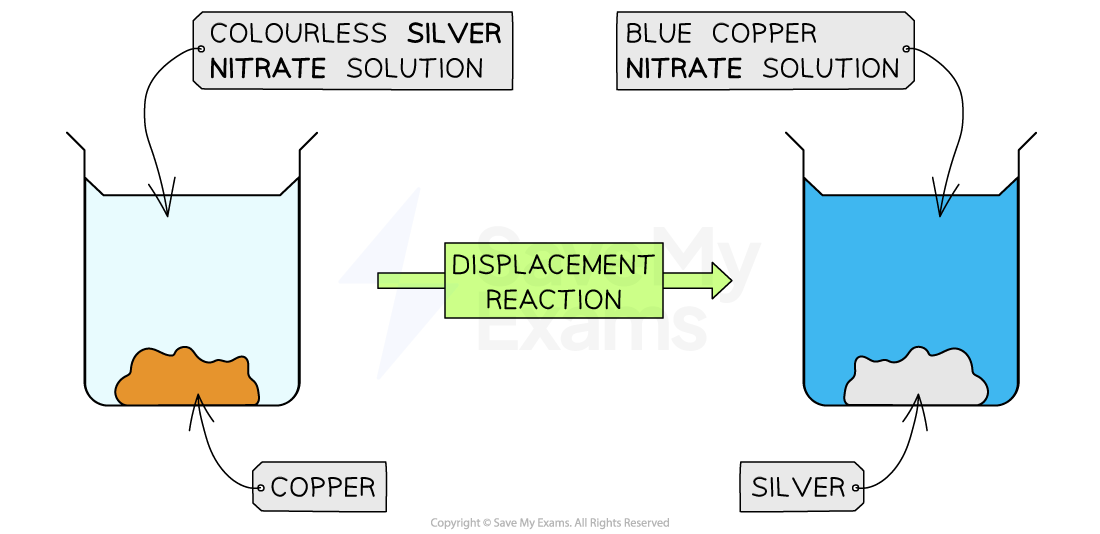
The reaction shows two colour changes; one in the colour of the solution and one in the colour of the solid
-
Another reaction, from the syllabus, that shows a clear colour change is the halide ion test
- From colourless to cream / white / yellow depending on the halide ion
- This also includes a change of state as a solid / precipitate is formed
Temperature change
-
Chemical reactions that give a temperature change can be grouped into two categories:
- Those that give out heat / thermal energy - exothermic
- Those that take in heat / thermal energy - endothermic
Exothermic reactions
-
Some examples of reactions that cause an increase in temperature are:
- The reaction of calcium oxide with water to form calcium hydroxide is highly exothermic
- The reaction of sodium with water is exothermic and effervesces
Endothermic reactions
-
Reactions that cause a decrease in temperature are less commonly talked about than exothermic reactions
-
Examples include:
-
Photosynthesis
- Light energy is absorbed during the process of converting carbon dioxide and water into glucose and oxygen
-
When solid ammonium chloride is dissolved in water
- Heat / thermal energy is absorbed from the surroundings, causing the temperature to decrease
- This reaction is commonly used in cold packs
-
Effervescence
-
Effervescence, or fizzing, is another sign of a chemical reaction
-
Chemical reactions that cause effervescence often involve acids:
-
The reaction of alkali metals with water
- The reaction of the alkali metals, such as sodium, with water releases hydrogen gas
- Metal + water → metal hydroxide + hydrogen
-
-
There are other signs of a chemical reaction including:
- Light being produced
- A smell being produced
- A change in pH
Was this revision note helpful?