Hydrogen Fuel Cells (Cambridge International IGCSE Chemistry)
Spec point —
4.2.2· State that a hydrogen–oxygen fuel cell uses hydrogen and oxygen to produce electricity with water as the only chemical product
Hydrogen fuel cells
-
A fuel is a substance which releases energy when burned
-
Hydrogen is used as a fuel in rocket engines and in fuel cells to power some cars
-
A fuel cell is an electrochemical cell in which a fuel donates electrons at one electrode and oxygen gains electrons at the other electrode
- H2 → 2H+ + 2e–
- O2 + 4H+ + 4e- → 2H2O
-
The hydrogen-oxygen fuel cell produces electricity by combining both elements, releasing energy and water
-
The overall equation for the reaction within a hydrogen fuel cell is:
hydrogen + oxygen → water
2H2+ O2→ 2H2O
-
The diagram below shows the setup of a hydrogen fuel cell
- The air entering provides the oxygen
- The fuel entering is hydrogen
- The only chemical product made is water
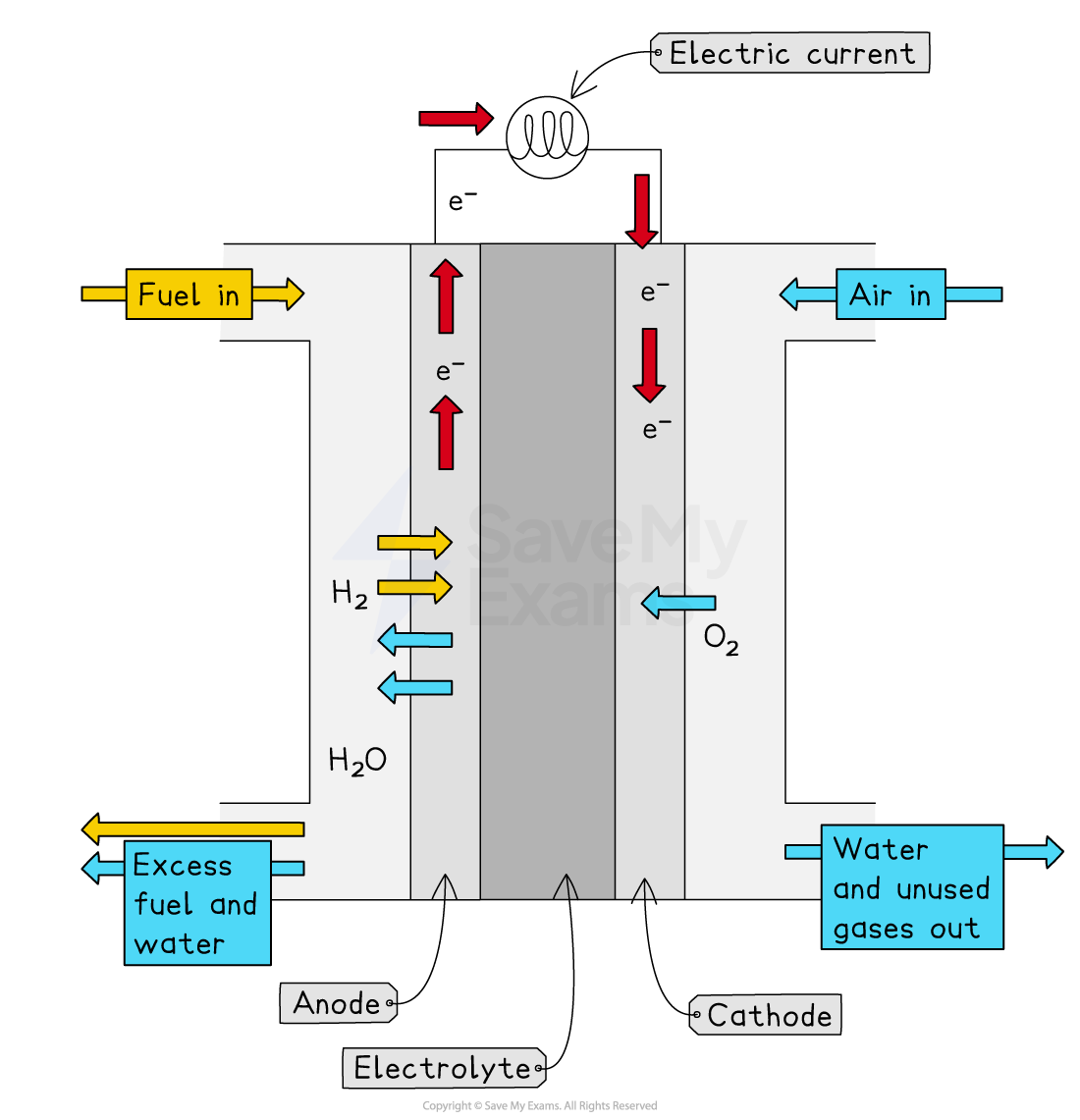
Diagram showing the movement of hydrogen, oxygen and electrons in a hydrogen-oxygen fuel cell
Advantages & disadvantages of hydrogen fuel cells
Spec point —
4.2.2· Describe the advantages and disadvantages of using hydrogen–oxygen fuel cells in comparison with gasoline /petrol engines in vehicles
Extended tier only
- Hydrogen-oxygen fuel cells are an alternative technology for powering vehicles, replacing traditional petrol or diesel engines.
Advantages
No pollutants produced
- The only product of the reaction is water. This is a major advantage over petrol engines which produce harmful pollutants such as carbon dioxide (a greenhouse gas), oxides of nitrogen (which cause acid rain), and carbon monoxide.
High efficiency
- They release more energy per kilogram than either petrol or diesel.
Renewable
- The hydrogen fuel can be produced by the electrolysis of water, which is a renewable resource.
Disadvantages
Hydrogen production:
- Most hydrogen is currently produced from fossil fuels (like methane), which is a non-renewable process that releases carbon dioxide.
- The electrolysis of water requires large amounts of electricity, which may be generated by burning fossil fuels.
Storage and Safety
- Hydrogen is a highly flammable gas that is difficult and expensive to store safely, often requiring high-pressure tanks. This is less convenient than storing liquid petrol.
Cost and Infrastructure:
- The materials used to make fuel cells are often expensive.
- There is a very limited number of hydrogen filling stations available.
Exam Hint When comparing fuel cells to petrol engines, your answers should focus on the chemical products and their environmental impact.
Fuel cells are much quieter, leading to less noise pollution. However, this is considered a physical or engineering advantage. So, this is unlikely to score a mark.
Always stick to the chemical points, like "the only product is water" or "no carbon dioxide is produced."
Was this revision note helpful?
Build on this topic