Gas Exchange Processes (Cambridge International AS Biology)
Spec point —
9.1.7· describe gas exchange between air in the alveoli and blood in the capillaries
Gas exchange processes
-
The exchange of oxygen and carbon dioxide occurs between the alveoli and the capillaries in the lungs
-
Oxygen and carbon dioxide are exchanged in a process of simple diffusion
- This is a passive movement from high to low concentration
-
The air in the alveoli contains a high concentration of oxygen
- The oxygen diffuses from the alveoli and into the blood capillaries, before being carried away to the rest of the body for aerobic respiration
-
The blood in the capillaries has a relatively low concentration of oxygen and a high concentration of carbon dioxide
- The carbon dioxide diffuses from the blood and into the alveoli and is then exhaled
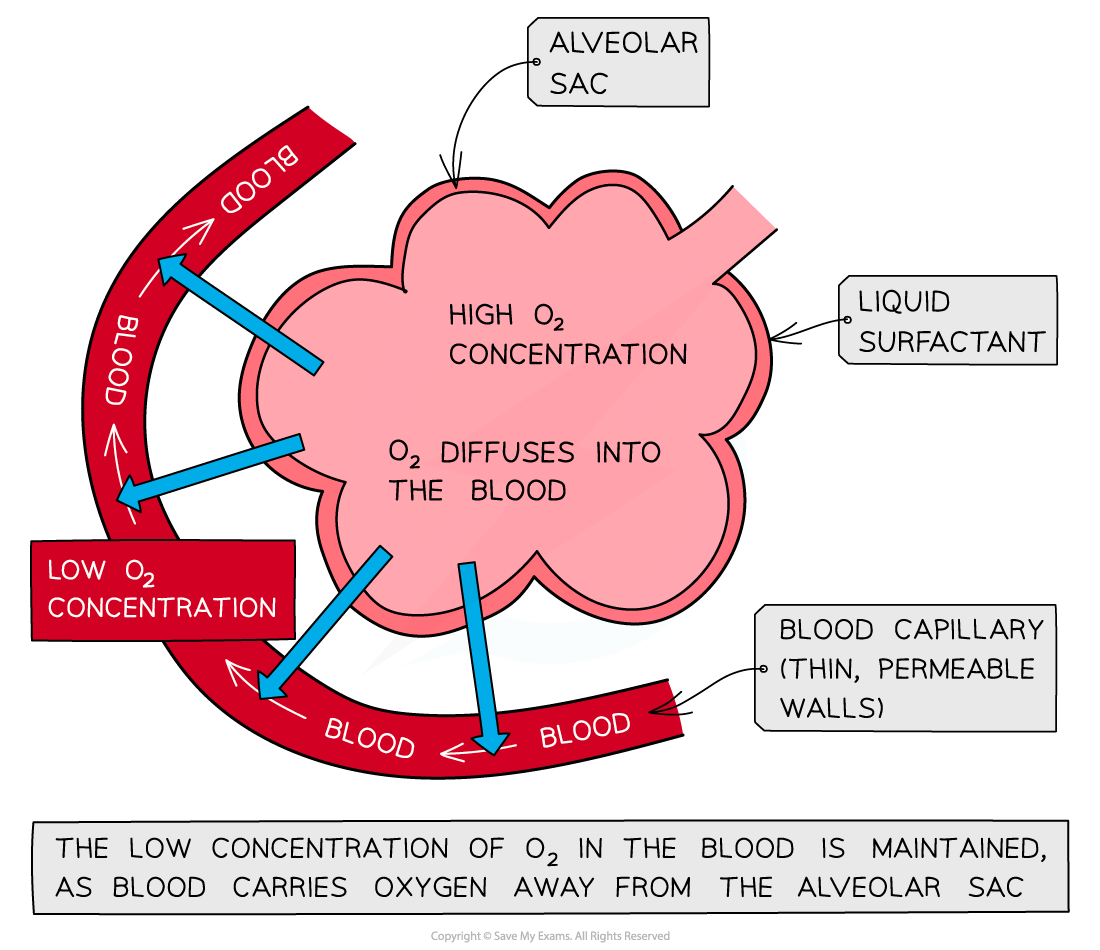
The movement of blood through the capillaries surrounding the alveoli maintains a concentration gradient to drive diffusion of oxygen into the blood
| Feature of alveoli | Importance |
|---|---|
| Large surface area | The average human adult has around 480-500 million alveoli in their lungs This equals a surface area of 40-75m2 This enormous surface area increases the space available for oxygen and carbon dioxide to diffuse |
| Thin walls | The walls of the alveoli are only one cell thick This means that gases have a very short diffusion distance and so gas exchange is as quick and efficient as possible |
Exam Hint Remember that blood arriving to the lungs in capillaries is deoxygenated, while blood leaving the capillaries is oxygenated and returns to the left side of the heart.
You don't need to know how many alveoli there are for your exam, or their total surface area—these are only included here to show you just how large a surface area they have in total!
Was this revision note helpful?
Build on this topic