Animal & Plant Cells (Cambridge International AS Biology)
Electron Micrographs: Animal Cells
Spec point —
1.2.2· describe and interpret photomicrographs, electron micrographs and drawings of typical plant and animal cells
-
Exam questions will not always contain neat diagrams of cellular structures, but may instead present images taken using microscopes
- Such images are known as micrographs
-
It is possible to identify organelles in micrographs of animal cells on the basis of their shape, location, and size relative to other organelles, e.g.
-
The nucleus will always be the largest organelle
-
Mitochondria are the next largest, and are often cylindrical with a folded inner membrane
- Note that mitochondria are not always cylindrical, but can also be circular; their shape will depend on their age, and on the angle at which they were sliced during specimen preparation
-
RER will be near the nucleus, and ribosomes can sometime be seen
-
Lysosomes and vesicles will be smaller than mitochondria
-
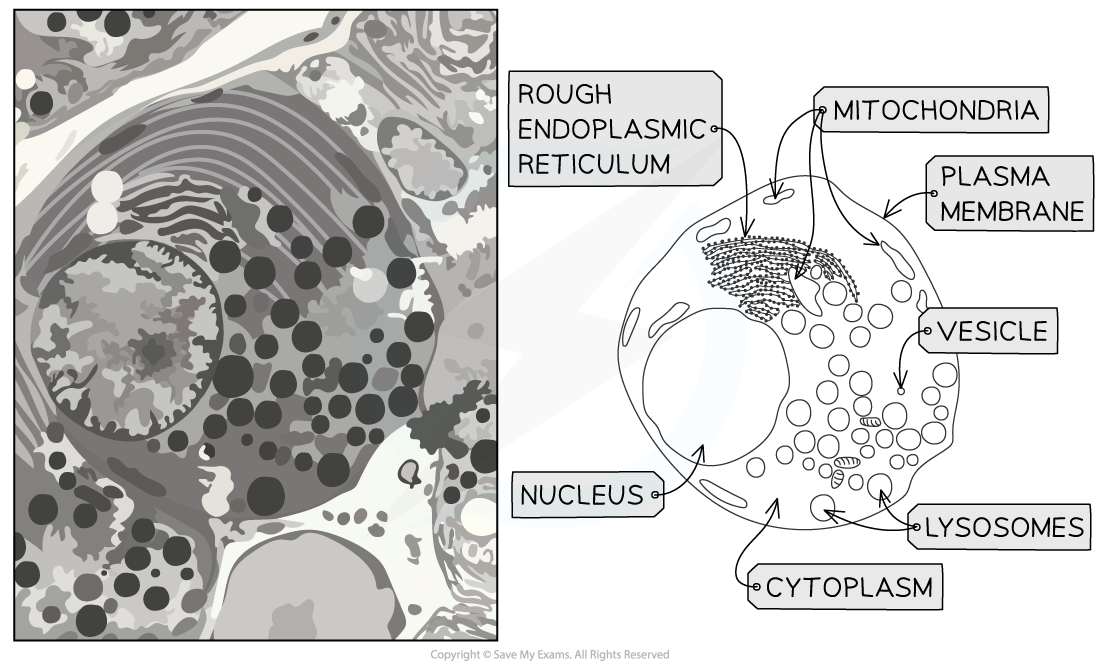
Exam questions may present micrograph images of cells
Exam Hint You should be able to describe and interpret photomicrographs, electron micrographs and drawings of typical animal cells.
Electron Micrographs: Plant Cells
Spec point —
1.2.2· describe and interpret photomicrographs, electron micrographs and drawings of typical plant and animal cells
-
Plant cell micrographs can be interpreted using the same techniques as animal cells
- Large, seemingly empty spaces inside cells will be vacuoles
- The nucleus will be the largest dark region in the cell
- Chloroplasts are the next-largest organelles, and grana are often visible
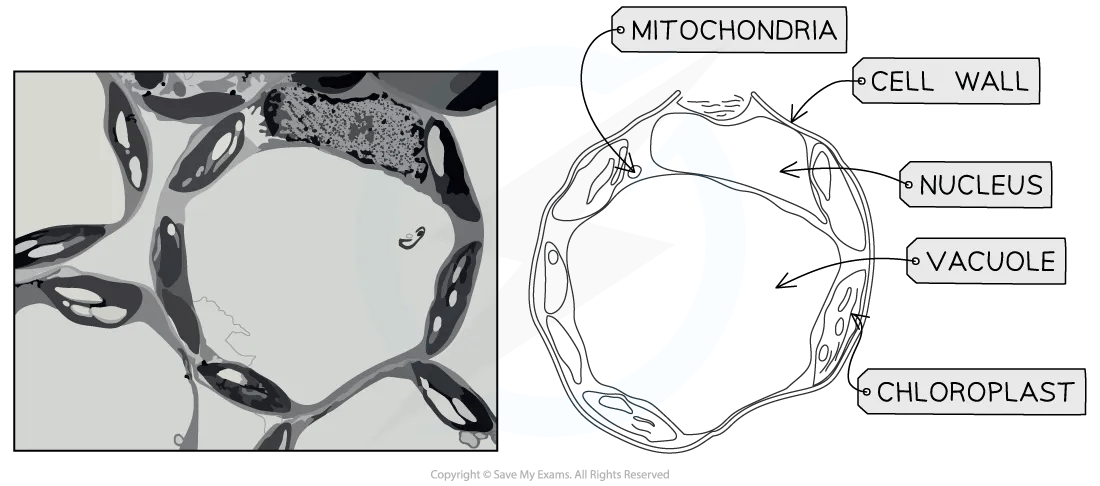
Vacuoles and chloroplasts can be easily recognised inside plant cells
Exam Hint You should be able to describe and interpret photomicrographs, electron micrographs and drawings of typical plant cells.
Structure of Animal & Plant Cells
Spec point —
1.2.3· compare the structure of typical plant and animal cells
-
Animal and plant cells have many common structures:
- Cell surface membrane
- Cytoplasm
- Nucleus
- Mitochondria
- Rough and smooth endoplasmic reticulum
- Golgi bodies
- Vesicles and lysosomes
- Ribosomes
- Microtubules
-
Plant cells are larger and more regular in shape than animal cells, and have the following additional structures
- Cellulose cell wall
- Large permanent vacuoles
- Chloroplasts
- Plasmodesmata
-
Structures found in animal cells but not in typical plant cells include centrioles, cilia and microvilli
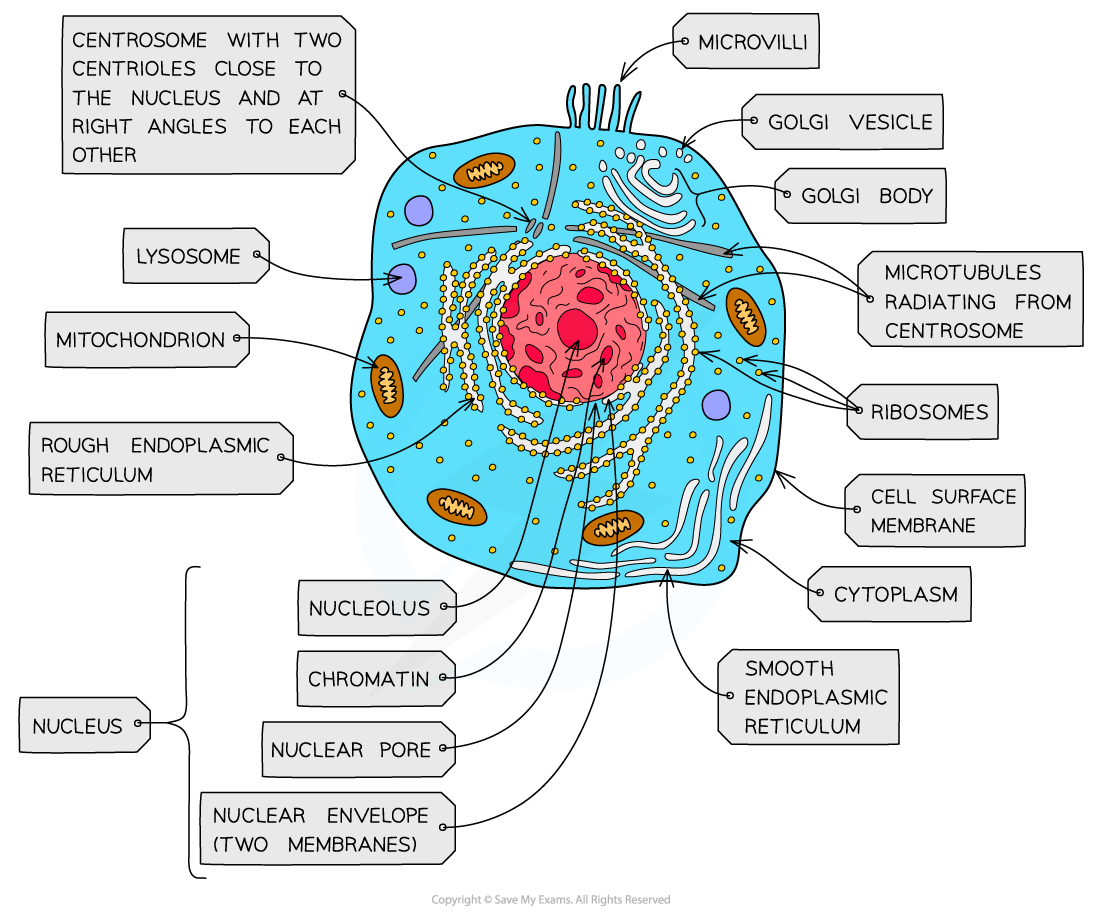
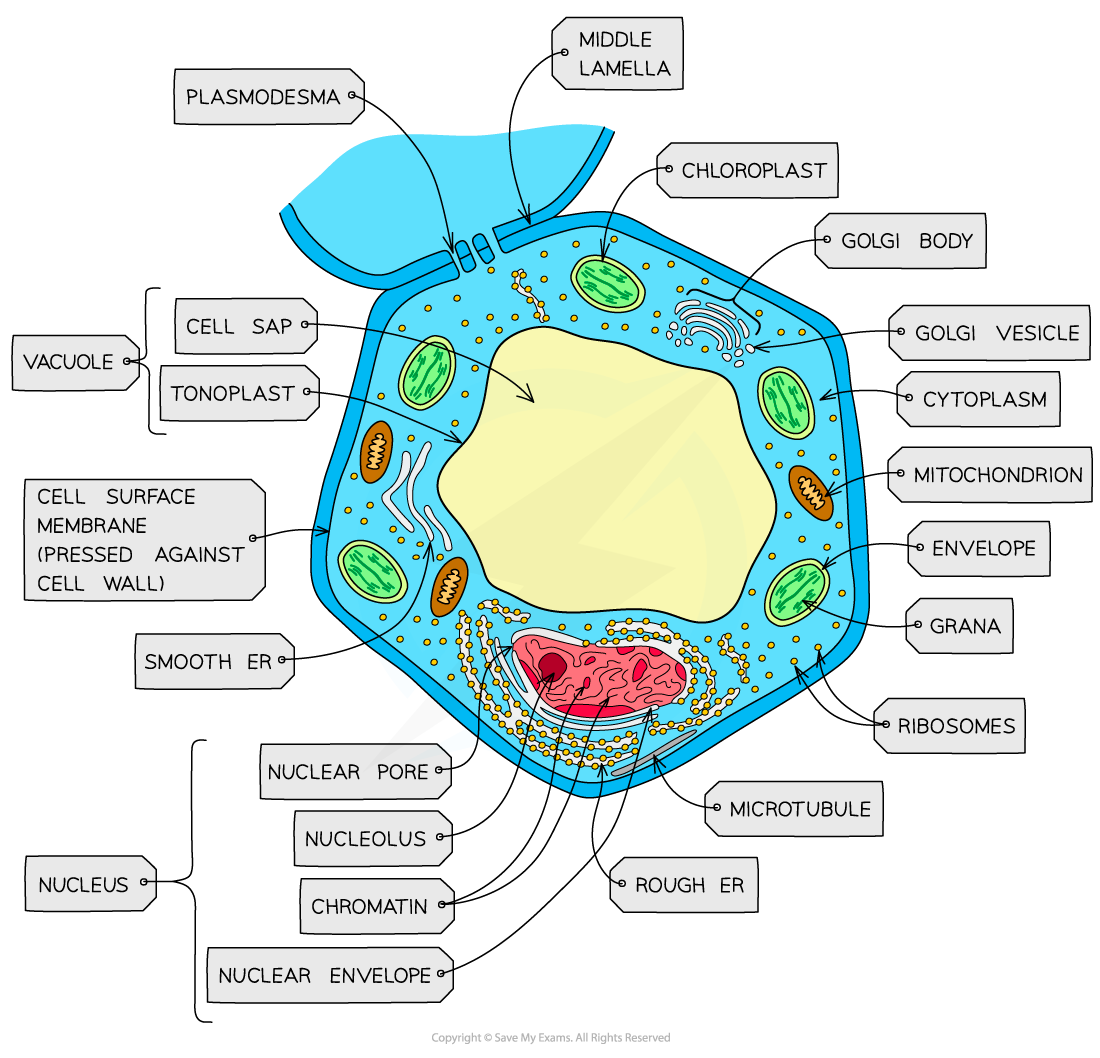
Plant cells have a larger, more regular structure in comparison to animal cells
Was this revision note helpful?