Uses of Monoclonal Antibodies (Cambridge International AS Biology)
Use of Monoclonal Antibodies
Spec point —
11.2.3· outline the principles of using monoclonal antibodies in the diagnosis of disease and in the treatment of disease
Diagnostic uses of monoclonal antibodies
-
Monoclonal antibodies can be used diagnostically for:
- Diagnosing HIV
- Detecting the presence of pathogens such as Streptococcus bacteria
- Distinguishing between Herpes I and Herpes II virus
- Detecting cancer cells
-
Monoclonal antibodies can also be used to locate the position of blood clots for patients thought to have deep vein thrombosis
-
This occurs by:
- Injecting a mouse with human fibrin (the main protein found in blood clots)
- This activates the plasma cells to produce antibodies against fibrin
- These cells are collected from the mouse spleen
- The plasma cells are then fused with tumour cells forming hybridomas that produce antifibrin antibodies
- To detect where the antibodies are binding to fibrin molecules, a radioactive chemical (producing gamma radiation) is attached to the antibodies making them radioactively labelled
- A gamma-ray camera is used to detect where these radioactively labelled antibodies have attached to a fibrin molecule, hence indicating where blood clots can be found
-
Generally monoclonal antibodies are used only once
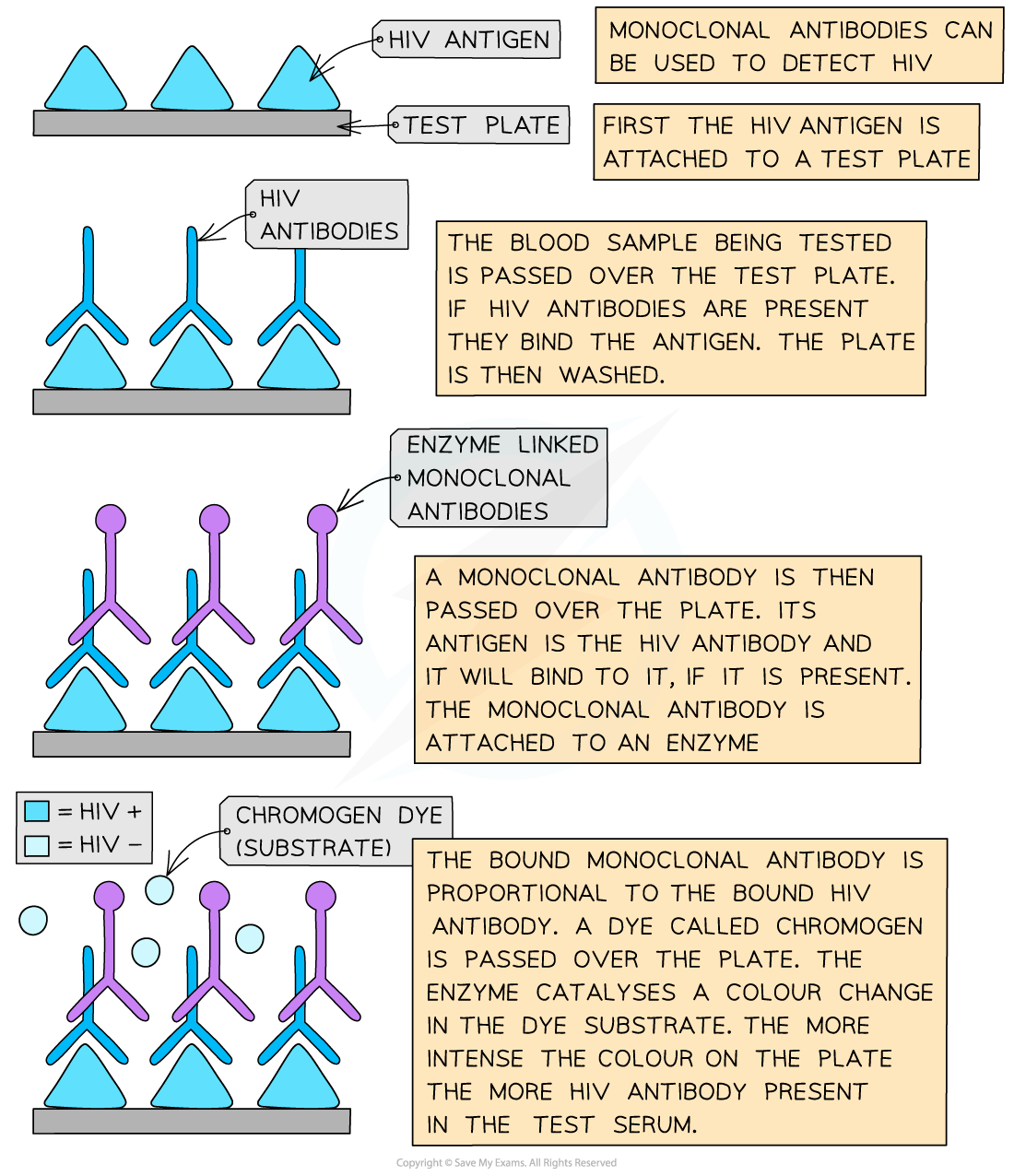
Another example of the diagnostic use of monoclonal antibodies—test for HIV
Therapeutic uses of monoclonal antibodies
-
Therapeutically, monoclonal antibodies have multiple applications to include:
-
Treatment for the rabies virus, which can be potentially fatal
- This is done by injecting purified antibodies
-
The prevention of transplanted organ rejection
- This is done by intervening with the T-cells involved in the rejection process
-
Treatment of inflammatory conditions such as allergic asthma (an allergy) and rheumatoid arthritis (an autoimmune disease)
- Monoclonal antibodies are able to bind and deactivate factors involved in the inflammatory response
-
Treatment for diseases caused by the overproduction or inappropriate production of B-cells (e.g. leukaemia, multiple sclerosis and myasthenia gravis)
- The antibody (rituximab) binds to cell surface receptor proteins on B-cells (not plasma cells) and causes the death of the cells
-
Prevention of blood clotting following angioplasty procedures
- Monoclonal antibodies bind to receptors on the platelet surface thereby inhibiting fibrinogen from binding and subsequent clotting from ensuing
-
Targeted treatment of breast cancer
- Herceptin is a monoclonal antibody used to treat breast cancer
- It recognises receptor proteins on the surface of cancer cells and binds to them allowing the immune system to identify and destroy them
-
Treatment of melanoma (a type of skin cancer)
- The antibody (ipilimumab) binds to a protein produced by T-cells (whose role is to reduce the immune response)
- This results in the immune system remaining active against the cancer cells
-
Exam Hint You do not need to know all the details for each example given on this page but you need to know specific examples of how monoclonal antibodies can be used as a diagnostic tool and for treatment. You can use a well-annotated diagram to explain how monoclonal antibodies can be used as a diagnostic tool.
Was this revision note helpful?
Build on this topic