Plant Transverse Sections (Cambridge International AS Biology)
Transverse Sections: Stems, Roots & Leaves
Spec point —
7.1.1· draw plan diagrams of transverse sections of stems, roots and leaves of herbaceous dicotyledonous plants from microscope slides and photomicrographs
Transport systems
-
Plants need transport systems to:
-
Meet their metabolic demands (glucose, hormones, mineral ions are required for various processes within plants)
-
Efficiently move substances up and down, e.g.
- Sugars made in photosynthesis need to be transported, as sucrose, to parts of the plant that cannot photosynthesise
- Water from the roots needs to be transported to the upper parts of a plant
- Plants may store starch in storage organs, e.g. tubers, and need to convert it to sucrose and transport it to metabolically active parts of the plant
-
-
Plants consist of many layers of cells and so cannot rely on diffusion from cell to cell to supply all their needs, as this would be too slow
-
Plants therefore have a vascular system which involves a network of vessels (vascular tissue) running through the leaves, stem and roots
- These three parts are the main organs involved in transport
-
The vascular system is comprised of two distinct types:
- Xylem transports water and mineral ions from the roots to the rest of the plant
- Phloem transports substances from the source (e.g. a leaf) to the sink (e.g. root)
-
The xylem and phloem are arranged together in vascular bundles
-
The bundles are laid out differently in the leaves, stem and roots
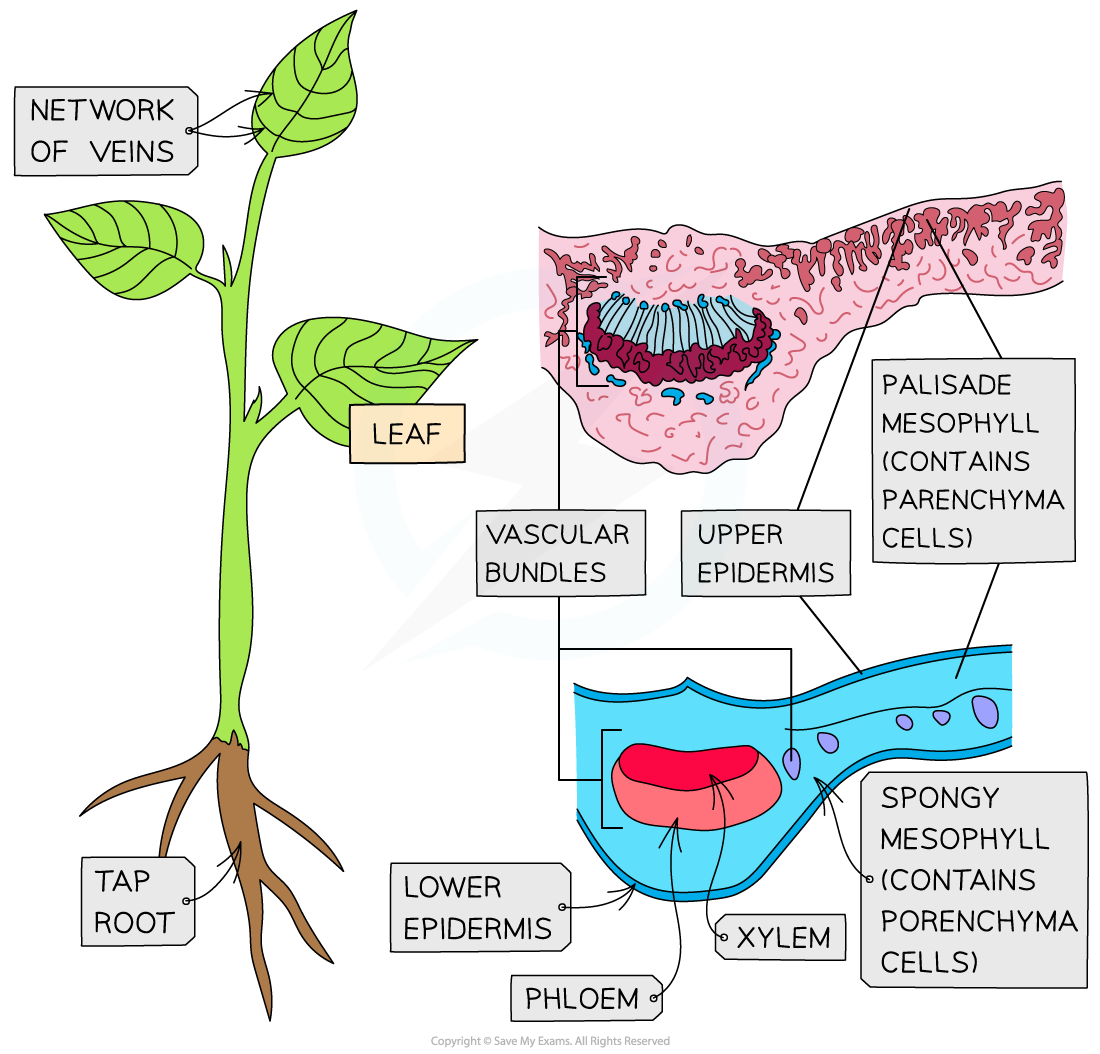
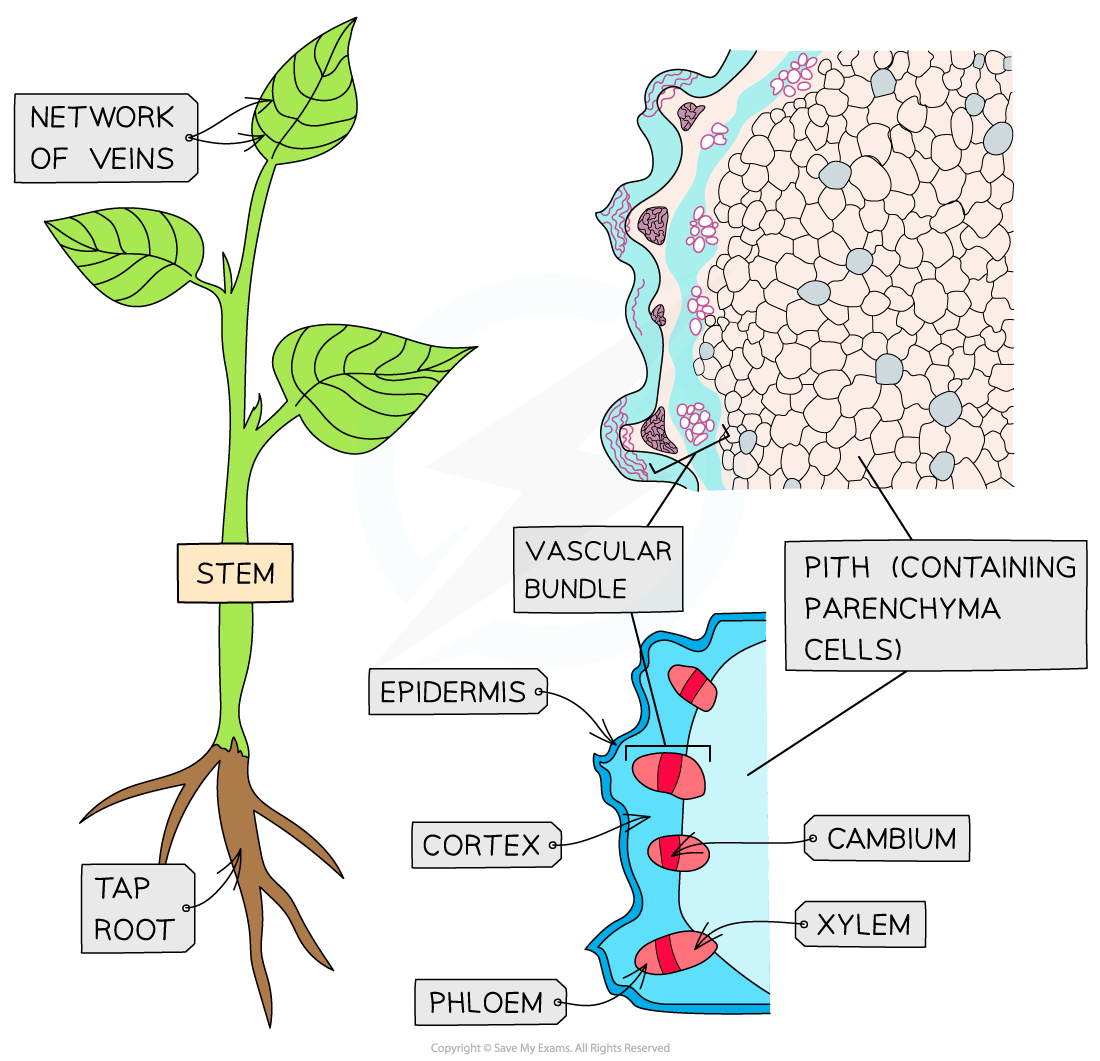
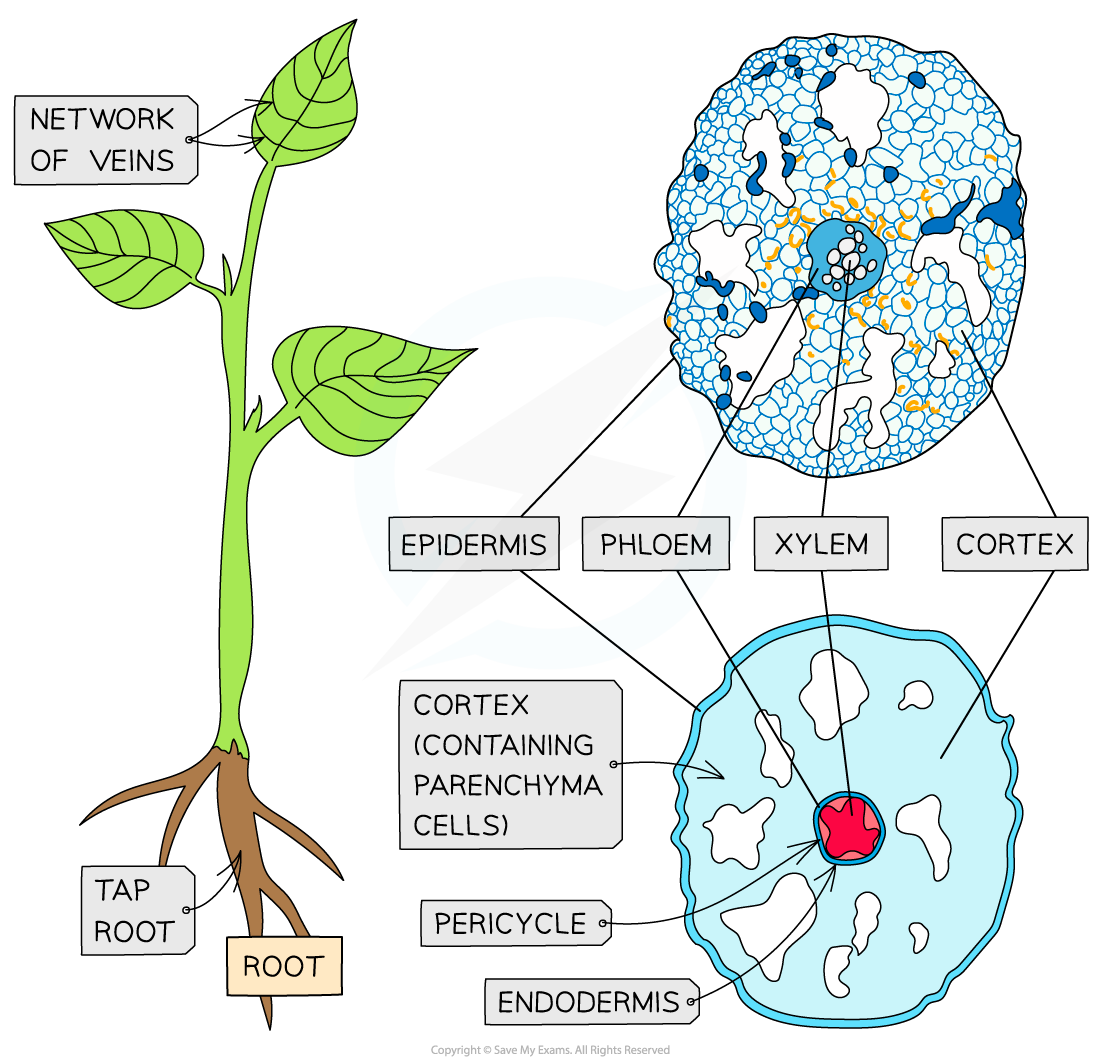
Tissue plan diagrams of a dicotyledonous leaf, stem and root
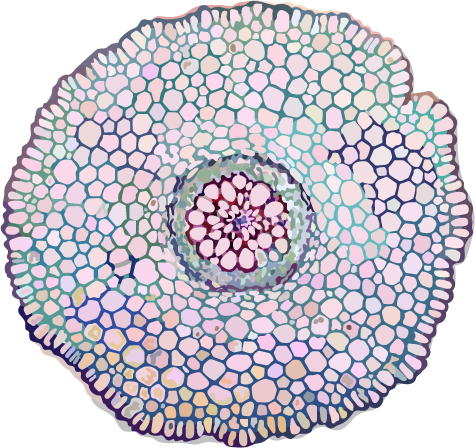
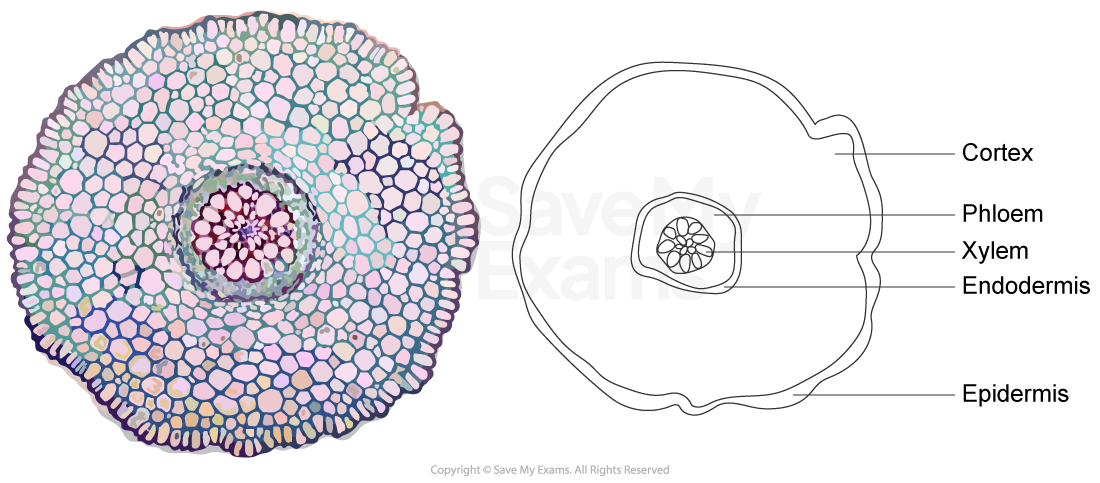
Worked Example The micrograph below shows a transverse section of root tissue.
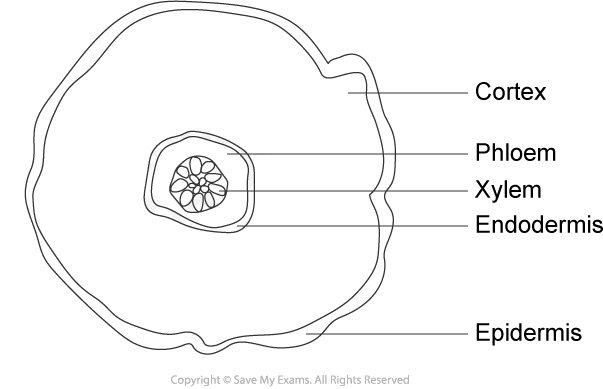
Draw a plan diagram of this section of root tissue.
Light micrograph (photomicrograph) of transverse root tissue
Step 1 Draw the outlines of each section
Use a sharp pencil with no shading or sketching
Use a continuous line
Step 2 Add the outlines of the remaining tissues
A plan diagram shows tissues only, so do not draw any individual cells; for example, outline the xylem tissue at the centre of the root
Step 3 Add labels
Use a ruler to draw horizontal lines to each structure of interest
Label clearly with correct spelling
Step 4 Add magnification(if present on micrograph or question)
Plan diagram of transverse root tissue
The 'before-and-after' images look like this side-by-side:
Root transverse section 'before-and-after' images side-by-side
Exam Hint When drawing tissue plan diagrams (which is common in the practical paper 3) you need to:
Read the instructions carefully
Draw a large diagram
Use a sharp pencil and do not shade (including the nucleus)
Use clear, continuous lines
When using an eyepiece graticule, use it to ensure you have correct proportions or if you are not using a microscope then endeavour to keep the proportions between tissues to scale
If drawing from a low-power image:
- Do not draw individual cells
- Read the question carefully as you may only have to draw a portion of the image
- Include the magnification on the drawing
If drawing from a high-power image:
- Draw only a few of the required cells
- Draw the cell wall of the plant cells
- Include the magnification on the drawing
When labelling, remember:
- Use a ruler for label lines (and scale line if appropriate)
- Label-lines should stop exactly at the structure (do not use arrows)
- Don't cross label-lines over each other
- Label all tissues and relevant structures (those requested)
Was this revision note helpful?