Electricity & Heat (Edexcel IGCSE Physics)
Guided lessons are live for this note
Work through it step by step — key points, depth layers, a worked example and self-checks.
Spec point —
2.3· understand why a current in a resistor results in the electrical transfer of energy and an increase in temperature, and how this can be used in a variety of domestic contexts
Electricity & heat
-
A current passing through a resistor (or wire) results in the electrical transfer of energy
- As explained in Charge & current, current is the rate of flow of charge
-
The temperature of a resistor increases due to the collisions of the free electrons within the wire
-
Some of the energy is dissipated into the surroundings by heating
-
This heating effect is utilised in many domestic contexts, including:
- Electric heaters
- Electric ovens
- Electric hob
- Toasters
- Kettles
Heating a pan on an electrical hob
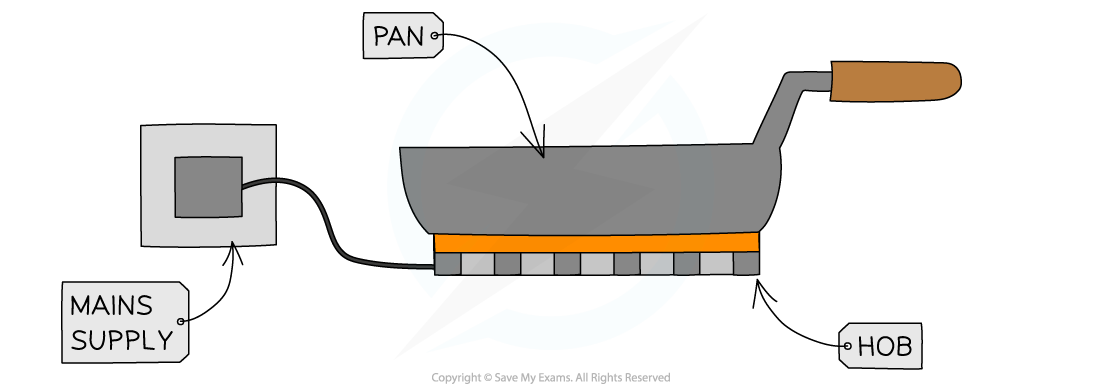
The heating effect of current can be used for many applications such as electric hobs
Exam Hint Remember that a charge moving around an electrical circuit are an example of an electrical transfer pathway. If you are unsure of how to explain energy stores and transfers use the Energy stores & transfers revision note to help.
Was this revision note helpful?
Build on this topic