Electricity & Heat
1 guided lesson · 9 checks · 2. Electricity → Electrical Power & Mains Electricity
Guided lessons for this note
Which concept don't you understand yet?
We'll explain it simply and check your understanding. Pick any lesson — any order works.
0 of 9 checks correct so far
Lesson 1 of 1
The heating effect of a current
Current is a stream of charge, and driving it through a resistor takes work. That work appears as heat: the drifting electrons collide inside the wire, the temperature climbs, and some energy dissipates into the room. Domestic appliances exploit the effect deliberately, turning a glowing element into a hob, a toaster or a kettle.
What you know already
Push a current through a resistor and the resistor warms up — the electrical transfer of energy shows itself as heat. Free electrons jostling through the wire collide and hand over energy, some of which escapes to the surroundings. Far from being a nuisance, that heating effect runs heaters, ovens, hobs, toasters and kettles.
Key points of understanding
- A current through a resistor or wire transfers energy electrically and warms it.
- Free electrons colliding inside the wire raise its temperature.
- Some of that energy dissipates into the surroundings by heating.
- Domestic appliances put the heating effect to work: heaters, ovens, hobs, toasters and kettles.
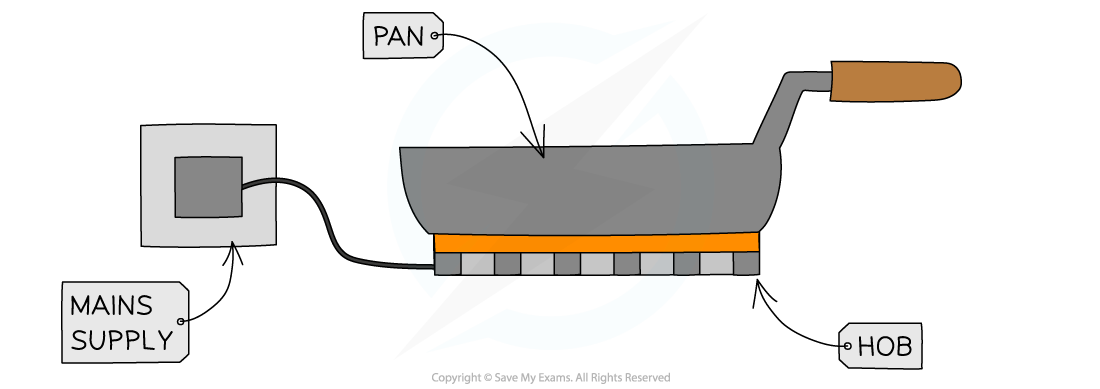
The heating effect of current can be used for many applications such as electric hobs
Choose a confidence level to continue.
Prefer to read it all at once? Show the full lesson as a page
1.The heating effect of a current
Current is a stream of charge, and driving it through a resistor takes work. That work appears as heat: the drifting electrons collide inside the wire, the temperature climbs, and some energy dissipates into the room. Domestic appliances exploit the effect deliberately, turning a glowing element into a hob, a toaster or a kettle.
The heating effect of current can be used for many applications such as electric hobs
Key points
- A current through a resistor or wire transfers energy electrically and warms it.
- Free electrons colliding inside the wire raise its temperature.
- Some of that energy dissipates into the surroundings by heating.
Guided content from the SME authoring corpus — note rn_z4nNPFw97V9fDkyS, pinned at 502107a3fcac · promoted SyllabAI/syllabai-resources b3caaaa90c5e