Generators & Dynamos (Edexcel IGCSE Physics)
Guided lessons are live for this note
Work through it step by step — key points, depth layers, a worked example and self-checks.
Spec point —
6.16· describe the generation of electricity by the rotation of a magnet within a coil of wire and of a coil of wire within a magnetic field, and describe the factors that affect the size of the induced voltage
Generators & dynamos
-
When a coil of wire is rotated within a magnetic field, an electric current can be generated
- This is known as the generator effect
- This is how electricity is produced
-
The generator effect can be used to:
- Generate a.c in an generator
- Generate d.c in a dynamo
Generators
- A simple alternator is a type of generator that produces an alternating current (a.c.)
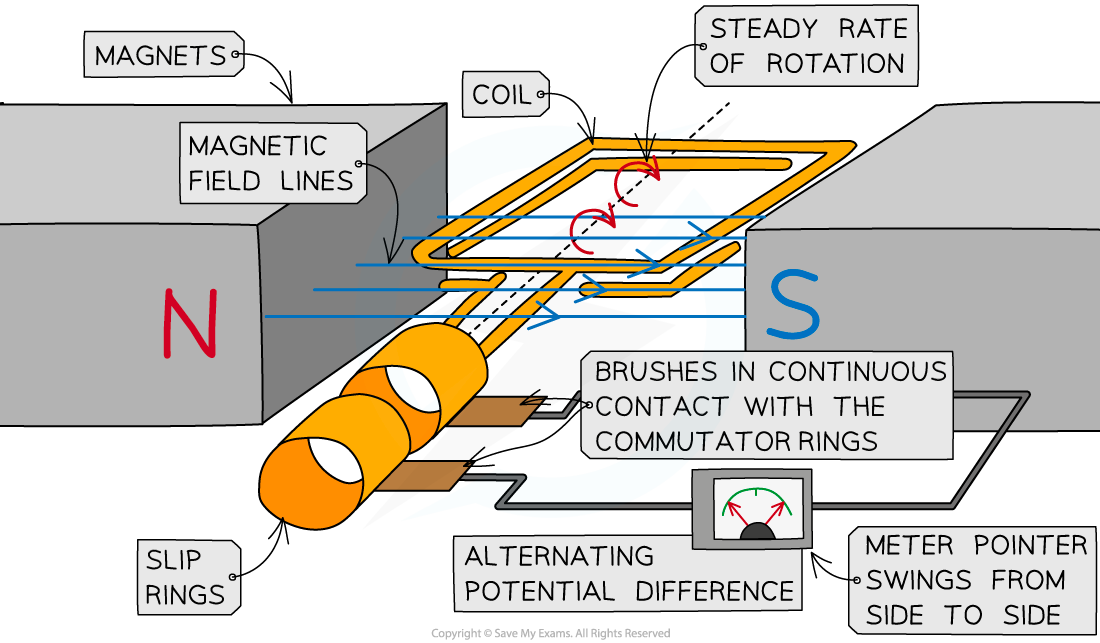
An alternator is a rotating coil in a magnetic field with slip rings
-
A rectangular coil is forced to spin in a uniform magnetic field
-
The coil is connected to a circuit which contains a centre-reading meter by metal brushes that press on two metal slip rings
- The slip rings and brushes provide a continuous connection between the coil and the meter
-
When the coil turns in one direction:
- The pointer deflects first one way, then the opposite way, and then back again
- This is because the coil cuts through the magnetic field lines and an alternating potential difference is induced in the coil
- The alternating potential difference produces an alternating current(a.c.)
-
An alternating current may also be produced when a magnet rotates within a stationary coil
- Both methods operate on the principle that p.d. is induced when a coil experiences a changing external magnetic field
-
The induced potential difference and the current alternate because they repeatedly change direction
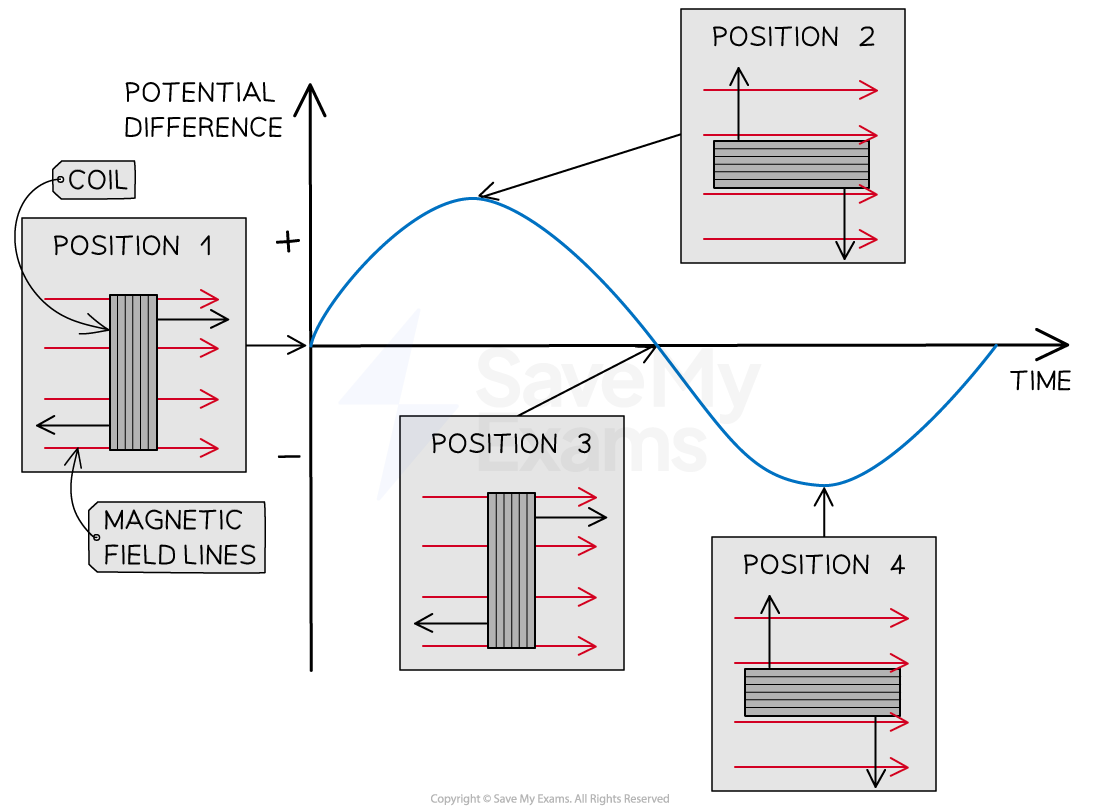
a.c output from an alternator - the current is both in the positive and negative region of the graph
Dynamos
- A dynamo is a type of generator that produces a direct current
- A simple dynamo is the same as an alternator except that the dynamo has a split-ring commutator instead of two separate slip rings
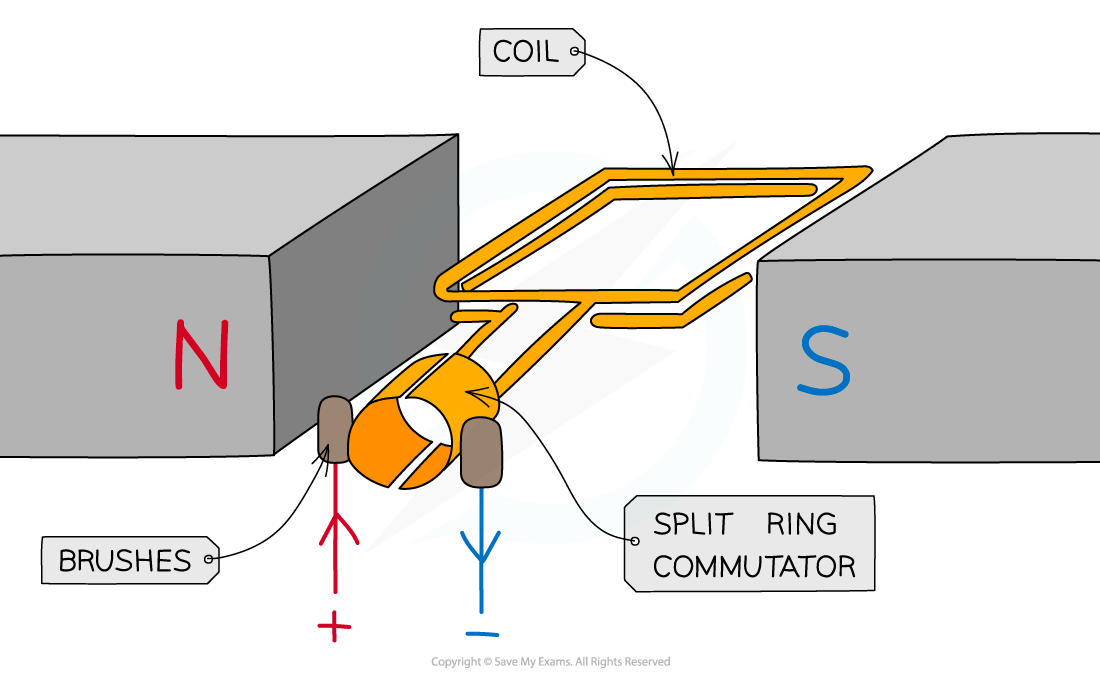
A dynamo is a rotating coil in a magnetic field connected to a split ring commutator
-
As the coil rotates, it cuts through the field lines
- This induces a potential difference between the end of the coil
-
The split ring commutator changes the connections between the coil and the brushes every half turn in order to keep the current leaving the dynamo in the same direction
- This happens each time the coil is perpendicular to the magnetic field lines
-
Therefore, the induced potential difference does not reverse its direction as it does in the alternator
-
Instead, it varies from zero to a maximum value twice each cycle of rotation, and never changes polarity (positive to negative)
- This means the current is always positive (or always negative)
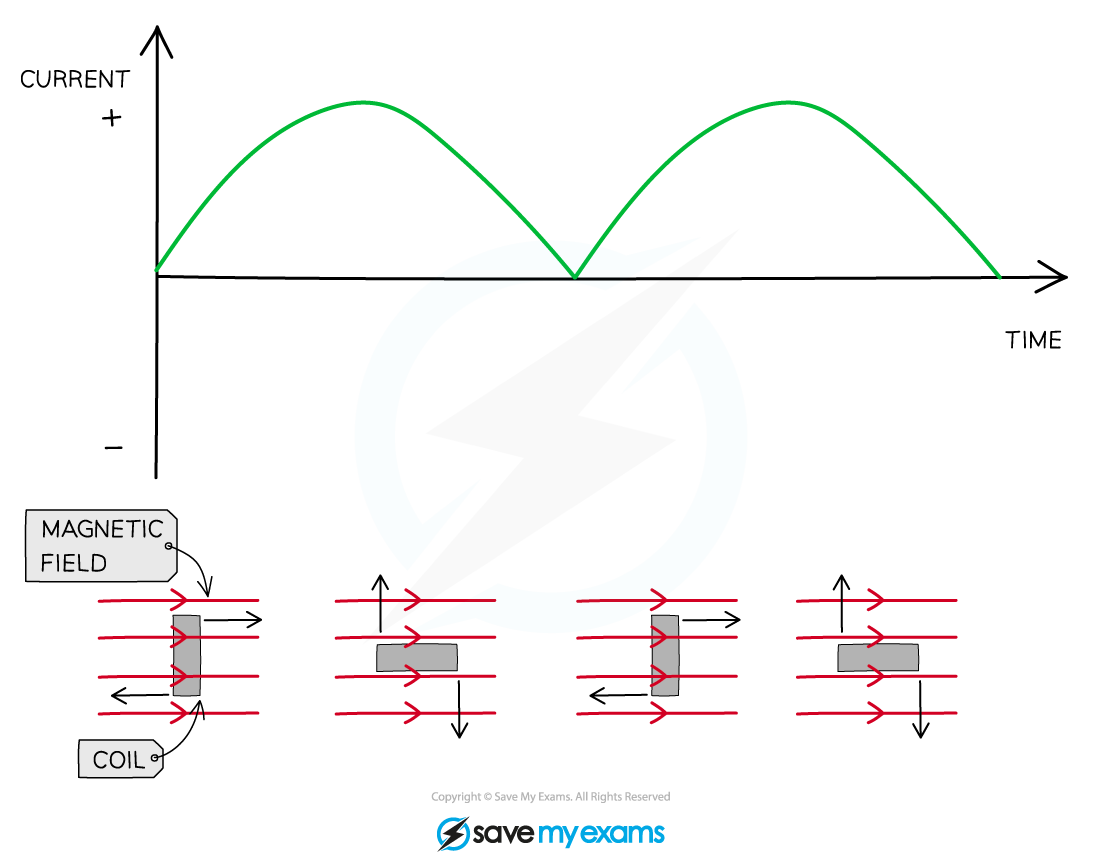
D.C output from a dynamo - the current is only in the positive region of the graph
Exam Hint Motors and generators look very similar, but they do very different things. When tackling a question on either of them, make sure you are writing about the right one!
You are also expected to know that alternating current can be produced when a coil rotates in a magnetic field, or when a magnet rotates within a coil. The key is relative motion between the coil and the magnet.
Was this revision note helpful?
Build on this topic