The Brightness of Stars (Edexcel IGCSE Physics)
Absolute magnitude
Spec point —
8.11P· understand how the brightness of a star at a standard distance can be represented using absolute magnitude (physics only)
Apparent and absolute magnitude
Luminosity
- The luminosity of a star is defined as
The total amount of light energy emitted by the star each second
- Luminosity is a measure of a star's brightness or power output
Apparent magnitude
-
The brightness, or apparent magnitude, of a star depends on two main factors:
- the luminosity of the star
- the distance the star is from Earth (more distant stars are usually fainter than nearby stars)
-
Apparent magnitude is defined as:
The perceived brightness of a star as seen from Earth
-
The apparent magnitude scale runs from back to front:
- The brighter the star, the lower the magnitude
- The dimmer the star, the higher the magnitude
The apparent magnitude scale
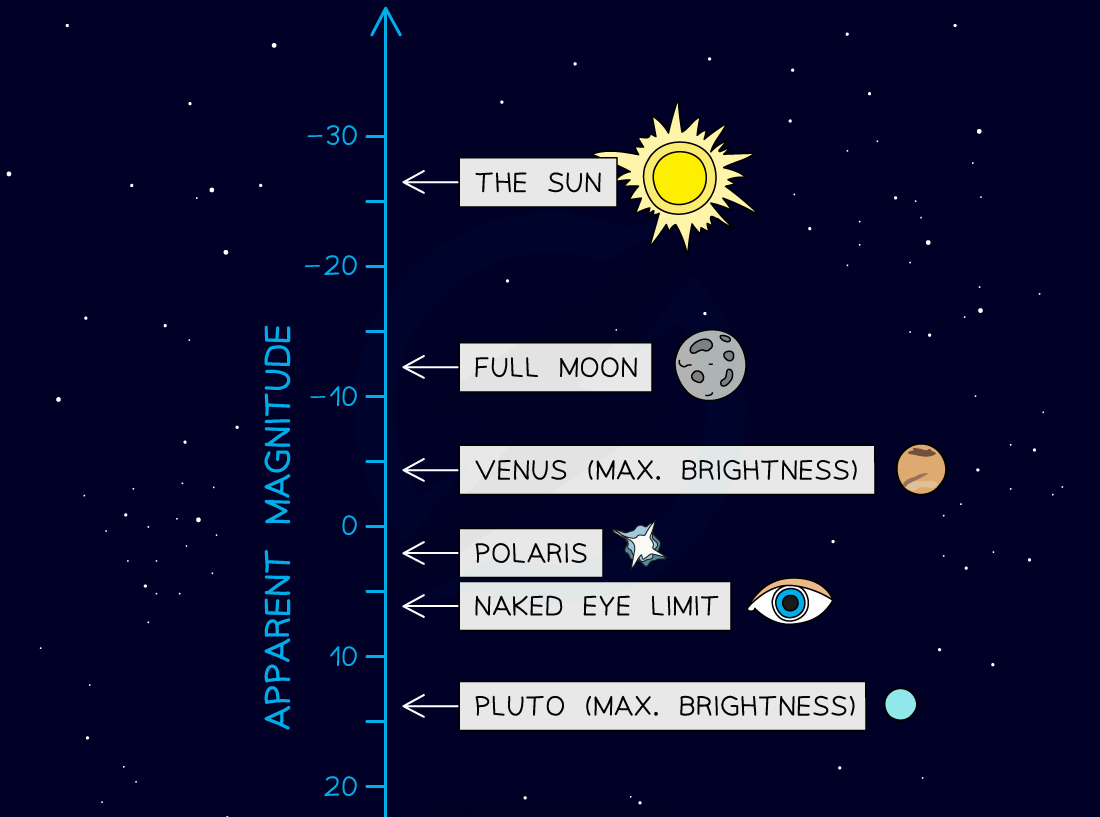
Examples of the apparent magnitude of different astronomical bodies
Absolute magnitude
-
Astronomers describe the brightness of stars at a standard distance using the absolute magnitude scale
- A bright star that is far away can look the same as a dim star that is nearby
- Therefore, it is difficult to measure the brightness of stars directly
-
Absolute magnitude is defined as:
A measure of how bright stars would appear if they were all placed the same distance away from the Earth
- The standard distance astronomers use is 10 parsecs, 32.6 light-years or 3.04 × 10¹⁴ km away from the Earth
Was this revision note helpful?
Build on this topic