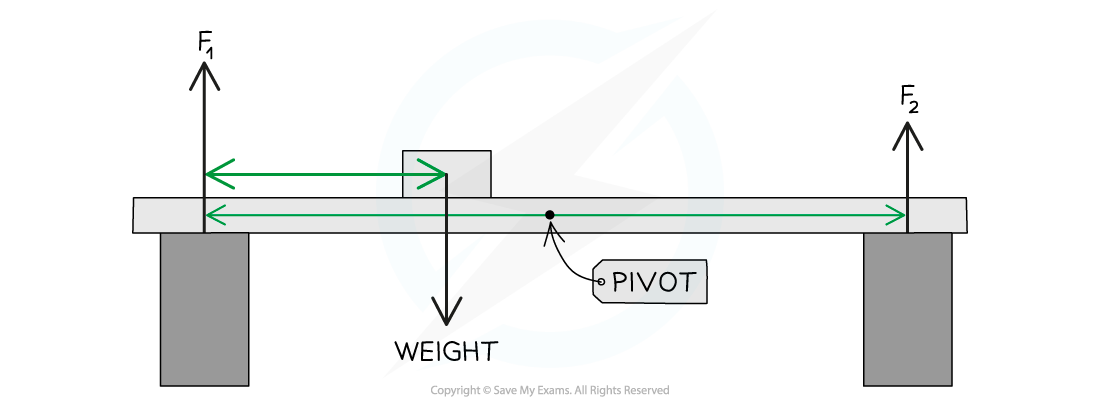
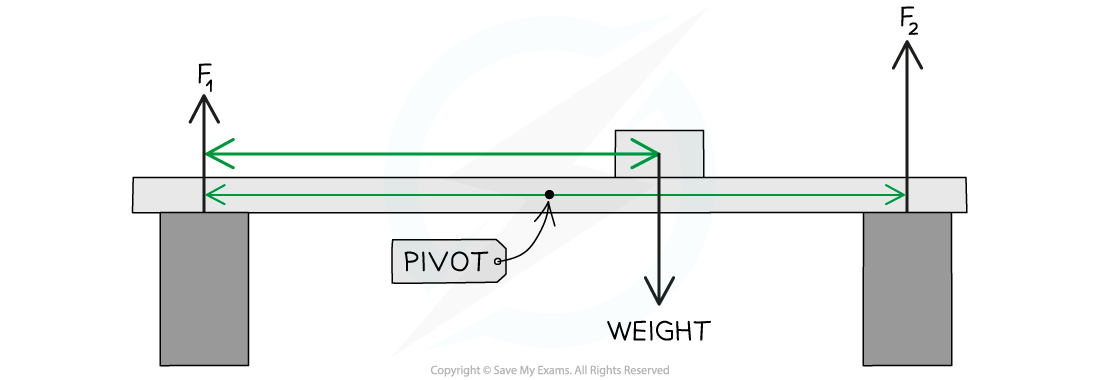
The Principle of Moments
2 guided lessons · 18 checks · 1. Forces & Motion → Moments
Guided lessons for this note
Which concept don't you understand yet?
We'll explain it simply and check your understanding. Pick any lesson — any order works.
0 of 18 checks correct so far
Lesson 1 of 2
The principle of moments
Sit a heavy child near the end of a see-saw and a light child far out, and the board can still hold level. The rule behind that trick is the principle of moments: turning effects on the two sides of a pivot must match. This lesson turns the rule into an equation and uses it to place forces and weights.
What you know already
You already know from the Moments subtopic that a force can turn an object about a pivot, and that this turning effect — the moment — grows with both the force and its distance from the pivot. Here those ideas harden into a balancing law: equal turning effects on both sides hold an object still. The same law then explains how two end supports share the weight of a beam's load.
Key points of understanding
- For a balanced object, the clockwise moments about the pivot add to the same total as the anticlockwise moments.
- Each moment comes from multiplying a force by its distance from the pivot, measured perpendicular to the force.
- Only forces with a perpendicular line of action produce a moment; on a horizontal beam these act upwards or downwards.
- With several forces, add the moments turning each way about one pivot and equate the two totals.
- Check every distance shares one unit, and sort each force as clockwise or anticlockwise before adding the moments.
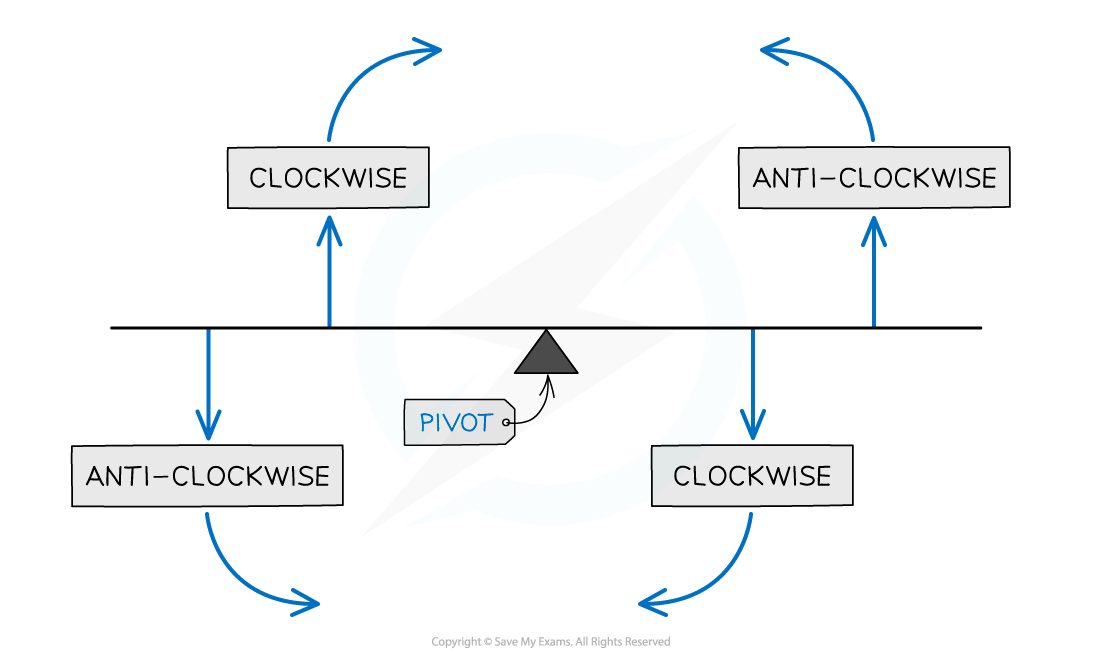
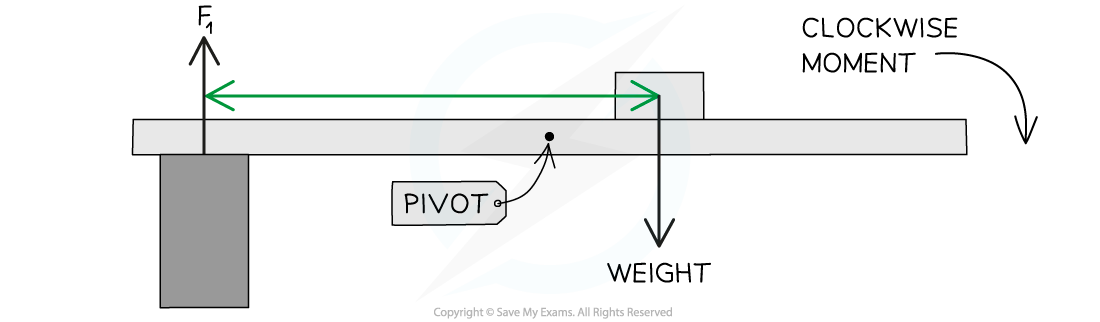
Imagine holding the beam about the pivot and applying just one of the forces. If the beam moves clockwise then the force applied is clockwise.
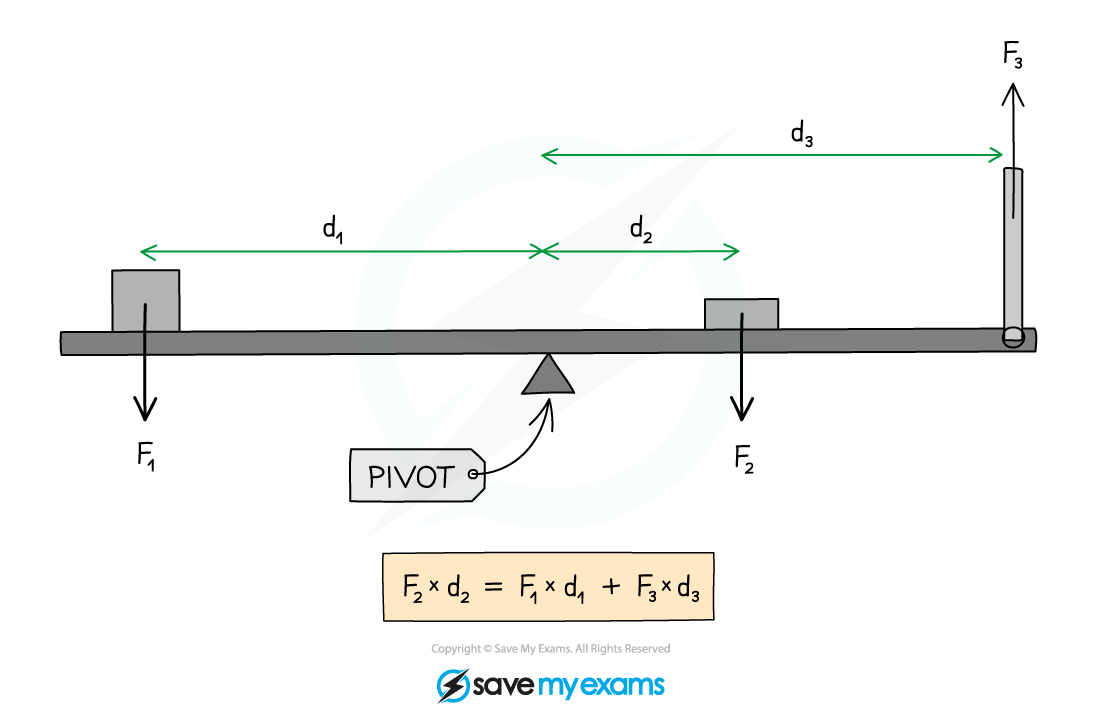
The clockwise and anticlockwise moments acting on a beam are balanced
Choose a confidence level to continue.
Prefer to read it all at once? Show the full lesson as a page
1.The principle of moments
Sit a heavy child near the end of a see-saw and a light child far out, and the board can still hold level. The rule behind that trick is the principle of moments: turning effects on the two sides of a pivot must match. This lesson turns the rule into an equation and uses it to place forces and weights.
Imagine holding the beam about the pivot and applying just one of the forces. If the beam moves clockwise then the force applied is clockwise.
The clockwise and anticlockwise moments acting on a beam are balanced
Guided content from the SME authoring corpus — note rn_zn4NVCRcTSNv8sRZ, pinned at 0cea83a78102 · promoted SyllabAI/syllabai-resources b3caaaa90c5e