Conductors & Insulators
2 guided lessons · 18 checks · 2. Electricity → Static Electricity
Guided lessons for this note
Which concept don't you understand yet?
We'll explain it simply and check your understanding. Pick any lesson — any order works.
0 of 18 checks correct so far
Lesson 1 of 2
Conductors & delocalised electrons
Metals conduct because their outermost electrons are not attached to any single atom: they form a mobile crowd around the positive ions. Since current is a flow of electrons, the freer that crowd moves, the better the metal conducts. Silver, copper, aluminium and steel are the everyday examples.
What you know already
Whether charge can move through a material decides everything about how it behaves in a circuit. Metals brim with delocalised electrons and conduct freely; plastics, rubber, glass and wood have no free charges and block the flow. This note sorts the everyday materials and explains the atomic picture behind the split.
Key points of understanding
- A conductor lets charge, usually electrons, flow through it easily.
- Typical conductors are metals: silver, copper, aluminium and steel.
- Metal lattices hold positive ions surrounded by delocalised outer electrons.
- Those free electrons make metals good conductors, since current is a flow of electrons.
- Plastics and rubbers are insulators — no free charges — so they sheath cables safely.

Different materials have different properties of conductivity
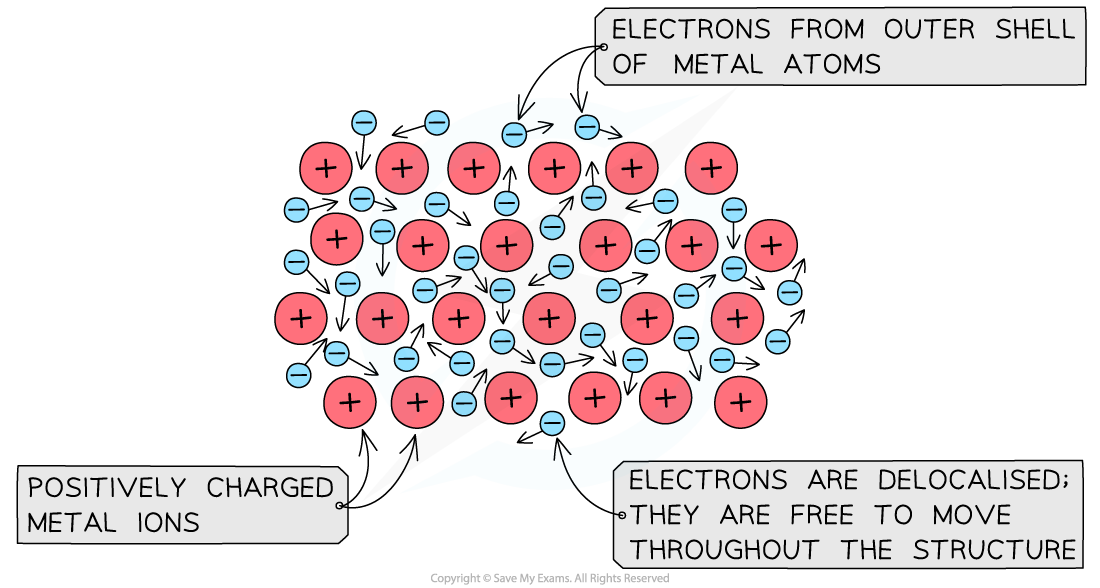
The lattice structure of a conductor with positive metal ions and delocalised electrons
Choose a confidence level to continue.
Prefer to read it all at once? Show the full lesson as a page
1.Conductors & delocalised electrons
Metals conduct because their outermost electrons are not attached to any single atom: they form a mobile crowd around the positive ions. Since current is a flow of electrons, the freer that crowd moves, the better the metal conducts. Silver, copper, aluminium and steel are the everyday examples.
Different materials have different properties of conductivity
The lattice structure of a conductor with positive metal ions and delocalised electrons
Key points
- A conductor lets charge, usually electrons, flow through it easily.
Guided content from the SME authoring corpus — note rn_qG9dxcQrRJJVDQf7, pinned at 502107a3fcac · promoted SyllabAI/syllabai-resources b3caaaa90c5e